Fragments of a large stoneware vessel with a medallion (Figure 1) were found scattered
throughout a 17th century rubbish pit at the Buck Site (18KE292) along with other
ceramics, pipe stems and general household artifacts. The Buck Site is located in Kent
County, Maryland about 9 miles southwest of Chestertown. The site was brought to the
attention of an archaeologist, L.T. Alexander, by a private landowner who had found
several artifacts in his field. The location of the rubbish pit was later determined from
examining a concentration of surface finds consisting of oyster shell and artifacts dating
to the latter half of the 17th century. The pit feature was discovered undisturbed and
capped by a thick layer of oyster shell (Alexander 1984:15). The majority of artifacts
unearthed were simple ceramic storage and cooking vessels, leading to the belief that
this trash pit belonged to a modest household (Alexander 1984:31). Also uncovered in
this same feature were a few fragments of another medallion identical to this one.
These fragments may be from a separate vessel or there may have potentially been
another medallion decorating the other side of this vessel. However, overall only a
few fragments of other stoneware ceramics were unearthed.
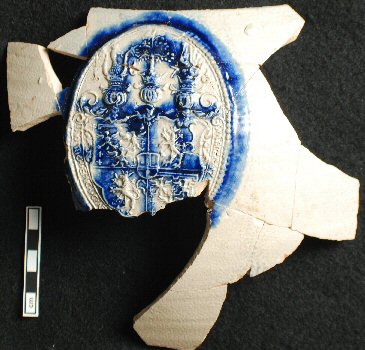 Figure 1. Stoneware vessel decorated with the Friderich Emich medallion (photo by
Marco de Pompa III.)
Figure 1. Stoneware vessel decorated with the Friderich Emich medallion (photo by
Marco de Pompa III.)
This vessel is categorized as a Rhenish blue and grey stoneware. Rhenish is recognized
by its grey salt glazed body and painted decoration in blue or manganese purple. On
this vessel, the decoration is a raised medallion featuring the coat of arms of Frederich
Emich and is accented with swirls of blue paint. The complete vessel could have been a
very large bottle or jug. It was most likely produced in the Westerwald region of Germany.
Throughout the 17th and 18th centuries, Westerwald was the largest exporter of Rhenish
stoneware ceramics. Molds were used to apply decorative relief to multiple vessels
such as this one. This increased the rate of production and allowed the same mold
design to be applied to several different vessel forms (Gaimster 1997:251-252).
The Emich Medallion depicts a crest (Figure 2) of three helmets each with a crown on
top. The center helmet is topped with a tree and two other unidentified images are
located over the right and left helmets. The shield is quartered with a smaller shield
in the center. The small, central shield contains a cross design. In the main shield,
the top left quadrant features three displayed eagles. The top right quadrant contains
a lion rampant with two tails and a crown on its head. In the bottom half of the shield,
the two quadrants are exactly the same but their placement is reversed, with the lion
on the left and the eagles on the right. The completed inscription under the shield
would read, "FRIDERICH EMICH GRAF ZU LEININGEN UND TAXBURG HERR ZU APPIRMUN." This
inscription states that Friderich Emich was the Count of Leiningen and Taxburg or
Dagsburg. Several bottles similar to this vessel were produced for the wedding of
Count Emich's son Emich XIII on February 24, 1676. The inscription on these vessels
is exactly the same but the wedding bottles include the date 1676 at the end
(Alexander 1984:25).
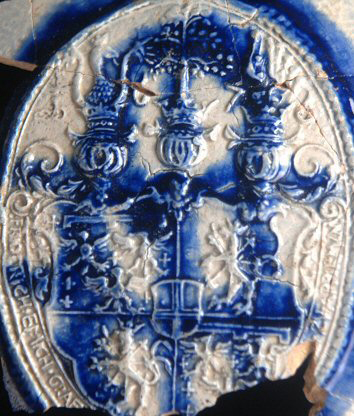 Figure 2: Closeup of the Friderich Emich coat of arms (photo by
Marco de Pompa III
Figure 2: Closeup of the Friderich Emich coat of arms (photo by
Marco de Pompa III
Political portraits and heraldry on ceramic vessels were popular throughout the 16th
and 17th centuries. Potters would favor producing vessels with arms of their benefactors
and regional nobility (Gaimster 1997:153). However, potteries would also produce vessels
with political images from countries other than their own. This would often lead to
incorrect coats of arms or images that misrepresented foreign nobles (Gaimster 1997:160).
These politically designed vessels were shipped internationally to spread knowledge of
a particular noble's name, family and territory. These vessels could also be used as
forms of political propaganda combining images of values such as faith and hope with
the portrait of a specific noble. Slogans could be added supporting political unity
under a certain ruler or showcasing a noble’s blood ties to a specific nationality or
important individual. (Gaimster 1997:154). Vessels featuring armorials were exported
heavily to other locations in Europe and the colonies. Archaeologists have found
examples in England, Scandinavia and North America (Gaimster 1997:156).
German coats of arms were typically used to distinguish members of the nobility. Specific
elements such as the barred helmets and crowns included in the crest on the Emich
medallion were restricted for use only by the nobility in the 17th century. Coats
of arms may contain the same family shield with different crests above it to recognize
individuals in a family. Others may combine elements within their shields to differentiate
between branches of one family (Pine 1970:191). The Leiningen and Westerburg coat of
arms (Figure 3) includes in its shield the three eagles for Leiningen and the
cross for Westerburg. It is also possible that this cross may be the same one
that is depicted in the small shield on the Emich medallion.
 Figure 3: Leingen and Westerburg coat of arms (Wappenbuck.)
There has been little conclusive research on the family or structure associated with
the Buck Site rubbish pit and consequently the owners of this vessel. When the pit
was covered, there were only a few dwellings in use on the property. From the
artifacts uncovered in this feature, it is believed that these individuals were
slaves or indentured servants (Alexander 1984:16). However, the exact name and
origin of the tenants is still unknown. It is possible this vessel was brought
over by a German immigrant or was received as a gift or even purchased locally.
As with many other interesting archaeological finds, it is unlikely we will ever
really know who owned this vessel and how it was regarded before it was
thrown away.
References
Alexander, L.T.
1984 North Devon Pottery and Other Finds C.A.D.
1660-1700. The Bulletin and Journal of Archaeology for New York State 88:15-32.
Gaimster, David
1997 German Stoneware 1200-1900: Archaeology and
Cultural History. British Museum Press, London.
Pine, L.G.
1970 International Heraldry. Charles E.
Tuttle Co., Vermont.
Wappenbuck
Electronic Document,
http://www.wappenbuch.de/images/wappen_w016_Teil_1.jpg – accessed October
21, 2008.