This small but significant find was recovered from Johnsontown, an archaeological site
located in Charles County. The Saint Benedict medal was recovered by a local
architectural historian who collected artifacts on the property over several years.
The property of 'Johnson Towne' was purchased in 1665 by Henry Hawkins. He owned
multiple tracts of land and held several influential positions including sheriff,
justice and member of the lower house of the assembly. Artifacts found at Johnsontown
suggest the site was occupied until 1740 (King et al. 2008:17-18).
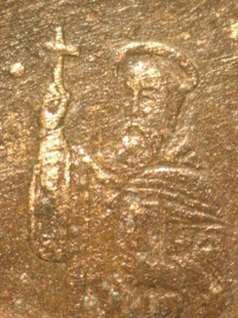 Figure 1. Close-up of St. Benedict holding the cross and Holy rule
on the front of the medal.
Figure 1. Close-up of St. Benedict holding the cross and Holy rule
on the front of the medal.
This type of Saint Benedict medal is commonly referred to as an ordinary medal (Herbermann
1913:338). This particular medal is an oval shape approximately 1.6 cm by 1.2 cm. A
medal this small would probably have been worn on a rosary instead of individually.
The front of the medal depicts Saint Benedict holding a cross in his right hand
(Figure 1&2). In his otherhand he holds the Benedictine Rule, a guideline written by
the Saint for monastic life and discipline (Sutera 1997:2). On either side of Benedict
are a raven and a cup. Both symbols represent periods in Benedict's life when he was
saved by his faith. The central image is surrounded by the inscription
CRUX S.P. BENEDICTI, which stands for Crux Sancti Patris Benedicti, the "Cross of
the Holy Father Benedict" (Gueranger 1880:11).
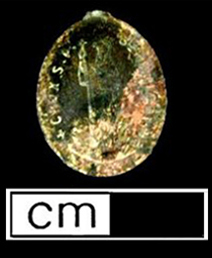 Figure 2: Front side of the St. Benedict medal.
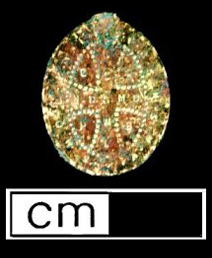 Figure 3: The reverse side of the St. Benedict medal.
The reverse side (Figure 3) shows a cross surrounded by the initials
V.R.S.N.S.M.V.S.M.Q.L.I.V.B. This represents the Latin initials for Vade Retro,
Satana; Nunquam Suade Mihi Vana. Sunt Mala Quae Libas; Ipse Venena Bibas, which
translates into "Begone, Satan! And suggest not to me your vain things. The
cup you offer me is evil; drink your own poison." The horizontal bar of the
cross is inscribed with N.D.S.M.D., representing Non Draco Sit Mihi Dux or
"Let not the dragon be my guide." The vertical bar of the cross contains the
initials C.S.S.M.L., for the phrase Crux SacraSit Mihi Lux, "May the holy cross be
my light." The four corners of the cross contain the initials C.S.P.B., once
again representing the phrase Crux Sancti Patris Benedicti (Gueranger 1880:12-13).
The ordinary medal was designed after the discovery of a manuscript originally written
in 1415. The manuscript contained a drawing of Saint Benedict holding a scroll in
one hand and a cross in the other. Phrases written around the image were later
represented as initials on the back of the medal. The first medals were created
in Germany during the 17th century and spread with popularity throughout
Europe (Herbermann 1913:338).
Wearing the medal of Saint Benedict is considered to be a silent continuous prayer
(Sutera 1997:109). The medal is worn to cure sickness, the affects of poisoning and
also for general physical protection (Gueranger 1880:25-26). The Saint Benedict medal
is also the only medal used for exorcism (Sutera 1997:109). The phrases on the
reverse side of the medal are believed to have been spoken by Benedict to banish
Satan and his temptations (Sutera 1997:109). Overall, the medal would have been
used to cleanse the body and soul of evil influences or even the devil himself.
References
Gueranger, Prosper
1880 The Medal or Cross of St.
Benedict. Burns and Oates, London.
Herbermann, Charles George. (editor)
1913 The Catholic Encyclopedia.
Encyclopedia Press, New York.
King, Julia, Scott M. Strickland, and Kevin Norris
2008 The Search for the Court House
at Moore's Lodge: Charles County's First County Seat. Report Prepared for
the Citizens of Charles County.
Sutera, Judith
1997 The Work of God: Benedictine
Prayer. Liturgical Press, Minnesota.