Nancy S. Shippen, MAC Lab Conservator
Because Jamestown is known primarily for its role in establishing the British colonies in
America, little is discussed about the activities that took place on the island during
the Civil War period. Just as the location was an important strategic outpost for the
English colonists in 1607, the Confederates looked to Jamestown Island as the best
defensive location to protect Richmond, the capital of the South and a major industrial
center in 1861 (Riggs 1997). In the building of embankments and digging moats for the
Confederate earthen fort, some of the dirt from the original James Fort was incorporated.
Excavation of the Civil War trenches in the 1950s, and again in 1994, led to the discovery
of the James Fort (Kelso, 2006). Jamestown was occupied by both Confederate and Federal
forces throughout the war.
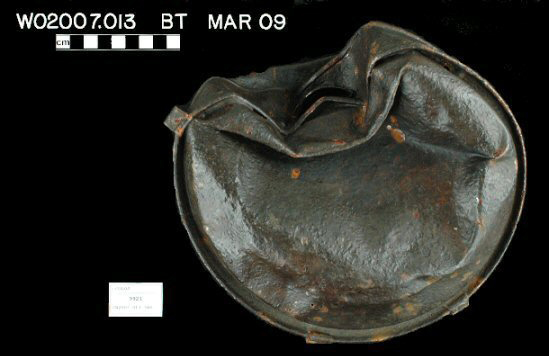 Figure 1: Civil War canteen found in Jamestown in the 1930s archaeological
excavations.
Figure 1: Civil War canteen found in Jamestown in the 1930s archaeological
excavations.
After the move of the capital of colonial government from Jamestown to Williamsburg in 1699,
the island reverted to agricultural fields and the property passed through several hands.
By 1861, the island eventually consolidated to one owner, Captain William Allen
(Jamestown Archaeological Assessment 2002). Captain Allen occupied the island with
Confederate troops raised at his own expense. They constructed five earthworks to protect
the island and control the river traffic to prevent the capture of Richmond. As more
troops were added, additional fortifications were constructed. When Yorktown was besieged
in 1862, the Confederates evacuated. Federal troops then occupied Jamestown, connecting
the island to the War Department in Washington by telegraph wire. Jamestown, however,
was largely ignored until 1863 when both Confederate and Union forces used the location
in diversionary tactics, during the Confederate Suffolk campaign and later during the
Gettysburg campaign, the Federal troops made a feint against Richmond. Later in 1863,
Jamestown was a Union outpost and a communications link for Williamsburg, and a
telegraph cable extended underwater from Jamestown to Fort Powhatan to Union headquarters
at City Point. At the end of the Civil War, after the surrender of the Confederate army
at Appomattox, the Oath of Allegiance was administered at Jamestown (Riggs 1997).
An essential piece of equipment for any soldier, there were many types and designs of
canteens used by both armies. A classic design of the Federal forces after 1861 was
the metal "bullseye" type (Model 1858) where rings were pressed into both sides of
the canteen. Canteens made of wood or leather were also used, and they could be
personalized by carving into the wood or painting the cloth cover with their
owner's name and company number (Field and Smith 2005).
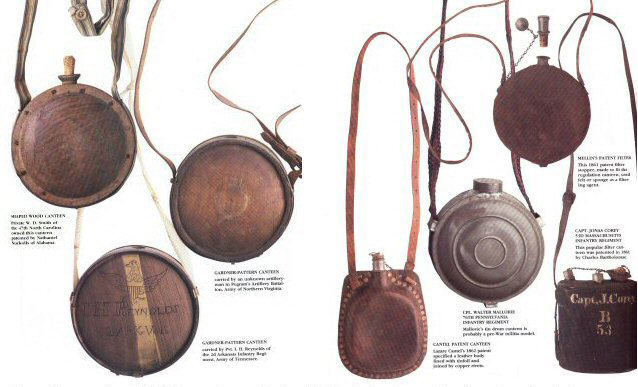 Figure 2: Examples of civil War canteens. On the left, Confederate wooden
drum type, the bottom canteen personalized (Echoes of Glory 1998, 209); on the
right , Union canteens, the top canteen a “bullseye” type with woolen cover, the
middle canteen a drum type, and lover left canteen of leather (Echoes of Glory
1998, 208).
Figure 2: Examples of civil War canteens. On the left, Confederate wooden
drum type, the bottom canteen personalized (Echoes of Glory 1998, 209); on the
right , Union canteens, the top canteen a “bullseye” type with woolen cover, the
middle canteen a drum type, and lover left canteen of leather (Echoes of Glory
1998, 208).
Companies that produced large quantities of canteens were located primarily in the North,
so Confederate soldiers had to rely on wooden canteens, crude blacksmith products, or
whatever could be found on the battlefield. Despite having greater access to canteens,
the North still had difficulty providing the necessary quantity, and found they had
an increase in problems, such as leaking, due to the number of different manufacturers
used (Jones 2007).
The canteen would have been issued with a dyed wool or cotton cover, some with a
leather sling. The cover, in particular wool, would not only provide padding to
prevent a leak if dropped and to muffle sound, but also would help cool the canteen
through evaporation. The covers were produced through a mixture of machine and hand
sewing, each modified by the soldier to fit. Often the canteen covers would be removed
and used for patching uniforms.
This Civil War canteen, found in archaeological excavations in Jamestown in the 1930s,
is known as a drum type and could have been used by either the Confederate or Union
army. Originally, the canteen was round with a wide band and three loops for straps.
The drum canteen was considered inferior to the lighter "bullseye" canteen.
References
Echoes of Glory
1998 Arms and Equipment of The
Union. Time Life Books, Alexandria.
1998 Arms and Equipment of The
Confederacy. Time Life Books, Alexandria.
Field, Ron and Robin Smith
2005 Uniforms of the Civil War.
The Lyons Press, Guilford.
Jamestown Archaeological Assessment
2002 National Park Service, U.S.
Department of Interior. U.S. Library of Congress, Washington DC.
Jones, Robert
2007 The Civil War Canteen.
Lulu.com.
Kelso, William M.
2006 Jamestown: The Buried Truth.
University of Virginia Press, Charlottesville.
Riggs, David F.
1997 Embattled Shrine: Jamestown in
the Civil War. White Mane Publishing Co., Shippensburg.