This cast iron cannon (Figure 1), currently at the Maryland Archaeological Conservation
Laboratory, was likely used against the British Navy in the spring of 1813. Coastal
Maryland, like much of the Eastern Seaboard during the War of 1812, was routinely
harassed by the British naval fleet. The Chesapeake area had an especially large
British naval presence, as the Royal Navy sought to blockade the Bay and prevent the
shipbuilding and privateering operations taking place in Baltimore and the surrounding
towns (Byron 1964: 13-14). Many communities were raided, including Havre de Grace in the
early morning of May 3, 1813.
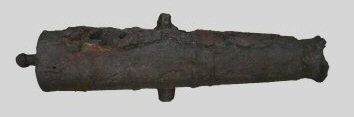 Figure 1 – Havre de Grace Cannon conserved at the Maryland
Archaeological Conservation Laboratory.
Figure 1 – Havre de Grace Cannon conserved at the Maryland
Archaeological Conservation Laboratory.
Having heard that the British were nearby, the residents of Havre de Grace were ready to
defend their town (Whitehorne 1997: 48). The local militia kept watch at the "Potato
Battery" on Concord Point, which consisted of one nine-pounder and two six-pounder cannon.
When the attack came, the only militiaman to hold his ground was John O'Neill, who
single-handedly manned the battery until he was captured. He was imprisoned by Admiral
Cockburn aboard the Maidstone for three days. Although the town was burned and
ransacked (Figure 2), O'Neill became a local hero. When the lighthouse was built at
Concord Point in 1827, he was given the position of lighthouse keeper in appreciation
of his brave actions. Successive generations of his family followed as keepers of the
lighthouse until it was automated in 1920 (Vojtech 1996: 10).
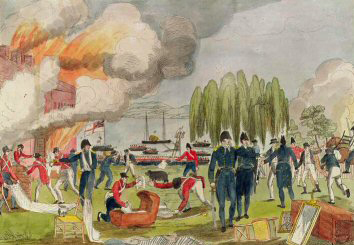 Figure 2 - Admiral Cockburn Burning & Plundering Havre de Grace. Illustration: a
hand colored etching attributed to William Charles from 1813 - Courtesy of the Maryland
Historical Society.
Figure 2 - Admiral Cockburn Burning & Plundering Havre de Grace. Illustration: a
hand colored etching attributed to William Charles from 1813 - Courtesy of the Maryland
Historical Society.
In 1914, Havre de Grace held a centennial commemoration of the war, and O'Neill's
descendants unveiled a memorial (Figure 3) to "John O'Neill, The Gallant Defender of
Havre de Grace Against the British Attack in 1813" (Unknown 1914: program cover). The
memorial consists of an iron cannon placed on a marble base and a plaque detailing
O'Neill's story. Fittingly, it is located on the site of the "Potato Battery" next
to the Concord Point lighthouse. The cannon used in the memorial is dated circa 1812
and was found in the Chesapeake Bay near Havre de Grace. Although this style of cannon
was widely used by the Americans during the War of 1812 (Manucy 1985: 12), it is
possible that this cannon is one of the original "Potato Battery" cannon used by
John O'Neill in his defense of the town.
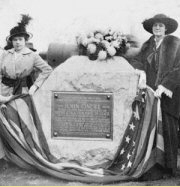 Figure 3 – Installation of O’Neill memorial, 1914 - Courtesy of Friends of
Concord Point Lighthouse.
Figure 3 – Installation of O’Neill memorial, 1914 - Courtesy of Friends of
Concord Point Lighthouse.
The memorial has been moved within Havre de Grace several times, but it was returned
to its original location at Concord Point in the early 1980s (Figure 4). Decades of
exposure to the natural elements has caused the deterioration of the cannon, and
most of its original surface has corroded away. If left unchecked, its condition
would have continued to decline; however, it was recently removed from its base and
transported to the MAC Lab, where it will undergo conservation treatment. The methods
used to stabilize and protect the cannon will allow it to be returned to Concord Point,
where it can continue to commemorate O'Neil's distinctive place in Maryland history.
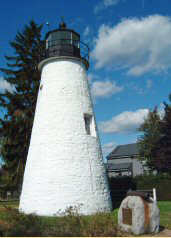 Figure 4 – John O’Neill memorial at the Concord Point Lighthouse prior to
conservation.
Figure 4 – John O’Neill memorial at the Concord Point Lighthouse prior to
conservation.
Thanks to Marsha Jacksteit at the Friends of Concord Point Lighthouse for supplying us
with historical documents and photographs related to the O'Neill cannon.
References
Byron, Gilbert
1964 The War of 1812 on the Chesapeake Bay.
Baltimore: Maryland Historical Society.
Manucy, Albert
1985 Artillery Through the Ages. Washington,
DC: National Park Service.
Unknown
1914 Program from "Unveiling Exercises of the
Centennial Memorial to John O'Neill."
Vojtech, Pat
1996 Lighting the Bay, Tales of Chesapeake
Lighthouses. Centreville, Maryland: Tidewater Publishers.
Whitehorne, Joseph
1997 The Battle for Baltimore 1814. Baltimore:
The Nautical & Aviation Publishing Company of America.