In June of 2010, archaeologists working for the University of California at Los Angeles announced the
discovery in an Armenian cave of a 5,500 year old shoe (Belluck 2010). Crafted from cowhide, this
exciting find has been heralded as the world’s oldest shoe. While discoveries like this one demonstrate
that protective footgear has been around for thousands of years, the advent of paved surfaces to
help ease travel lagged centuries behind.
In the past, travelers often had to contend with unpaved roads made a soupy mess by rains or an obstacle
course from animal waste. The non-waterproof nature of early shoes, coupled with messy road conditions,
led to the development of devices designed to elevate travelers off the ground. In addition to keeping
feet and women's long gowns clear of road debris, pattens also raised a wearer's feet off cold stone
flooring. Wooden examples of these devices, commonly called pattens, have been discovered in European
and English archaeological sites dating as early as the 12th century (Grew and de Neergaard 1988). At
first high status items, their use had filtered down to the general population by the end
of the 15th century.
The patten pictured here is from a seventeenth-century archaeological site in Delaware known as Avery's
Rest. This plantation near the Rehoboth Bay was owned during the early fourth quarter of the
seventeenth century by Captain John and Sarah Avery and later by the Avery's daughter and her husband.
The Archaeological Society of Delaware and the State of Delaware have been excavating the Avery's Rest
Site since 2006. The patten arrived at the Maryland Archaeological Conservation Laboratory in 2009;
one of a group of objects needing conservation prior to their inclusion in an exhibit on display at
the Rehoboth Beach Museum until April 2011. The patten was one of many artifacts recovered from a
cellar hole that was filled with trash between the 1690s and circa 1720.Illustration of 18th
century woodcut of maid wearing pattens on her shoes.
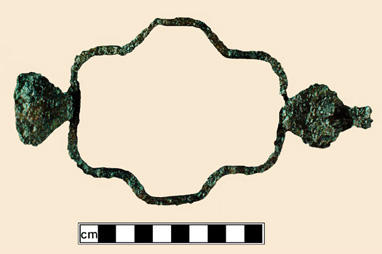 Figure 1: Iron patten components from Avery’s Rest Site. (Photo courtesy of the Maryland
Archaeological Conservation Laboratory).
Figure 1: Iron patten components from Avery’s Rest Site. (Photo courtesy of the Maryland
Archaeological Conservation Laboratory).
While early pattens were wooden with leather straps to hold them to the feet, metal rings also began
to be used as components of pattens. The Avery's Rest patten was crafted of iron and was probably
very similar in construction to the 19th-century example shown here. Pattens were not always easy
to walk in; Samuel Pepys noted in his diary entry of January 24, 1660 that his wife was "exceedingly
troubled with a pair of new pattens, and I vexed her to go slow." (Pepys 1660).
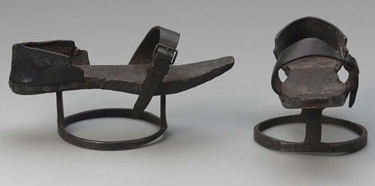 Figure 2: Metal and wooden pattens dating from the early 19th century.
(Photo from http://echostains.wordpress.com/2009/05/16/the-patter-of-tiny-feet-in-pattens-take-a-walk-on-the-wild-side/).
Figure 2: Metal and wooden pattens dating from the early 19th century.
(Photo from http://echostains.wordpress.com/2009/05/16/the-patter-of-tiny-feet-in-pattens-take-a-walk-on-the-wild-side/).
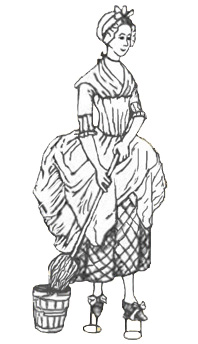 This 18th-century English woodcut, entitled Piety in Pattens or Timbertoe on Tiptoe shows
a maid wearing pattens, elevating her from the wet floor she is mopping.
(http://www.ashfield-mdclub.co.ok/summer2006.htm)
This 18th-century English woodcut, entitled Piety in Pattens or Timbertoe on Tiptoe shows
a maid wearing pattens, elevating her from the wet floor she is mopping.
(http://www.ashfield-mdclub.co.ok/summer2006.htm)
The increased occurrence of paved roads and sidewalks, along with the nineteenth-century invention
of rubber galoshes signaled the death knell for this curious form of footwear.
Acknowledgements:
The author would like to thank Dan Griffith and the Archaeological Society of Delaware for graciously
allowing me to make the patten from Avery's Rest the subject of a Curator's Choice essay.
References
Belluck, Pam
2010 This Shoe Had Prada Beat by 5,500 Years. New
York Times. June 9, 2010.
Grew, Francis, and Margrethe de Neergaard
1988 Shoes and Pattens; Medieveal Finds from Excavations
in London. London: Her Majesty's Stationery Office.
Pepys, Samuel
n.d. The Diary of Samuel Pepys Complete 1660 N.S.
Hardpress.net.