Effigies cover a large category of objects created by Native Americans to represent human or animal
forms. These unusual figures have been formed from multiple material types including stone, clay,
shell, wood and bone. These figures have been discovered in the shapes of human faces or full
figures and various types of animals, including birds, turtles, canines and bears (Kent 1984:162).
Effigy objects were used as pendants, tobacco pipes, ceramic vessels, and other utilitarian or
ceremonial objects. As seen with other sacred objects, archaeologists have discovered effigies
purposefully buried separately or with human or animal remains. This was possibly done after the
object was broken or no longer needed by the owner as a way to prevent illness and misfortune
from affecting the living (Kraft 1996:81, 87).
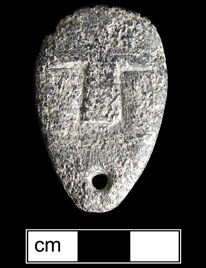 Figure 1. Steatite Pendant from the Holland Point site, Dorchester County.
Only a small number of effigies have been uncovered in Maryland. The few that have been discovered
are typically from Late Woodland period sites dating from approximately 900 to 1600 A.D. Three of
the effigies in the Maryland Archaeological Conservation Lab’s collections are made from shaped
steatite, a smooth grayish stone, and the other two were formed out of clay. All three of the
steatite faces were most likely meant to be worn as pendants; however, the one from the Rosenstock
site appears unfinished and may have been carried instead (Figure 2).
The steatite pendent from Holland Point was created in an unusual inverted style with the hanging
hole at the base of the face (Figure 1). Although the face may appear upside down to others, the
wearer could look down and see the face looking up at him. Some archaeologists believe these human
face effigies represent masks with a connection to other ritual mask practices such as the Iroquois
False Face tradition (Kraft 1996:89, Wonderley 2005:214).
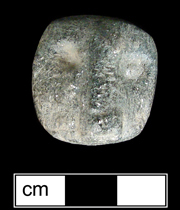 Figure 2: Steatite effigy face from the Rosenstock site, Frederick County.
The last steatite effigy, discovered at the Biggs Ford site in Frederick County, is in a more unusual
shield-like shape (Figure 3). The pendant has a notched area around the top where a cord would have
been tied, instead of a drilled hole. The small raised section in the center appears to be a human
face or mask.The clay owl effigy found at the Nutter’s Neck site in Wicomico County, Maryland, is
broken below the neck and is believed to be part of a clay tobacco pipe (Figure 4). Other similar
bird effigy pipes have been found at archaeological sites in Pennsylvania and New Jersey (Kent
1984:145-146). Effigy pipes were created with the sculpted figure facing towards the individual
using the pipe. Archaeologists speculate this was used as a way to communicate with the represented
guardian spirit (Kraft 1996:81, Wonderley 2005:215).
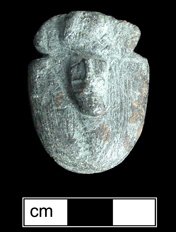 Figure 3: Steatite effigy pendant from the Biggs Ford site, Frederick County.
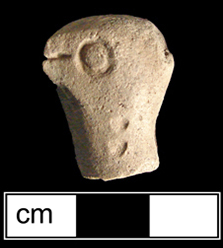 Figure 4: Broken clay owl effigy from the Nutter's Neck site, Wicomico County.
The last of these objects is an interesting piece of modified clay from the Reeves site in Wicomico
County (Figure 5). It does not appear to be part of a larger object and instead seems intentionally
shaped. This piece may be an incomplete or broken effigy face.
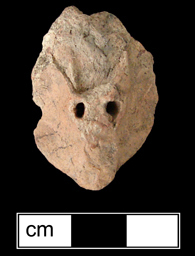 Figure 5: Possible clay effigy from the Reeves site, Wicomico County.
With no historical records regarding effigies, archaeologists are still unclear on the actual purpose
of these figures. In general, it is believed these objects had an important spiritual or religious
significance for their owners. However, effigies may have had specific meanings based on the type
of object and who used them. Many of these objects were created to be worn or carried by an
individual and may represent guardian spirits or protectors. Effigies may also be totemic symbols
that identify the individual as part of a specific clan or group (Kent 1984:164, Wonderley 2005:215).
Whatever their original purpose may have been, it is obvious these handmade objects held important
personal significance to those that owned them.
References
Kent, Barry C.
1984 Susquehanna's Indians. Commonwealth
of Pennsylvania, Harrisburg.
Kraft, Herbert
1996 "Effigy Faces in Lenape Archaeology."
Journal of Middle Atlantic Archaeology vol. 12.
Wonderley, Anthony
2005 "Effigy Pipes, Diplomacy, and Myth: Exploring
Interaction Between St. Lawrence Iroquoians and Eastern Iroquois in New York State."
American Antiquity 70:2.