Alex Glass, MAC Lab Public Archaeology Asst.
During the 2011 excavations at the Smith's St. Leonard site, located at Jefferson
Patterson Park and Museum, archaeologists worked to excavate a kitchen cellar that
had been filled with trash and then covered with a brick surface. The cellar artifacts
appear to date from the middle of the 18th-century. Because of this, it is possible
the cellar could have been filled in around 1748, when the property changed hands
several times due to deaths in the Smith family (Fig.1). Among the rubble and shell
that filled a stratum layer roughly halfway down through the feature were the remains of
an ivory hand fan.
.png) Figure 1: Smith's St. Leonard fan after conservation treatment. Many of the sticks
are broken, and the top portion of the fan is gone.
Figure 1: Smith's St. Leonard fan after conservation treatment. Many of the sticks
are broken, and the top portion of the fan is gone.
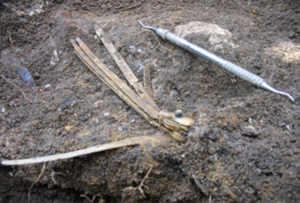 Figure 1a. Smith’s St. Leonard fan uncovered at site.
The Smith's St. Leonard fan is missing the paper section at its end that made the
fan able to move air. This section is called the "leaf" (Webber 1984). It can be assumed
that the paper or fabric decomposed over time, but because it seems likely the fan was
broken when discarded, it is also possible that the leaf was removed. Some of the
sticks (the thin pieces of ivory attached by a rivet at the lower end of the fan) are
broken, and the ribs which attached the leaf to the sticks have either broken off or
decomposed. A complete copper alloy rivet holds the sticks together so they can be
spread apart or closed. While the ends of these rivets are sometimes decorated with a
gem or paste stone, the Smith one is plain (Bradfield 1997). The sticks are mostly
undecorated, and do not have any gilding, paint or inlays on them as some 18th century
fans had. The bases of the sticks are carved with an "S"-like pattern. This pattern
creates areas between the sticks when open, adding to the overall decoration of
the fan (Fig. 2).
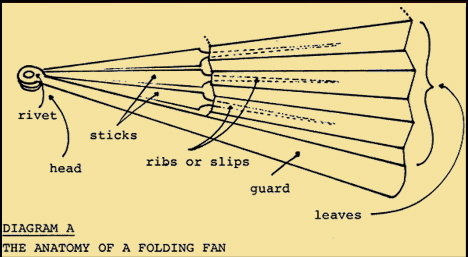 Figure 2: The different parts of a folding fan (Maxson 1986).
Hand fans have been in use for hundreds of years, but were introduced to Europe later
in the 13th and 14th centuries from Asian countries through trade (Steele 2002). Fans
gained widespread popularity in Europe during the next several centuries and, by the
18th century, fan-makers were producing highly elaborate and detailed fans. These
could be commissioned by wealthy ladies of the period and often were made of precious
materials such as ivory, mother of pearl, exotic woods and fine fabrics or animal
skins (Mayor 1980). Many fans featured hand painted paper or silk leaves with scenes
that depicted military accomplishments, maps, dance steps, biblical scenes,
and landscapes (Fig. 3).
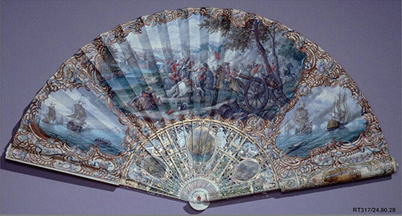 Figure 3: Very elaborate fan with gilding and painted skin. The Metropolitan Museum
of Art, European Sculpture and Decorative Arts. Accession Number: 24.80.28
Figure 3: Very elaborate fan with gilding and painted skin. The Metropolitan Museum
of Art, European Sculpture and Decorative Arts. Accession Number: 24.80.28
In comparison to some of these fancier fan types, the Smith's St. Leonard fan seems
plain. Possibly, most of the decoration had been on the leaf, which is now gone. The
sticks also could have been painted at one point, but there is no longer any residue
from paint or gilding. It is hard to get an impression of what the fan may have
looked like while it was in use, but its presence, along with the other artifacts in
the cellar, provides for a deeper understanding of the Smith Family (Fig 4 and 5).
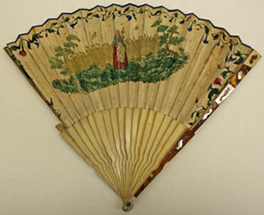 Figure 4: This fan could be similar to the Smith's fan. The sticks are plain, but
the paper section is hand painted. Notice the side where the stick ends, and
the paper has detached from it. The ivory section is only about half the total
length of the fan. Metropolitan Museum of Art Collection, accession
number C.I.44.8.82.
Figure 4: This fan could be similar to the Smith's fan. The sticks are plain, but
the paper section is hand painted. Notice the side where the stick ends, and
the paper has detached from it. The ivory section is only about half the total
length of the fan. Metropolitan Museum of Art Collection, accession
number C.I.44.8.82.
 Figure 5: Woman holding a fan Painting by Joseph Blackburn, active 1752-1778.
Abigail Chesebrough (Mrs. Alexander Grant), 1754. American, English born. The
Art Institute of Chicago.
Figure 5: Woman holding a fan Painting by Joseph Blackburn, active 1752-1778.
Abigail Chesebrough (Mrs. Alexander Grant), 1754. American, English born. The
Art Institute of Chicago.
References
Bradfield, Nancy
1997 Costume in Detail: 1730-1930.
New York. Costume and Fashion Press.
Maxson, Holly
1986 "Design and Construction of a Support for
a Folding Fan" Book and Paper Group Annual. Vol. 5. http://cool.conservation-us.org/coolaic/sg/bpg/annual/v05/bp05-04.html, Page accessed 29
February 2012.
Mayor, Susan
1980 Collecting Fans. New York. Mayflower
Publishing.
Metropolitan Museum of Art
Fan, 18th century. European. http://www.metmuseum.org/Collections/search-the-collections/80053870?rpp=20&pg=14&ft=fan&when=A.D.+1600-1800&what=Fans&pos=276,
Page accessed 28 February 2012.
Metropolitan Museum of Art
Fan, 1760-1750. Dutch (?). http://www.metmuseum.org/Collections/search-the-collections/120026309?rpp=20&pg=1&ft=24.80.28&pos=1,
Page accessed 28 February 2012.
Steele, Valerie
2002 The Fan: Fashion and Femininity Unfolded.
New York. Rizzoli International Publishing.
The Art Institute of Chicago
Abigail Chesebrough (Mrs. Alexander Grant), 1754, Joseph Blackburn American
Art Gallery 166.