Regular pest management is an important part of collections care. Pests, such as rodents
and insects, can damage collections and their associated records leading to the loss of
vital information. To mitigate this, most collections storage facilities and museums have a
pest monitoring plan implemented by museum staff or a contract pest management company. This
involves the use of sticky traps to capture pests, as well as regular monitoring for pest
entry points, infestations, and damage.
Due to the current harsh economic climate, the Maryland Archaeological Conservation
Laboratory (MAC Lab) has been looking for effective methods to reduce costs, while still
providing the same level of care. There are also concerns about the use of harsh chemicals
and pesticides. A more natural method is preferred. One new method currently being tested is
the use of natural predators, such as snakes or cats, to control rodent populations.
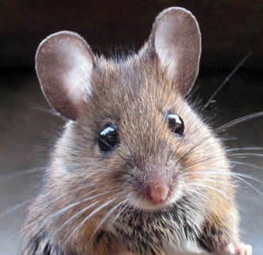
Rodents are a nemesis of every collections manager (Figure 1). They devour and destroy organic
materials, including paper, making their nests out of important records and labels. Rodents
also have a habit of leaving behind mouse pellets and urine, which are not just disgusting,
but are also a health hazard.
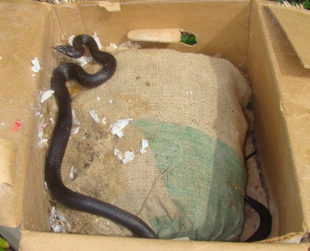
Even though many humans have a fear of snakes, most snakes are not outwardly aggressive and
can actually be considered beneficial (Figure 2). Most local snakes, such as this black
rat snake, prefer to eat rodents and can be collections superheroes in the war against mice.
Snakes do not require regular maintenance or extra feeding and can typically take care of
themselves. Many snakes are strong climbers and can get into small, hard to reach places that
a curator could never reach. For optimal use, these creatures are more suitable to outdoor
barns and more open or exposed types of storage area. However, they will also happily take
up residence in climate controlled storage facilities, if given the opportunity.
There are some potential downsides to using snakes for rodent control, such as the occasional
shed skin or an overly aggressive snake biting a staff member. However, snake bites can be
kept to a minimum if only local, non-poisonous snakes are chosen. This strategy can also
lead to the next inevitable pest problem, what to do with the snakes after the rodent
problem is under control.
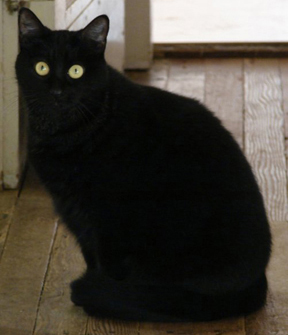
Other facilities have chosen to go with an alternative pest management solution — the
cat (Figure 3). Cats require regular feeding and basic care but are relatively low
maintenance. Cats have a well established relationship with humans, and many are just as
effective at catching and deterring rodents as snakes. However, they may also choose
to display their hunting skills by leaving dead rodents as gifts, which can be upsetting
to some individuals and could potentially impact museum visitation.
The MAC Laboratory will continue to examine these and other possible pest management
alternatives for the best methods of preserving our collections.
...... Happy April Fools!