This white porcelain figurine head depicting a toddler sporting a top hat was found
in an excavation in Baltimore City. Today the site of Camden Yards Oriole Park, this part
of Baltimore contained an African American neighborhood filled with row houses in the
early twentieth century. Before indoor plumbing became common, small outdoor structures
set over brick-lined pits served as toilet facilities for many urban households. This
figurine head was discovered in 1989 during the archaeological exploration of one of
these privy pits at a row house site (18BC80). Such pits became convenient dumping
places for household garbage in the days before city-wide trash pick-up.
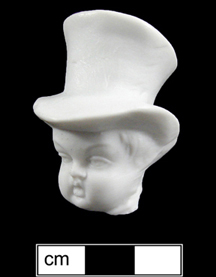 White porcelain figurine head depicting a toddler sporting a top hat was found
in an excavation in Baltimore City.
White porcelain figurine head depicting a toddler sporting a top hat was found
in an excavation in Baltimore City.
Discarded because it was broken, the figurine was most likely what is known by collectors
as a "piano baby." These figurines, generally ranging in size from 6 to 18 inches, were
placed atop the shawls used to decorate pianos in Victorian and early 20th-century homes.
While the figurine head showed no manufacturer's marks that would provide clues to its
age, many piano baby figurines were made in Germany in the late 19th and early 20th
centuries. Other artifacts found in the privy at this site—broken dishes and
bottles—all dated to the first several decades of the twentieth century and fit
nicely with the date range that piano dolls were popular. The head is realistically
molded and although it contained no traces of paint or colorful glazing, many piano
babies were painted, suggesting that this figurine’s paint may have flaked away in
the soil of the privy fill.
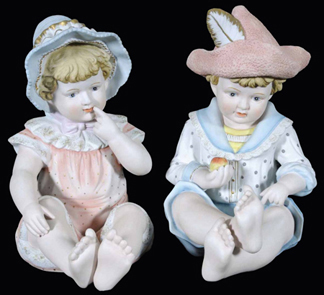 These painted bisque porcelain piano babies are 11" tall.
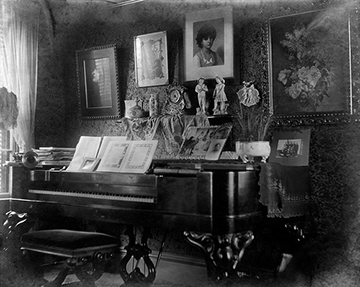 Several piano babies, as well as
a clock and other knickknacks, are displayed on the piano in this late Victorian parlor.
Several piano babies, as well as
a clock and other knickknacks, are displayed on the piano in this late Victorian parlor.
It is tempting to speculate that this toddler represented the New Year's baby, but
it is impossible, in the absence of the remainder of the figurine, to know for certain.