Annette Cook, MAC Lab Public Archaeology Asst.
Archaeologists study past humans by investigating the "stuff" they left behind. These
remains are used to figure out how groups of people lived their lives and interacted with
one another. Sometimes, however, we are lucky enough to find an object that connects
us with an individual from the past in a very personal way.
In 2011, while excavating a mid-18th century cellar in the kitchen of the Smith's St.
Leonard site on Jefferson Patterson Park and Museum in Calvert County, MD a small,
clay pinch pot was found (Figure 1). The pot was mostly intact, about the size of a
small plum, with clear finger impressions and pinch marks. A host of other ceramic
sherds were found in the cellar, mostly European-made imports, but also including
fragments of other pinch pots, covered with the ridges and whorls of the fingerprints
of their makers. These vessels were roughly made and low fired, if they were fired
at all.
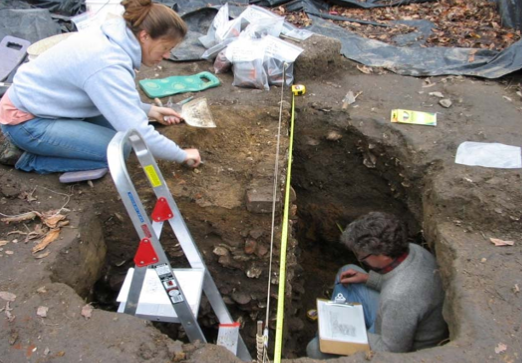 Archaeologists mapping the mid-18th century cellar in the kitchen of the
Smith's St. Leonard.
Archaeologists mapping the mid-18th century cellar in the kitchen of the
Smith's St. Leonard.
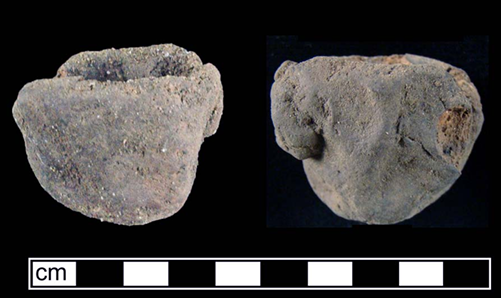 Figure 1: Pinch pot found at the Smith's St. Leonard site.
In the same cellar, a brick fragment was discovered with the clear impression of four
fingers of a human's right hand (Figure 2). While the brick-making process certainly gave
ample opportunity for such prints to be left behind, it is the only such handprint-marked
fragment found at Smith's St. Leonard thus far.
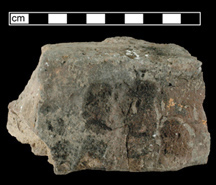 Figure 2: Brick fragment with partial human hand print from Smith's St.
Leonard.
Figure 2: Brick fragment with partial human hand print from Smith's St.
Leonard.
So what is it about finger/hand prints that peaks interest? For me, it is the human
connection — the awe-inspiring moment when you realize you are seeing actual
physical evidence of a specific person performing a specific activity. In my imagination
I see a child making pinch pots while her mother works in the kitchen. Perhaps she
offers them to her mother in the universal and timeless "look what I made" manner of
children happy with their creations. Possibly a brick maker, tired at the end of a
long day's labor, was not as careful as he usually would be. Or maybe the wet
bricks just proved too great a temptation for someone to pass up.
Other marked artifacts inspire a different type of "awww." Another brick found at
Smith's St. Leonard bears clear paw prints, possibly those of a cat. The Maryland
Archaeological Conservation Laboratory houses similar artifacts from other sites, including
a complete brick with several probable cat paw prints from Bennett's Point in Queen
Anne's County (Figure 3) and a brick fragment with a large canine footprint from Oxon
Hill Manor in Prince George's County (Figure 4). Who doesn’t love puppies and
kitties?
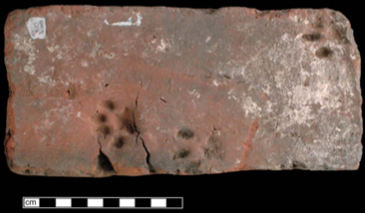 Figure 3: Brick with cat paw prints from Bennett's Point site.
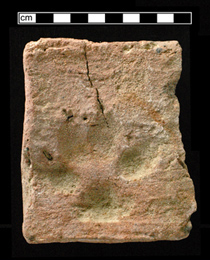 Brick fragment with dog paw print from Oxon Hill Manor.
These artifacts serve to remind us that the objects we study are linked to people, who,
for all their dissimilar times and circumstances, were probably not all that different
from us.
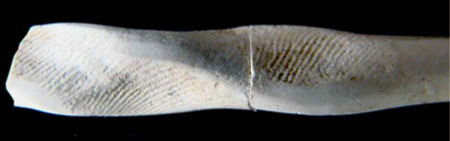 This tobacco pipe stem, from the King's Reach site at Jefferson Patterson Park
and Museum, is another example of an artifact with human fingerprints..
This tobacco pipe stem, from the King's Reach site at Jefferson Patterson Park
and Museum, is another example of an artifact with human fingerprints..
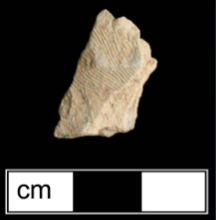 Example of another pottery sherd with fingerprints from Smith's St. Leonard.