Behold the wonder that is the bulbous black glass Bavarian button! These buttons first came
to my attention when the grant-funded website titled A Comparative Archaeological Study
of Colonial Chesapeake Culture launched in 2009 and multiple sites had one or more of
these distinctive nearly spherical glass buttons. Some of the buttons are painted with a
yellow and white starburst-like design while others are plain (Figure 1). For the most
part, the buttons recovered in the Chesapeake date to the 17th century.
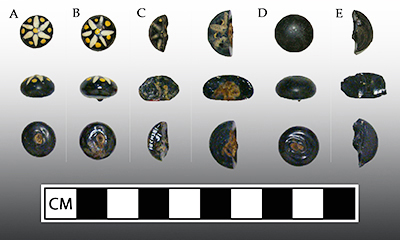 Image of Bavarian buttons from the MAC Lab.
The earliest examples were found at Jamestown, and in one case eight black glass buttons
were recovered along the breastbone of a burial, indicating their use on a doublet or
jerkin that a man wore to his grave (Bly Straube, personal communication 2013). That was
a rare and fortunate clue as to how the buttons were used, because 17th-century clothes
were usually too valuable to bury with the dead.
Although these buttons are thread-covered instead of glass, they have a similar bulbous
shape and the design features a central dot surrounded by petal-like dots on a contrasting
background. Metropolitan Museum of Art Accession 1982.183.2a–c. Small bulbous buttons made of
metal, glass, or thread over a wooden mold were very popular in the 17th century, and those who
could afford fine clothing often had dozens of tightly-spaced buttons along the chest or sleeve
of a single doublet, jerkin, coat, bodice, or waistcoat (Figure 2). The buttons served both
as fasteners and as showy fashion accessories. The black glass buttons that have been found
in Maryland all seem to date to the second half of the 17th-century. In the 18th century,
buttons tended to flatten out and increase in size, so little spherical buttons fell
out of style.
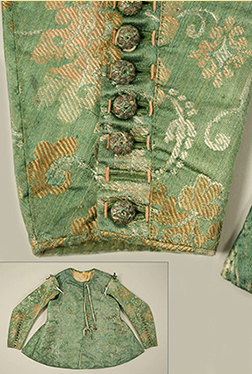 Figure 2: Detail of a ca. 1645 doublet sleeve with the whole doublet shown
in the inset.
Figure 2: Detail of a ca. 1645 doublet sleeve with the whole doublet shown
in the inset.
What makes these buttons extra special to archaeology is that once they were posted online,
we started to hear from other people who found them (Figure 3). First, we were contacted by
an archaeologist excavating a 17th-century glassworks in Bavaria where 80% of the artifacts
recovered in a glass hut excavated in 2004 were black glass buttons.
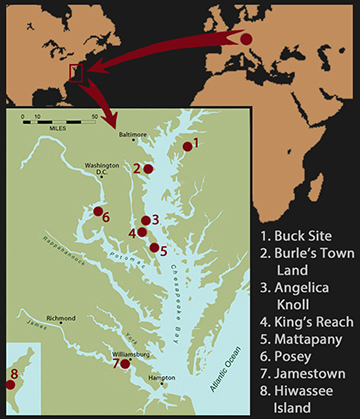 Figure 3: Map showing the source of the black buttons in Bavaria, Germany (top) and
eight known sites in North America where this button type has been recovered by
archaeologists (Bly Straube, personal communication, Lewis and Kneberg 1984;
Luckenbach 1995; MAC Lab 2009).
Figure 3: Map showing the source of the black buttons in Bavaria, Germany (top) and
eight known sites in North America where this button type has been recovered by
archaeologists (Bly Straube, personal communication, Lewis and Kneberg 1984;
Luckenbach 1995; MAC Lab 2009).
Bavaria was a center of glass button and bead production because of its proximity to the
necessary natural resources needed to make glass, and a lot of the goods were produced
specifically for export (Florian Preiss, personal communication 2009; Dubin 1987:113).
Elemental analysis of buttons from Jamestown matched the composition of the buttons recovered
in Bavaria (Bly Straube, personal communication 2013), and it is likely that the Maryland
black buttons came through the same trade networks.
But the life of the buttons did not always stop with export to European settlers. Painted
black glass buttons have also been recovered on sites occupied by American Indians in the
17th century. The Posey site in Charles County, Maryland was occupied by a few American
Indian families from ca. 1650-1680, and its artifacts include one painted button and three
plain black buttons. That is not surprising since English settlers lived nearby, but it
was unexpected to hear from an archaeologist in Tennessee about the exact same painted
button being recovered at a 17th-century American Indian site on the Tennessee River
called Hiwassee Island (Jon Marcoux, personal communication 2013; Lewis and Kneberg
1984: Plate 85). Since Europeans had not yet settled that far west, the Hiwassee
Island button must have traveled through trade networks. So far, we don't know if
the buttons were imported for the Indian trade along with common glass trade beads,
or Indians traded for the original clothing that fastened with these buttons. Either
is plausible since beads and buttons were made at the same glass production sites,
and European clothing was among the trade goods desired by American Indians.
The best thing about bulbous Bavarian black buttons though (other than the tongue
twister opportunities), is that the more people look through their old collections and
put photos and site information online, the more all archaeologists are able to turn
the occasional lost button into an opportunity to explore how interconnected the
Atlantic World was in the 17th century. By tracing a black button from its birth
in Bavaria to its loss in the colonies or reuse for trade on American Indian sites,
archaeology transforms these buttons from fashionable fasteners to direct evidence of
important trade connections that developed between Europe and North America 400
years ago.
References
Dubin, Lois Sherr
1987 The History of Beads, from 30,000
B.C. to the Present. Harry N. Abrams, Inc. Publishers, New York.
Lewis, Thomas M. and Madeline Kneberg
1984 Hiwassee Island: An Archaeological
Account of Four Tennessee Indian Peoples. The University of Tennessee Press,
Knoxville, TN.
Luckenbach, Al
1995 Providence 1649: The History and
Archaeology of Anne Arundel County Maryland's First European Settlement.
The Maryland State Archives, Studies in Local History.
Maryland Archaeological Conservation Lab (MAC Lab)
2009 A Comparative Archaeological Study of
Colonial Chesapeake Culture. Web resource:
http://www.chesapeakearchaeology.org/Index.aspx, accessed April 30, 2014.