During the 2002 excavation of the Chinatown area in Historic Deadwood, South Dakota, a small copper
alloy button was recovered. This button, only 2.3 cm in diameter and weighing 3.3g, is the badge of
a US Cavalry officer (Figure 1). The button features the Great Seal device of the United States, an
eagle grasping an olive branch in one talon and arrows in the other. This cavalry button is
distinctive in that a shield is displayed on the bird's chest, bearing the letter "C." Shortly
after the US Congress created the Cavalry in 1855, the use of letters to denote military branch
on enlisted men's buttons was stopped. Officers, however, continued to use this style of button
until the standardization of all uniform buttons in 1902 (Tice 1997: 133).
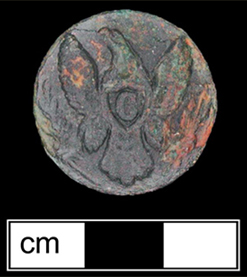 Figure 1 – US Cavalry Officer’s Button "•EXTRA•/QUALITY" CV215A54.
During the 1860s and 1870s, the American drive for expansion into the western frontier was met with
violence as settlers struggled with Native Americans over land and opposing ways of life. In an
effort to put an end to these conflicts, Congress created the Indian Peace Committee charged with
preventing future Indian uprisings and wars. (Oman 2002: 35) The primary method employed by this
committee was to establish treaties that would force tribes to give up existing lands and move
further west into reservations. The 1868 Treaty of Laramie (Figure 2) was one such effort between
the US Government and the Sioux, which established the Black Hills as part of the Great Sioux
Reservation and for exclusive use by the Sioux people.
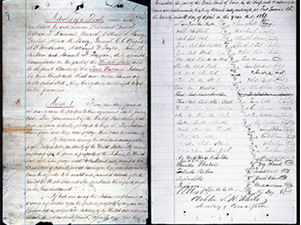 Figure 2. Select pages of the 1864 Treaty of Laramie. National Archives.
Only six years later, the US Government sent a military expedition into the Black Hills region to
establish the location of a new Army fort and to survey the area's natural resources. The two
month expedition was led by Lieutenant Colonel George Armstrong Custer with the accompaniment of
the 7th Cavalry, over 1000 men and more than 100 wagons, together with horse and cattle (Cozzens
2004: 176) (Figure 3). On August 15, 1874, Custer wrote to Assistant Adjutant General of the
Department of Dakota describing the presence of gold in the Black Hills, "the miners report
that they found gold among the roots of the grass… gold was found in paying quantities… men
without former experience in mining have discovered it at an expense of but little time or
labor" (Cozzens 2004:166). Custer’s reports were conveyed by the New York Times
(Figure 4) and other reporters with the expedition soon had reports of gold covering the
headlines of newspapers across the nation.
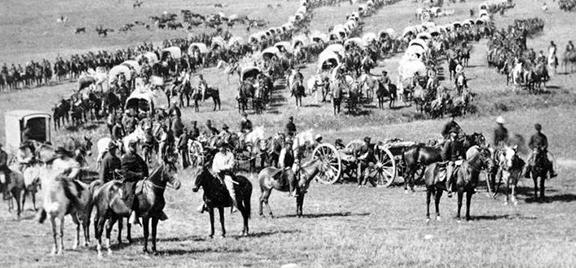 Figure 3. Custer Expedition into Black Hills, 1874, photo by William H. Illingworth.
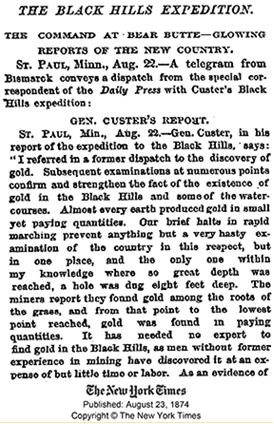 Figure 4. New York Times article, published Aug 23, 1874.
By the fall of 1874, white and Chinese prospectors flocked to the Black Hills without regard to
the Treaty of Laramie. The new town of Deadwood, South Dakota would become the most
prominent settlement and later an icon of the American Wild West (Figure 5). With this invasion
into Sioux territory, violent encounters between whites and Native Americans increased and the
settlers demanded protection from the US Army. This led to the Great Sioux War of 1876-1877,
and the famous Battle of Little Bighorn and the defeat of Custer and the 7th Cavalry.
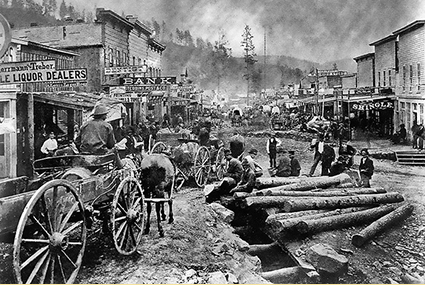 Figure 5. Deadwood City, Dakota Territory, 1876.
One year following Little Bighorn, Fort Meade was established to provide protection to the
gold mining area around Deadwood and the associated transportation routes. The 7th Cavalry
was stationed at Fort Meade during the height of hostilities. Years later, on December 29,
1890, the 7th Cavalry was responsible for the infamous Massacre at Wounded Knee, which would
herald the end of the American Indian Wars.
In some ways, this button can be said to represent both the beginning and end of the American West.
References
Cozzens, P.
2004 Eyewitnesses to the Indian Wars, 1865-1890.
Mechanicsburg: Stackpole Books.
National Archives
n.d. Web resource:
http://www.archives.gov/exhibits/american_originals/sioux.html, accessed March 18, 2015.
New York Times
1874 "The Black Hills expedition." Web resource:
http://query.nytimes.com/mem/archive-free/pdf?res=9800E2D7143BEF34BC4B51DFBE66838F669FDE,
accessed March 24, 2015.
Oman, Kerry R.
2002 "The Beginning Of The End The Indian Peace
Commission Of 1867~1868." Great Plains Quarterly. Paper 2353.
South Dakota State Historical Society
2008 Deadwood Chinatown Excavation Site Report.
South Dakota State Historical Society Archaeological Research Center.
Tice, Warren K.
1997 Uniform Buttons of the United States,
1776-1865. Gettysburg: Thomas Publications.