With Memorial Day recently passed and Independence Day just ahead of us, a patriotically-themed
Curator's Choice somehow seemed appropriate for the month of July. This red, white and blue rimmed
plate commemorates the sinking of the battleship USS Maine (Figure 1).
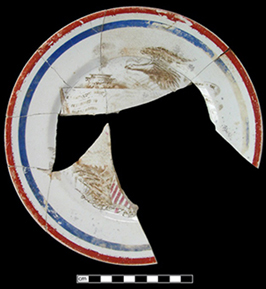 Figure 1. Remember the Maine plate from the Queenstown Courthouse Site
(18QU124).
Figure 1. Remember the Maine plate from the Queenstown Courthouse Site
(18QU124).
Docked in the Havana harbor on what was billed as a friendly reconnaissance mission, the USS Maine was
rocked by a massive explosion at 9:40 pm on February 15, 1898 (Figure 2). A U.S. Naval Court of
Inquiry concluded that the ship had been destroyed by a Spanish mine and called for a declaration of
war in April of that same year. A popular rallying cry became "Remember the Maine, to Hell with Spain!"
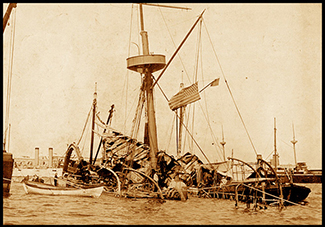 Figure 2. The USS Maine after the February 15, 1898 explosion in the Havana harbor.
http://www.spanamwar.com/mainewrk.jpg
Figure 2. The USS Maine after the February 15, 1898 explosion in the Havana harbor.
http://www.spanamwar.com/mainewrk.jpg
The iconography on the plate, which was produced by the Edwin Bennett Pottery of Baltimore, is both
commemorative and patriotic (Figure 3). The center of the plate contains a postcard style depiction
of the ship with wording about its destruction in Cuba. An eagle clutches a banner proclaiming
"Remember the Maine," and a stars and bars shield rests in an "amber field of grain" that masks a
sword, anchor and ship spyglasses. Rising smoke from the funerary urn contains the number "260,"
a reference to how many men were killed in the explosion (Figure 4). There is disagreement on the
number of casualties, ranging from 260 to 268, almost two-thirds of the ship's crew. At least one
Maryland resident, ship machinist John A. Kay from Cecil County, was killed in the explosion
(Cecil Daily.com).
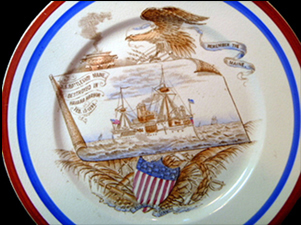 Figure 3. A complete plate showing the central design.
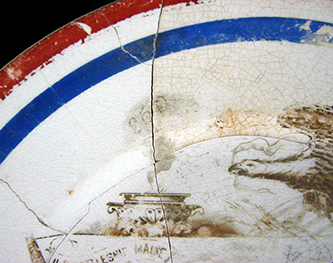 Figure 4. Detail of the urn, showing the number "260" in the smoke, signifying the
number of casualties.
Figure 4. Detail of the urn, showing the number "260" in the smoke, signifying the
number of casualties.
This plate was recovered from the Queenstown Courthouse Site (18QU124), former location of Queen Anne
County's eighteenth-century courthouse. At the time of the USS Maine explosion, the property served as
private residence for the Harriett Embert family (Cheek et al 2011).
An armistice halted fighting in the Spanish American War in August of 1898 and a treaty was signed in
December (History.com). While the explosion on the USS Maine catapulted the United States into war
with Spain, there is strong evidence that the explosion was caused by an internal coal fire which
ignited the ship's magazines.
References
Cecil Daily.com
2015 Remembering the Maine and John A. Kay.
Website http://www.cecildaily.com/our_cecil/article_843b4af2-741a-5f4d-9cc3-bcc1c53ba5c6.html,
accessed June 19, 2015.
Cheek, Charles, Robert Hoffman, Lynn D. Jones, and Cynthia Vollbrecht Goode
2011 Queenstown Courthouse (18QU124) Artifact Collection MD456A
from US 301 to MD18C. Queenstown, Queen Anne’s County, Maryland. Archeological Report No. 405.
Maryland Department of Transportation. On file at the Maryland Archaeological Conservation Laboratory.
History.com
2015 February 15, 1898: The Maine Explodes. This Day in History.
History.com website http://www.history.com/this-day-in-history/the-maine-explodes, accessed June 19, 2015.
PBS.org
2015 February 16, 1898: Battleship U.S.S. Maine Explodes.
Timeline on website http://www.pbs.org/crucible/tl10.html, accessed June 19, 2015.