With Thanksgiving and Christmas just behind us and the long winter ahead, 'tis the time of year for roast turkey
and other savory joints of meat. This month's artifact would have come in very handy for the seventeenth-century
cook seeking to prepare a succulent wild turkey, a species common in colonial Maryland's forests.
The mended coarse earthenware fragments are part of the rim and base of a North Devon gravel tempered basting
pan. This vessel form is not one typically found in colonial archaeological assemblages, and in fact, it
took staff here at the lab awhile to figure out what it was. A complete example was discovered during early
excavations at Jamestown Island (Watkins 1960) and more recent work in Bristol, England revealed the example
shown in Figure 2. The flat, shallow pan, placed under a bird or joint of meat being spit roasted during
open hearth cooking, caught the juices that dripped from the cooking meat. These juices were used to baste
the meat and to later prepare gravies.
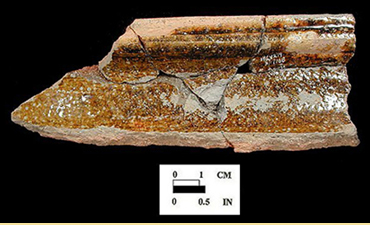 Figure 1. Mended fragments of the North Devon gravel tempered earthenware basting pan from the
Compton Site. Photo: JPPM.
Figure 1. Mended fragments of the North Devon gravel tempered earthenware basting pan from the
Compton Site. Photo: JPPM.
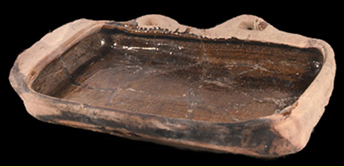 Figure 2. This complete example of a North Devon gravel tempered basting pan was excavated in
Bristol, England. Photo from https://drojkent.wordpress.com/2014/05/20/english-country-potterydripping-pans-bacon-and-apple-roasters/.
Figure 2. This complete example of a North Devon gravel tempered basting pan was excavated in
Bristol, England. Photo from https://drojkent.wordpress.com/2014/05/20/english-country-potterydripping-pans-bacon-and-apple-roasters/.
This vessel is from the Compton Site (18CV279), a mid-17th-century tobacco plantation located along the
Patuxent River in Calvert County, Maryland. William and Magdalen Stevens lived and worked at this plantation
from 1651 until the mid-1660s. Archaeological excavations at the Compton Site showed that the Stevens family
relied on a number of wild and domestic meats, including chicken, goat, pig, cow, horse, deer, raccoon,
opossum and turtle (Louis Berger 1989). In preparing roasted turkey, perhaps Magdalen Stevens followed the
wisdom of Gervase Markham in The English Housewife, a popular household guide published in 1615:
"Sauce for a Turkey Take fair water, and set it over the fire, then slice good store of Onions, and put into
it, and also Pepper and Salt and good store of Gravy that comes from the Turkey, and boyl them very well
together: then put to it a few fine crums of grated bread to thicken it, a very little Sugar, and some Venegar,
and so serve it up with the Turkey" (Markham 1994: 92).
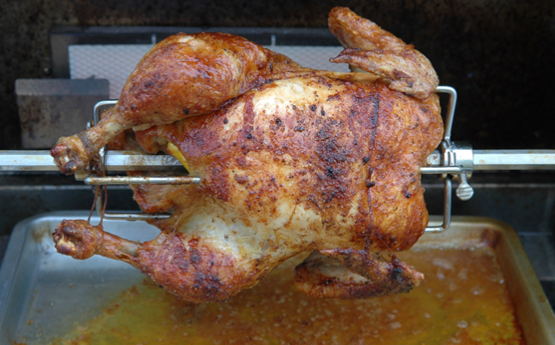 Figure 3. This modern basting pan shares similarities with the colonial example.
https://en.wikipedia.org/wiki/Rotisserie#/media/File:RotisserieChicken.jpg
Figure 3. This modern basting pan shares similarities with the colonial example.
https://en.wikipedia.org/wiki/Rotisserie#/media/File:RotisserieChicken.jpg
Markham discusses roasting a wide variety of meats in great detail in his guide; interestingly, he does not mention
using a basting pan in any of his directions. Although we may not find them often on archaeological sites, it
is likely that every seventeenth-century housewife knew what they were!
References
Louis Berger and Associates, Inc.
1989 The Compton Site, circa 1651-1684, Calvert County, Maryland,
18CV279. Report prepared for CRJ Associates, Inc., Camp Springs, Maryland, 1989.
Kent, Oliver
2014 "English Country Pottery – dripping pans, bacon and apple
roasters." Clay and Fire. May 20, 2014. Website
https://drojkent.wordpress.com/2014/05/20/english-country-pottery-dripping-pans-bacon-and-apple-roasters/,
accessed December 29, 2015.
Markham, Gervase
1994 The English Housewife. Edited by Michael Best.
McGill-Queen's University Press, 1994. Originally published as Countrey Contentments, or, The
English Huswife. Hannah Sawbridge, London, 1615.
Watkins, C. Malcolm
1960 North Devon pottery and its Export to America in
the 17th Century. Bulletin 225, United States National Museum, Washington, D.C. 1960.