This unusual teapot (Figure 1) made a brief visit to the Maryland Archaeological Conservation Lab in May of
2016 as part of a collection of artifacts from the Federal Reserve Site (18BC27) in Baltimore. While the
lab curates most of the site’s artifacts, a number of items from the 1980 excavation in the Old Otterbein
neighborhood are owned by the Federal Reserve Bank of Richmond. The bank's collection visited the lab
for cataloging and photography in 2016 and many interesting pieces were recorded.
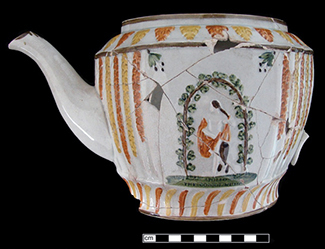 Figure 1. Pearlware Teapot from the Federal Reserve site (18BC27) in Baltimore.
The drinking and serving of tea in colonial America was accompanied by a number of specialized objects and
a set of ritualized behaviors. The ceremony of tea consumption was associated primarily with women at
this time. Teapots are a common find on eighteenth- and nineteenth-century archaeological sites in North
America, but if one considers this particular teapot as part of the feminine sphere, it becomes much more
than just a vessel for holding a hot beverage.
The earthenware teapot is molded with two human figures. One side shows a draped male figure and the impressed
inscription "Apollo the God of Music” shown in Figure 1. Music was considered an appropriate pursuit for ladies,
and being accomplished in music was an important social skill. Girls and women performed by either singing or
playing an instrument in private homes, since public performances were deemed immodest (Oxford 2016).
The other side of the teapot (Figure 2) is fragmented, but comparison with an unbroken teapot and a print from
a late eighteenth-century fashion magazine (Figures 3 and 4) shows that it once displayed a female figure
seated beneath an arbor (Anonymous 1795). Her pursuit of reading shows "Passion subdued by Reason," the
words impressed underneath her. Reading was also an approved activity for females, particularly literature
that was morally uplifting.
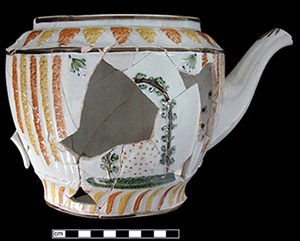 Figure 2. Reverse side of teapot, showing partial figure of a woman reading.
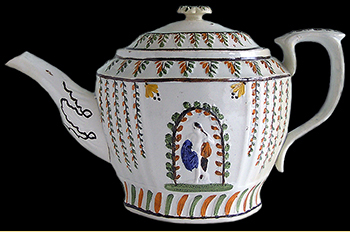 Figure 3. Complete example of a similar teapot showing Apollo (Private collection).
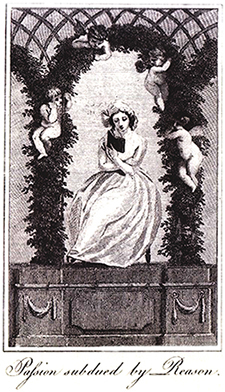 Figure 4. Illustration "Passion Subdued by Reason" from The Ladies Magazine or Entertaining for the Fair Sex.
Volume 26. London, 1795.
Figure 4. Illustration "Passion Subdued by Reason" from The Ladies Magazine or Entertaining for the Fair Sex.
Volume 26. London, 1795.
In the eighteenth century, proper female comportment was narrowly prescribed. Over 100 women's magazines were
published in North America between 1790 and 1830 (Aronson 2014). While these publications were seen primarily
as an outlet for the entertainment and improvement of women, over time they increasingly became a place for women
to speak out about social issues that concerned them. Since the magazines generally accepted submissions from
their readers, women became active producers as well as consumers of the materials presented within them.
The inclusion on the teapot of this female whose "Passion [was] subdued by reason" is more complicated than the
Apollo figure. A short tale of this same title appeared in the 1795 "Ladies Magazine," accompanied by the
illustration shown in Figure 4. In this story, young Matilda, who has been tempted into considering elopement
with Florio, is brought to her senses (and reason) through reading a moral essay (Pearson 1999). So here,
users of the teapot could learn that the appropriate reading material could help cool passions that might lead
a young lady astray.
It is easy to imagine this c. 1800 teapot serving as a lesson in comportment in a fashionable Baltimore home.
It was part of an assemblage of household debris discarded by the family of carpenter Samuel Fry. In 1810,
Fry and his wife had two daughters under the age of 25 living at home. Why was this particular teapot chosen
for purchase? Was it acquired because it was aesthetically pleasing or was it because it would serve as a
daily reminder of appropriate behavior? Did Samuel Fry choose the teapot or was it a purchase made by the Fry
females? Were they familiar with the short moral tale from The Ladies Magazine or did they have just a more
general understanding of what this figure might represent? To this researcher, these really interesting questions
about this artifact will unfortunately forever remain unanswered.
References
Anonymous
1795 Passion Subdued by Reason. The Ladies Magazine or Entertaining
Companion for the Fair Sex. Volume XXVI, 1795.
Aronson, Amy Beth
2014 Women’s Magazines (18th and Early 19th Centuries). In
Women's Rights in the United States: A Comprehensive Encyclopedia of Issues; A Comprehensive Encyclopedia
of Issues, Events, and People. Wayne, Tiffany and Lois Banner, editors. ABC CLIO, 2014.
Oxford Music Online
2016 Women in Music; Colonial Period to 1850. Oxford Music Online.
Website accessed June 23, 2016. http://www.oxfordmusiconline.com/public/page/Women_in_music
Pearson, Jacqueline
1999 Women's Reading in Britain 1750-1835; A Dangerous Recreation.
Cambridge University Press.