Ocean City, Maryland began as an isolated fishing village located on a small barrier island. It only developed into
a popular beach resort after the addition of the railroad and Atlantic Hotel in 1876. With greater accessibility,
the city continued to grow with the iconic boardwalk constructed in 1900 and Trimpers Amusements following soon
after (Ocean City Maryland n.d.). Men and women traveled on the railroad to stroll along the boardwalk in their
suits and dresses (Figure 1). After enjoying the sights, amusements and a good meal, many returned with ruby
stained glassware as inexpensive souvenirs of their trip, either etched with their names or those of their
loved ones (Mann 2016).
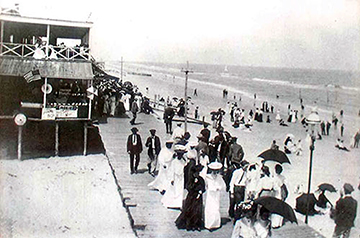 Figure 1: Photograph of Ocean City circa. 1904 showing people wearing their best
outfits on the boardwalk and enjoying the beach
Figure 1: Photograph of Ocean City circa. 1904 showing people wearing their best
outfits on the boardwalk and enjoying the beach
Ruby stained glassware is sometimes mistaken for a similar, earlier glass type, ruby flashed glass. The flashing
process involved taking hot blown glass and dipping it in a layer of colored glass material before shaping. This
produced a thin layer of colored glass on top of the clear glass. Staining became a more economical substitute
for this technique. Instead of using colored glass, staining involved brushing already finished pressed glass
with a chemical solution, typically including copper sulfate for ruby glass. The glassware would then be
reheated in a kiln, adhering the chemicals and changing the color. Other colors besides ruby were produced,
though in much less quantity, by applying different chemicals including amber, green, and a cranberry or
pink variant (McKearin & McKearin 1989:34, Miller 1988:22). This process allowed decorating companies to
purchase premade pressed glass in bulk and then use unskilled labor to apply the color themselves
(Mackinac State Historic Parks 2015). However, even though the resulting color did adhere to the surface
of the glass, the final product was inferior to flashed glass. The colored surface scratched more often
and showed signs of wear extremely easily (Miller 1988:22).
The golden age of ruby stained glassware occurred between 1892-1912, as a result of increased interest from
the Chicago Columbian Exposition (Heacock 1986:4; Miller 1988:22). Ruby stained glassware became a popular
substitute for more expensive bohemian glass (McKearin & McKearin 1989:34). It is estimated there were
over 200-300 different patterns of ruby stained glassware due to the process of decorating already finished
glassware with different colorations (Miller 1988:22). Molds for the original pressed glassware were also retooled
over time due to wear or to reduce the expense of creating new patterns without having to make an entirely new
mold. Toward the later years of this period, interest began to wane and this glassware was sold as cheap
souvenirs at beach towns and fairs. Some researchers believe the ruby stained glass sold as souvenirs may
have been purchased from decorating companies as close-outs or seconds, allowing them to be decorated and resold
even more cheaply (Heacock 1986:5-7). These souvenirs were typically personalized with the location, date
and name of the person purchasing them, or of a loved one (Mackinac State Historic Parks 2015). Fancier,
more expensive pieces may have been engraved with a copper wheel. This was spun by a skilled artisan on
a lathe who used abrasive pastes and different sized wheels to carve away the ruby color in intricate
patterns (McKearin & McKearin 1989:32; Mackinac State Historic Parks 2015; Pattern Glass School n.d.). This
work was more time consuming than the other method of decoration, acid etching. Acid etching did not
require a skilled artisan; instead, anyone could be quickly trained to coat the glass in a resistant
material, such as beeswax or asphaltum, and scratch out a design through the coating. This was done with
either a needle or an already designed steel etching plate. They would then dip the glassware in
hydrofluoric acid which would only bubble the surface of the scratched area, and then peel off the
resistant layer leaving the final design. In contrast to engraved pieces, acid etched decorations would
not leave a concave or deep design in the glass and would instead appear flat and at times blurry
(McKearin & McKearin 1989:33; Pattern Glass School n.d.).
The particular piece of ruby stained glassware shown above was found at the Victualling Warehouse site, 18AP14
in Annapolis, Maryland (Figure 2). This site had been used for various stores and residences since the 1740's
(Pearson 1991:i). The ruby staining on this piece is heavily worn and faded. It is most likely a spooner, a
vessel designed to hold spoons and used with other tea wares such as creamers and sugar bowls. However, most
personalized souvenir glassware was purchased individually as a memento instead of in sets (Tascione 2016).
This particular pattern is recognized as Lace Band (Figure 3), and was produced by the Imperial Glass Co.
of Bellaire, Ohio from 1902 through 1910 (Heacock 1986:138, 149). The blurry acid etched decoration
reads, "1905 Ocean City MD Grace Schumacher." Unfortunately, we were unable to find any information about
Grace and her life in Annapolis. Perhaps she was a resident, or a shop worker, or maybe she had no
connection to Annapolis, and her spooner was discarded or resold by someone else.
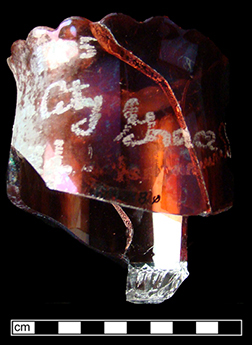 Figure 2: Mended ruby stained spooner from the Victualling Warehouse Site etched with,
"1905 Ocean City MD Grace Schumacher".
Figure 2: Mended ruby stained spooner from the Victualling Warehouse Site etched with,
"1905 Ocean City MD Grace Schumacher".
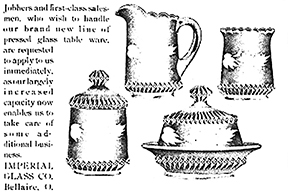 Figure 3: Advertisement for a set of glassware with the same pressed glass pattern,
Lace Band, as the red stained piece from Annapolis. The vessel in the top right corner is an example of
a complete spooner.
Figure 3: Advertisement for a set of glassware with the same pressed glass pattern,
Lace Band, as the red stained piece from Annapolis. The vessel in the top right corner is an example of
a complete spooner.
References
Mann, Bunk
2016 21 Jul. 2016. How the Boardwalk was in the Early 1900's.
http://www.mdcoastdispatch.com/2016/07/21/vanishing-ocean-city-with-bunk-mann-july-22-2016/, accessed 26 Aug. 2016.
Heacock, William
1986 Encyclopedia of Victorian Colored Pattern Glass vol. 7:
Ruby-Stained Glass from A to Z. Antique Publications, Inc., Marietta, OH.
Mackinac State Historic Parks
2015 25 Sept. 2015. Frank Kriesche’s Ruby Souvenir
Glasses. http://www.mackinacparks.com/frank-kriesches-ruby-souvenir-glasses/, accessed 26 Aug. 2016.
McKearin, Helen & George S. McKearin
1989 American Glass Book. Bonanza Books, New York, NY.
Miller, Donald
1988 Tri-state Once a Prime Member of Ruby Stained Glass.
Pittsburg Post Gazette 15 Jan. 1988:22.
Ocean City Maryland
n.d. OC History.
http://ococean.com/explore-oc/oc-history/, accessed 26 Aug. 2016.
Pattern Glass School
n.d. Is it Etched? Sandblasted? Is it Engraved? or Cut?.
http://www.patternglass.com/School/Lessons/ColorlessDecor.html, accessed 26 Aug. 2016.
Pearson, Marlys J
1991 Archaeological Excavations at 18AP14: The Victualling
Warehouse Site, 77 Main Street, Annapolis, Maryland 1982-1984. Archaeology in Annapolis, College Park, MD.
Tascione, Janice
2016 Personal Communication. 27 Aug. 2016.