Recent excavations at Fort King in Ocala, Florida by Gulf Archaeology Research Institute discovered a brass
bayonet scabbard belt plate (Figure 1). Fort King was constructed by the United States Army in 1827 to serve
as a buffer between the Seminoles and Americans settling to the north. The Fort was burned by Seminoles after
its abandonment in 1836. It was rebuilt in 1837, occupied by the 7th US Infantry, and was an important supply
depot and fort during the Second (1835-1842) Seminole War (Sivilich 2016).
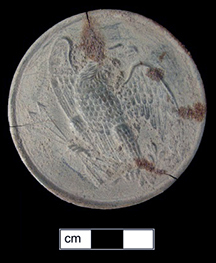 Figure 1. Before treatment photo of eagle bayonet scabbard belt plate.
In early 19th-century New York, a contractor by the name of Robert Dingee was the pre-eminent supplier of military
equipment to the United States government. The Ordnance Department contracted work out to him and he would prepare
initial designs and make sample equipment for approval (Huntington 1987).
One of the many accoutrements he designed besides cartridge-boxes, bayonet scabbards, flasks, pouches and gun
slings, was the bayonet scabbard belt plate. Dingee's contract of August 2, 1828 introduced the 1828 pattern
bayonet scabbard, with accompanying belt and belt plate, described as being 2.5 inches in diameter (Figure 2).
This is the earliest reference to a round eagle belt plate (Huntington 1987). The circular brass plate with a
raised rim was dominated by an eagle of refined design, similar to the eagle appearing on War of 1812 belt plates.
The eagle has its wings drooped, head to the left, three arrows in the right talon and an olive branch in the
left talon (Campbell and Howell 1963). The appearance of the eagle as a symbol of US military strength was
not a new idea. During the War of 1812, a rectangular eagle plate was first seen on leather Infantry caps
and appeared on military buttons dating from 1808 to 1814 (Chartrand 1992). They also displayed the eagle
clutching arrows for war and an olive branch for peace.
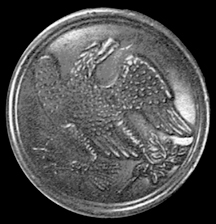 Figure 2. 1828 pattern belt plate. (Huntington 1987)
The bayonet scabbard belt was worn over the right shoulder, which carried the musket bayonet scabbard on the
left hip. In general, the belts were white buff leather; but black ones were used occasionally (Florida
Frontier Guards). The round eagle brass plate, with its pronged back, would buckle the two halves of
the belt together at the front.
Robert Dingee's 1831 sketch of a copper rifle powder flask shows the same type of eagle design, with the
eagle holding arrows and an olive branch, but also with a shield covering its breast. In 1839 a "new pattern"
bayonet shoulder belt (Figure 3) is listed in white leather only, with an eagle belt plate costing 10
cents (Huntington 1987). The 1841 Ordnance manual states that the belt plate for the Hall bayonet is noted
as being "the same as for the Infantry," which implies the 2.5 inch round eagle plate was used (Huntington 1987).
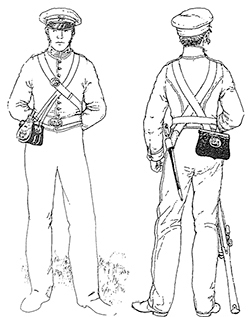 Figure 3. 1839 Infantryman showing eagle belt plate on bayonet scabbard belt.
During the Mexican War in 1846, the Mormon Battalion received the eagle plates that were fitted to the outside
of their pattern 1839 white leather bayonet scabbard belts. The circular lead-backed plate had three hooks that
could attach to the cross belt (Halford 2004).
There were eleven round brass plates found among the debris of goods burned at the Hoff store site in San Francisco
after the Great Fire of May 3-4, 1851. In the report of military accoutrements found, it was noted that the eagle
plates were used on shoulder straps for bayonet scabbards prior to 1841 and then later on shoulder straps for
cartridge boxes (Delgado et al. 1990). These plates were manufactured in large numbers and many variations of
the original design by several contractors during the Civil War (1861-1865) (Campbell and Howell 1963). The
brass eagle plate can be seen on the shoulder straps of many soldiers in photos and cartes de visite of
the time (Figure 4).
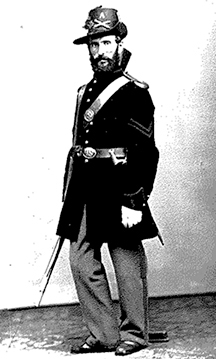 Figure 4. Artillery Corporal with eagle plate, Civil War.
References
Campbell, J. Duncan, and Edgar M. Howell
1963 American Military Insignia 1800-1851. Smithsonian
Institution, Washington D.C.
Chartrand, Rene
1992 Uniforms and Equipment of the United States Forces in
the War of 1812. Old Fort Niagara Association, Inc. Youngstown, NY.
Delgado, James P, Allen G. Pastron, and Eugene M. Hattori
1990 Civilian and Military Armament and Accoutrements from the
Hoff Store Site. Society for Historical Archaeology Special Publication Series, Number 7: 48-57.
2016 The Florida Frontier Guards; Seminole War Reenactors and
Living History, 1835-1842. http://floridafrontierguard.com. Website accessed 9/28/2016.
Halford, Val John
2004 Mormon Battalion, Military Arms, Equipment and Training.
http://www.mormonbattalion.com. Website accessed 10/4/2016.
Huntington, R.T.
1987 Accoutrements of the United States Infantry, Riflemen and
Dragoons 1834-1839. Historical Arms Series No. 20. Museum Restoration Service, Alexandria Bay, NY.
Sivilich, Michelle
2016 Personal Communication, 10/14/2016.