This curious little bisque porcelain figure was found during recent archaeological work at the Indian Queen
Tavern (18PR96) in Bladensburg. The hollowed stump beside which the young boy is standing was obviously made
to hold something, but it seemed much too small for a floral bouquet. And indeed, this little vase was created
to hold something quite different from blossoms.
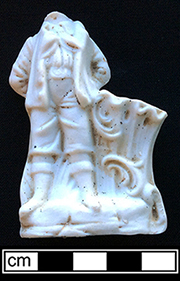 Figure 1. Bisque porcelain spill vase from the Indian Queen Tavern site. This piece was most
likely discarded after being damaged.This curious little bisque porcelain figure was found
during recent archaeological work at the Indian Queen Tavern (18PR96) in Bladensburg. The
hollowed stump beside which the young boy is standing was obviously made to hold something,
but it seemed much too small for a floral bouquet. And indeed, this little vase was created
to hold something quite different from blossoms.
Figure 1. Bisque porcelain spill vase from the Indian Queen Tavern site. This piece was most
likely discarded after being damaged.This curious little bisque porcelain figure was found
during recent archaeological work at the Indian Queen Tavern (18PR96) in Bladensburg. The
hollowed stump beside which the young boy is standing was obviously made to hold something,
but it seemed much too small for a floral bouquet. And indeed, this little vase was created
to hold something quite different from blossoms.
In the days before sulphur and phosphorus friction matches became commonly available, lighting tobacco pipes,
candles and stoves had to be accomplished using lighted tapers or "spills" to transfer fire from another
source. Spills could be crafted from a variety of substances, including twisted fragments of paper, reeds,
or wood shavings. The term "spill" is a derivative of the word "spile," in use as early as 1513 to describe
a splinter, or narrow strip of wood (OED 1991).
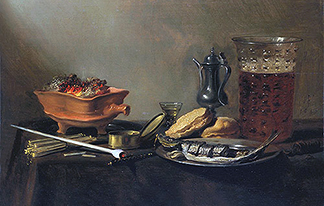 Figure 2. A 1647 painting "Still Life with Pipe" by Dutch painter Pieter Claesz (c. 1597-1660)
shows a lit tobacco pipe perched precariously against a bundle of spills or reeds.crafted from a
variety of substances, including twisted fragments of paper, reeds, or wood shavings.
The term "spill" is a derivative of the word "spile," in use as early as 1513 to describe a
splinter, or narrow strip of wood (OED 1991).
Figure 2. A 1647 painting "Still Life with Pipe" by Dutch painter Pieter Claesz (c. 1597-1660)
shows a lit tobacco pipe perched precariously against a bundle of spills or reeds.crafted from a
variety of substances, including twisted fragments of paper, reeds, or wood shavings.
The term "spill" is a derivative of the word "spile," in use as early as 1513 to describe a
splinter, or narrow strip of wood (OED 1991).
Matches were first made in Great Britain in the 1820s by hand dipping small sticks of wood into
sulphur. Dipping the sulphur tip into a small container of phosphorus would cause the match to
ignite. Friction matches, lit by striking the tip against a rough surface, were invented around
the same time in England. Wooden splints or pieces of cardboard were treated with sulphur, sulphide
of antimony, chlorate of potash and gum (Crass 1941). Friction matches did not become widely
available until much later in the nineteenth century.
 Figure 3. Antique German white bisque girl with a basket spill base. From a private
collection.
Figure 3. Antique German white bisque girl with a basket spill base. From a private
collection.
It was necessary to store spills, ideally someplace near a fire source, so spill vases were a
common feature of Victorian mantels. During the nineteenth century, a number of decorative containers,
made from ceramic, glass, brass and even iron, were manufactured to hold spills (Cox 2009).
The dropping prices of friction matches in the late nineteenth century led to the demise of this
interesting form of material culture.
References
Cox, Gary
2009 Spill Holder. Antique Answer Man. Website accessed
December 8, 2017. http://antiqueanswerman.blogspot.com/2008/11/spill-holder.html.
Crass, M.F., Jr.
1941 A History of the Match Industry. Part 1. Journal
of Chemical Education 18(3): 116–120.
OED
1991 Oxford English Dictionary. Oxford University
Press, Oxford.