This modest little artifact was hidden, along with several stoneware marbles,
under a set of outdoor steps in downtown Baltimore sometime in the last quarter of
the nineteenth century. There it remained, unnoticed and forgotten, until archaeologists
discovered this little cache of artifacts when they were conducting excavations in advance
of the building of the Baltimore City Life Museum (18BC68).
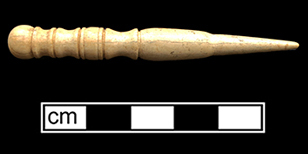 Figure 1. Turned bone stiletto dating circa 1880-1900.
Measuring 2.5 inches in length, this lathe turned bone sewing stiletto or awl, was used to punch holes
through coarse materials like felt, leather or canvas (Sullivan 2004) or to force open the weave
of a fabric to create an eyelet or buttonhole. Because the weave of the fabric remained uncut,
it resisted tearing. A stiletto was also useful for removing basting stitches. Sewing
stilettos were an important component of needlework and sewing boxes in the Victorian period.
Examples of stilettos identical to this Baltimore artifact date circa 1880 to 1900 (Thompson 1997).
This dating coincides perfectly with the blue and brown glazed stoneware marbles placed with the
awl under the steps of the house at 26 Albemarle Street. Benningtons, as these marbles are
popularly called, are not seen in U.S. archaeological assemblages until around 1890 (Gartley
and Carskadden 1998).
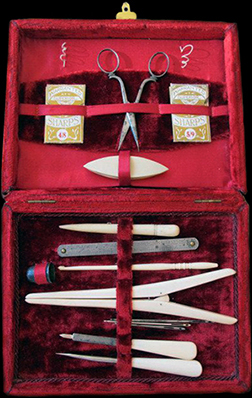 Figure 2. Circa 1900-1910 sewing kit with bone and celluloid tools.
https://www.pinterest.co.uk/pin/453245149972239991/
Figure 2. Circa 1900-1910 sewing kit with bone and celluloid tools.
https://www.pinterest.co.uk/pin/453245149972239991/
Why these artifacts were hidden together under these steps remains a mystery. In 1876,
the property at 26 Albemarle Street, with its three-story brick house, was acquired by
Theodore Heinrich Ladensack. The house remained in his ownership until 1909, when he
transferred the property to Theresa Ladensack and Laura Beck (Scott 1989:43). Perhaps
they were hidden under the steps by children in the household.
References
Gartley, Richard, and Jeff Carskadden
1998 Colonial Period and Early 19th-Century
Children's Toy Marbles; History and Identification for the Archaeologist and
Collector. The Muskingum Valley Archaeological Survey, Zanesville, Ohio.
Scott, Deborah M.
1989 An Archival Investigation of the
Archaeological Resources Associated with the Baltimore History Center of the Baltimore
City Life Museums, Baltimore, Maryland. Baltimore Center for Urban Archaeology Research Series 30.
Sullivan, Kay
2004 Needlework Tools and Accessories; A Dutch Tradition.
Antique Collector�s Club, Woodbridge, Suffolk.
Thompson, Helen Lester
1997 Sewing Tools and Trinkets. Collector Books,
Paducah, Kentucky.