This intriguing piece of ceramic (Figure 1) was recovered from a mid-19th century brick-lined
privy, part of the Federal Reserve site (18BC27), a three-block area located in downtown Baltimore.
Construction was already under way for the bank building when workers discovered the foundations
of the original neighborhood including this privy. Archaeologists were contacted but only had
a three-week window to excavate, collect and analyze Feature 23 as well as several other features.
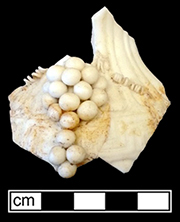 Figure 1. Bisque porcelain vessel found at the 18BC27 Federal Reserve site, with Grecian
lines underlying the delicately crafted grapes and twisted grape vines.
Figure 1. Bisque porcelain vessel found at the 18BC27 Federal Reserve site, with Grecian
lines underlying the delicately crafted grapes and twisted grape vines.
Historical information shows this privy was located at 522 Sharp Street, property owned in the
mid-19th century by Samuel Guest, a real estate broker in Baltimore. Guest rented this lot out
to people, one of whom was Dr. Dennis McKew (1829-1885), a well-known and highly-recommended doctor in
the Baltimore area.
The significance of this parian porcelain vessel is that it was for decorative purposes only
and indicates that this household had some disposable income. The design shows exquisite craftsmanship
and beautiful details, including delicate Grecian lines around the body as well as beautifully-crafted
three-dimensional grapes, leaves, a small flower and twisted grape vines wrapped around the entire vessel.
This vessel may have been made in Bennington, Vermont by the Fenton Works Pottery founded in 1847
by Christopher Webber Fenton (later renamed the United States Pottery). He experimented with reproducing
Rockingham ware, refined white earthenware and yellow wares. Fenton was also fascinated with the bisque
porcelain called Parian ware that was popular in England. He is believed to have produced intricate
works, like the cologne bottle dating circa 1847-1858 shown in Figure 2.
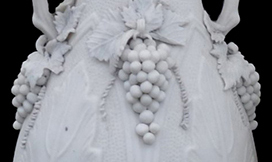 Figure 2. Complete example of a parian porcelain cologne bottle that is very similar to
the Baltimore vessel. www.ebay.com
Figure 2. Complete example of a parian porcelain cologne bottle that is very similar to
the Baltimore vessel. www.ebay.com
There are many similarities between the Baltimore artifact and the cologne bottle, but, it is impossible to
determine if the privy vessel was a cologne bottle. But one can see how intricate some of designs on
parian porcelain could be; from the carefully-placed grapes and twisted vines to the delicate archway
designs on the body and the feathered leaves. Each piece was in a sense: one of a kind.
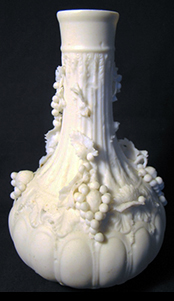 Similar grape cluster shown on this Parian vase found on Etsy.com
References
Barret, Richard Carter
1958 Bennington Pottery and Porcelain. Random House
Publishing, New York.
Brooke, Bob
2018 Parian Ware-Affordable Art for the Masses.
The Antiques Almanac. Website accessed June 29, 2018 at
http://theantiquesalmanac.com/parian.htm