This diminutive oil lamp (Figure 1), standing at six inches tall, was recovered in fragments
from a privy in Baltimore that was filled with household garbage in the second quarter of the
19th century. Painstakingly mended, this whale oil lamp is one of a matching pair from the
Shot Tower Metro site (18BC66). Although originally colorless like the lamp shown in Figure
2, the dark patina on the lamp is a result of the glass degrading in the organic fill of
the privy.
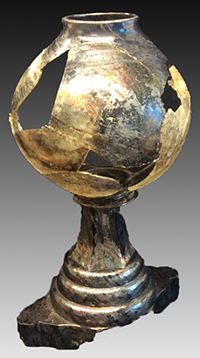 Figure 1. Whale oil lamp from 18BC66.
The lamp had a ball-shaped oil reservoir, set atop a press molded and stepped base. Like
the similarly-dated example shown in Figure 2, the Baltimore lamp would have been fitted
with a drop-in tube burner, whose wick extended into the whale oil contained in the reservoir.
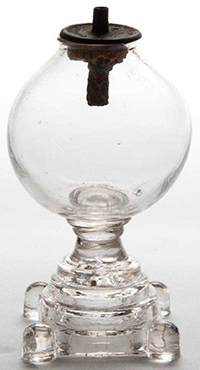 Figure 2. Lamp from private collection showing wick apparatus.
Although more expensive than oils rendered from sheep or beef tallow, whale oil was a popular
fuel for lamps among the wealthy because it burned brightly, without odor. Because whale
oil is actually wax that thickened when cool, the heated pewter tube burners extending down
into the oil font would warm and liquefy the whale oil.
Whale oil lamps remained popular until around the time of the Civil War, when they began
to be replaced by lamps using the more affordable kerosene.