Junior G-Man was an American boys club begun in the late 1930s and was based on a
children's radio show hosted by former Federal Bureau of Investigation agent Melvin
Purvis. Purvis was best known for bringing the gangster John Dillinger to justice. The
real exploits of Purvis and his fellow agents replaced fictional detectives such as Dick
Tracy, capturing the imagination of adults and children alike (Wikipedia 2018a).
Junior G-Man was promoted and popularized by FBI director J. Edgar Hoover. The public's
great interest in law enforcement and gangster movies, as well as Purvis's fame and
success, led to Junior G-Man clubs being formed all over the United States and Canada
(Wikipedia 2018a).
The radio program allowed the listeners to join a "Junior G-Man" club and receive a wide
variety of toy badges and secret agent items such as fingerprint kits, handcuffs and
modern weaponry. Young boys who embraced the G-Man craze saw themselves as "detectives"
rather than the ordinary "beat" cops. In fact, the name Junior G-Man was the term given
to a new or young FBI agent or law enforcement officer of the Federal Government. The G
was short for Government Man, an American slang term for special agents of the United States
Government (Wikipedia 2018b).
Melvin Purvis also became the face of the detective club promoted by the breakfast cereal
Post Toasties. As young crime stoppers, kids could send in cereal box tops in exchange for
codes, passwords, cap pistols, secret operators manuals and, of course, badges. In the
mid-1930s Junior G-Man clubs quickly became very popular. Even police departments saw
this phenomenon as a means of fighting against the high juvenile delinquency of the times.
Movies, books, comic strips and numerous radio programs encouraged children to aid and
embrace this "war on crime." Junior G-Man badges were numerous and varied in appearance.
Some had symbols of authority. Some proclaimed "Roving Operative," "Secret Operator,"
or "Law and Order Patrol.:
This particular Junior G-Man badge, probably owned by a young boy, was found at the Ward
Farmstead site in Baltimore County. It was a farm that was occupied from the late 19th
until the late 20th centuries. The badge was in quite a corroded condition. Nevertheless,
most of the thirty-two stars on the outer rim are visible as well as the words "Junior G-Man,"
the left looking eagle with its shield and talons holding three arrows and the scales of
justice. Many varieties of the badges were produced; quite a few with the name of Melvin
Purvis prominently displayed.
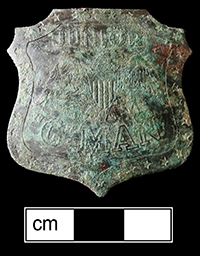 Figure 1. Junior G-Man badge from the Ward Farmstead.
Children's clubs like Junior G-Man validated children to be real world achievers and to
participate in daring adventures. Among the many clubs of this period the Junior G-Man
club certainly fulfilled just that role (Jacobson:2004).
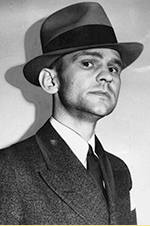 Figure 2. FBI agent Melvin Purvis. Photo credit: https://en.widipedia.org/wiki/Melvin_Purvis
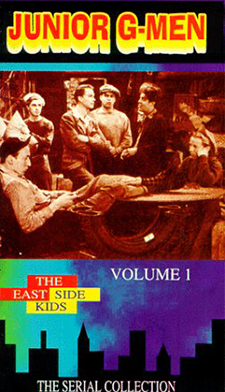 Figure 3. In this 1940 movie, the FBI is assisted by a gang of street kids
to find and rescue a kidnapped scientist. Photo credit: https://www.imdb.com/title/tt0032656/ref_-fn_al_tt_1
Figure 3. In this 1940 movie, the FBI is assisted by a gang of street kids
to find and rescue a kidnapped scientist. Photo credit: https://www.imdb.com/title/tt0032656/ref_-fn_al_tt_1
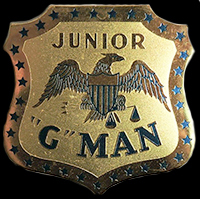 Figure 4. Junior G-Man badge identical in appearance to the Ward Farmstead
badge. Photo credit: https://www.google.com/search?q=Junior+G-Man
Figure 4. Junior G-Man badge identical in appearance to the Ward Farmstead
badge. Photo credit: https://www.google.com/search?q=Junior+G-Man
References
Jacobson, Lisa
2004 Raising Consumers: Children and the American
Mass Market in the Early Twentieth Century. Columbia University Press, New York, p.196.
Wikipedia
2018a Junior G-Men. http://en.wikipedia.org/wiki/Junior_G-Men
2018b G-Man. http://en.wikipedia.org/wiki/G-Man_(slang).