Laura Masur, Catholic University and 2015 Gloria S. King Fellow
The ring pictured here is made of copper alloy, with ten small knobs protruding from the exterior of the
band (Figure 1). Its flat bezel is inscribed with an insignia reading "IHS," a Greek abbreviation of the
name of Jesus (Figure 2). These characteristics indicate the ring would have been used to pray a decade
of the Roman Catholic rosary.
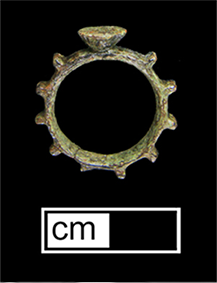 Figure 1: This decade ring was metal-detected in Calvert County, Maryland
and donated to the MAC Lab in 2019.
Figure 1: This decade ring was metal-detected in Calvert County, Maryland
and donated to the MAC Lab in 2019.
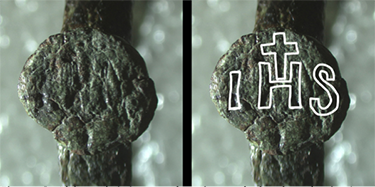 Figure 2: Although it is very deteriorated, the decade ring's bezel was inscribed with the
letters IHS and a cross.
Figure 2: Although it is very deteriorated, the decade ring's bezel was inscribed with the
letters IHS and a cross.
This ring was found during metal detecting in Lower Marlboro, Calvert County, in a field adjacent to the
eighteenth-century Grahame House. Charles Grahame, for whom the house was named, purchased the property
from Christian Smith in 1755. A house existed on the property before 1732, but it is unclear whether this
was the Grahame House or another house on the property (Parish 1971). The ring was found about 300-400
feet from the house near brick fragments, buttons, farm tools, and an assortment of coins. These coins
included a gold 1684 King Charles half guinea and a 1777 Spanish silver real (Charles Gilroy, pers.
comm., June 18, 2019).
Although evidence is limited, these artifacts suggest that the ring was buried during the colonial period.
There are two possible explanations for the ring’s archaeological context. First, it may have been deposited
near a residence that preceded the construction of the Grahame house. Second, the area may have been part of the
colonial plantation landscape, including agricultural outbuildings or the residence of indentured servants or
enslaved Africans associated with the Smith or Grahame households. The use of the site probably transitioned
through time; it is impossible to know whether the ring was associated with the Smith or Grahame families or
earlier households. While the object was clearly intended to be used in covert Roman Catholic prayers, the
end of its use life remains a mystery. The ring may have been lost, or intentionally buried or discarded.
Christian devotional prayers associated with the Virgin Mary and counted on strings of beads were developed as
early as the twelfth century in Germany and were used in a variety of popular practices. These and other devotions
to the Virgin Mary, popular in pre-Reformation England, were forbidden after 1538. Jesuits in sixteenth-century
England "repackaged" and standardized prayers surrounding the rosary, organizing devotees into Confraternities
or Societies of the Rosary. A variety of manuals, including Jesuit Father Henry Garnet's 1593 book The Society
of the Rosary, provided instructions for these prayers: a meditation on 15 mysteries, each through the prayer
of one Pater Noster (Our Father) and ten Aves (Hail Marys) (Dillon 2003; see also McClain 2003).
While a full rosary contained enough beads to pray five "decades" (10 Hail Marys and one Our Father), single-decade
rosaries were also used. These rosaries often contained, in addition to the beads, a cross or crucifix and a plain
ring (Figure 3). The ring was moved between fingers to keep track of the number of decades that had been
prayed (Bigger 1914). A decade ring or “thumb rosary” was most likely used in a similar way. These rings were
made of gold, silver, copper alloys, and lead. One author argues that they originated in the Basque region of
Spain, where they were worn in particular for nighttime prayers (McGuire 1954:103-104). These rings took on
new meaning in England and Ireland, where they could be easily hidden and used covertly for prayer (McIntosh 2011).
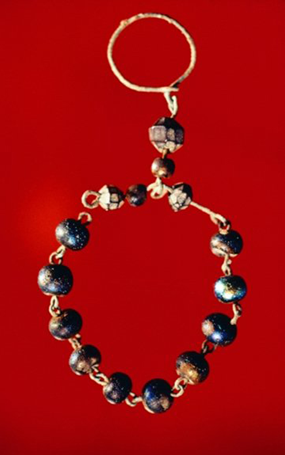 Figure 3: This single decade rosary was recovered by archaeologists working at Historic St.
Mary's City's St. John's site. It was found in a ca. 1638 builder's ditch as it was deliberately
placed to protect the home under construction. Courtesy Historic St. Mary's City.
Figure 3: This single decade rosary was recovered by archaeologists working at Historic St.
Mary's City's St. John's site. It was found in a ca. 1638 builder's ditch as it was deliberately
placed to protect the home under construction. Courtesy Historic St. Mary's City.
Numerous decade rings have been identified in England through the Portable Antiquities scheme. One ring is nearly
identical to the ring from Lower Marlboro (Noon 2011). On the bezel, there is a cross inscribed above "IHS"
and three nails which evoke Christ’s crucifixion.Its production date is estimated as 1500-1800, and a similar
copper alloy ring (Figure 4) was produced around 1600-1800. Although many of these rings bear the "IHS"
christogram, the circular knobs used to count Hail Marys make this class of artifact distinct from "Jesuit"
rings, a common find at American Indian sites in colonial New France and occasionally in the British
colonies (e.g., Mercier 2011).
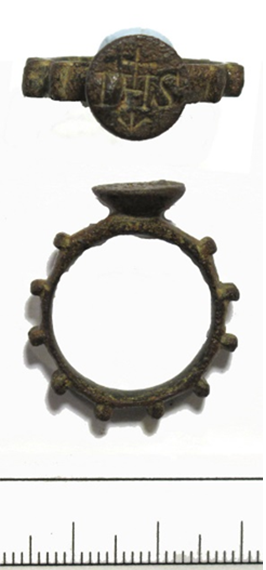 Figure 4: Other than the orientation of the inscription, this ca. 1600-1800 decade ring
from the Portable Antiquities Scheme website is almost identical to the MAC Lab's example.
It was recovered in Darlington County, UK (McIntosh 2011).
Figure 4: Other than the orientation of the inscription, this ca. 1600-1800 decade ring
from the Portable Antiquities Scheme website is almost identical to the MAC Lab's example.
It was recovered in Darlington County, UK (McIntosh 2011).
Praying the rosary was a common practice among Roman Catholic inhabitants of Maryland and neighboring colonies.
The practice was encouraged by Jesuit priests, who acted as missionaries in the colony and organized rosary
societies among Catholics (see Hardy 1993:331-332). Rosary beads have been excavated from a variety
of archaeological contexts in Jamestown and St. Mary’s City as well as other archaeological sites (e.g.,
Lapham 2001; Middleton and Miller 2008). Many of these rosaries contain about ten stone or glass beads,
representing the Hail Mary prayers. Almost all rosary beads from the Chesapeake are disarticulated, which
suggests that they were strung on an organic material that decomposed over time. Rosary rings are far less
common; the object featured here is the only one of its kind found in Maryland or the surrounding region.
References to rosaries rarely made their way into documentary sources in Maryland. In one unusual account from
1640, a Maryland colonist requested “Ave Maria beads” from a Jesuit missionary. Instead of using them to pray,
he ground up and smoked the powder in his tobacco pipe. The Jesuits recounting this tale were sure to include
details on the man's subsequent gruesome death, which resulted from the festering wound of a large fish
bite (Foley 1878:380-381).
References
Bigger, F.J.
1914 Single-Decade Rosaries. Journal of the Galway Archaeological
and Historical Society, 8(4), 244–246.
Dillon, A.
2003 Praying by number: The Confraternity of the Rosary and the English
Catholic Community, c. 1580-1700. History, 88(291), 451–471. https://doi.org/10.1111/1468-229X.00273
Foley, H.
1878 Records of the English Province of the Society of Jesus: Historic
facts illustrative of the labours and sufferings of its members in the sixteenth and seventeenth centuries.
Vol. 3. Retrieved from http://archive.org/details/recordsofenglish00fole
Hardy, B.B.
1993 Papists in a Protestant age: The Catholic gentry and community in
colonial Maryland, 1689-1776. Unpublished Dissertation, University of Maryland.
Lapham, H.A.
202011 More Than "A Few Blew Beads": The Glass and Stone Beads from
Jamestown Rediscovery's 1994-1997 Excavations. The Journal of the Jamestown Rediscovery Center, Vol. 1.
McClain, L.
2003 Using What's at Hand: English Catholic Reinterpretations of the Rosary,
1559–1642. Journal of Religious History, 27(2), 161–176. https://doi.org/10.1111/1467-9809.00169
McGuire, E.A.
2011 1954 Old Irish Rosaries. The Furrow, 5(2), 97–105.
McIntosh, Frances
2011 DUR-1B73E3: A Post Medieval Finger Ring.
https://finds.org.uk/database/artefacts/record/id/435929, accessed July 16, 2019.
Mercier, C.
2011 "Jesuit" Rings in Trade Exchanges Between France and New France:
Contribution of a Technological Typology to Identifying Supply and Distribution Networks. Northeast
Historical Archaeology, 40(1), 21–42. https://doi.org/10.22191/neha/vol40/iss1/2
Middleton, A.P., & Miller, H.M.
2008 John Lewgar and the St. John’s Site: The Story of Their Role
in Creating the Colony of Maryland. >Maryland Historical Magazine, 103(2), 132–165.
Noon, Stuart
2011 LANCUM-CE9AE3: A Post Medieval Finger Ring.
https://finds.org.uk/database/artefacts/record/id/446034, accessed July 16, 2019.
Parish, P.
1971 Grahame House (National Register of Historic Places
Inventory – Nomination Form No. CT-10). Annapolis, MD: Maryland Historical Trust.
https://mht.maryland.gov/secure/medusa/PDF/Calvert/CT-10.pdf, accessed July 16, 2019.