A World War II M2 sea mine and anchor weight arrived at the MAC Lab for conservation earlier this year. Both
were found by staff at Cape Henlopen State Park in Lewes, Delaware when Hurricane Hermine made its way through
the state in September 2016.
The Cape Henlopen State Park grounds are home to the site of Fort Miles, an Army base that operated during World
War II. In response to the German U-boat presence along the U.S.'s Eastern seaboard, a minefield was set up to
prevent the enemy from entering the bay and the rivers connected to it. Each mine within that field was set up
to be remotely controlled via a central cable that connected them all to a central hub within Fort Miles (Associated
Press 2019, "Hurricane Hermine").
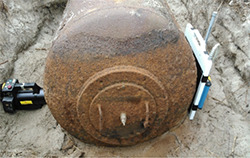 Figure 1: X-raying the M2 mine on site at Cape Henlopen. Photo courtesy of Jim Hall of
Delaware State Park.
Figure 1: X-raying the M2 mine on site at Cape Henlopen. Photo courtesy of Jim Hall of
Delaware State Park.
One of the earliest recorded uses of explosives in naval warfare was in 1585, when the Dutch booby-trapped the harbor
at Antwerp by strategically placing sacrificial ships loaded with explosive material.
In 1778, American inventor David Bushnell tested his "trigger mines" in the Delaware River with the goal of damaging
British ships. Bushnell seemed to have been less successful than the Dutch at Antwerp, but the idea stuck and mine
technology grew more advanced. In World War I, an estimated 300,000 mines were deployed which wrecked or destroyed
roughly 1,000 vessels (Chilstrom 1992:3-4).
Over the course of World War II, mines became widely recognized as "a relatively low-cost, twenty-four-hour,
all-weather threat which required no support" (Chilstrom 1992:6).
The M2 mine was first listed in the U.S. War Department’s Controlled Submarine Mine Material in April of 1942. The
mine and anchor would have been connected by an adjustable tether and linked to the central distribution box via a
cable (see Figure 2). This cable link would then transmit the signal to detonate from the distribution box to the
linked mines within the field.
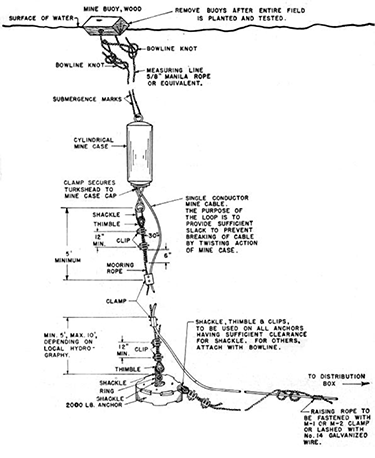 Figure 2: A diagram of an M2 mine assembly. Photo courtesy of Jim Hall of Delaware State Parks.
The standard amount of explosive material in an M2 mine, according to the manuals, would have been 24.99 cubic feet.
With this threat in mind, Delaware State Parks staff called in explosive experts from the nearby Dover Air Force
Base. After an x-ray of the mine was conducted (see Figure 3), the explosives team happily reported that there was
no explosive material present. The work of moving and ultimately preserving this unique piece of history could begin.
Reader, beware: should you find a most exciting piece of military history that was intended to contain explosive material,
it could have dangerous results. Don’t try anything at home by yourself, and always consult an expert.
References
Associated Press
2019 "Hurricane Hermine Unearths World War II Relics at Cape
Henlopen in Delaware."
https://weather.com/news/news/cape-henlopen-delaware-world-war-ii-war-relic-mine#3.
Chilstrom, John S.
1992 Mines Away! The Significance of U.S. Army Air Forces
Minelaying in World War II, e-book, United States Air Force Air University.
U.S. War Department
1942 Controlled Submarine Mine Matériel, Technical Manual
No. 4-220, e-book, U.S. War Department.