In 2017, an archaeological survey and excavations were carried out on the Brumbaugh-Kendle-Grove
(BKG) Farmstead in Washington County, Maryland. The site was slated for demolition as part of
an expansion project for the Hagerstown Regional Airport
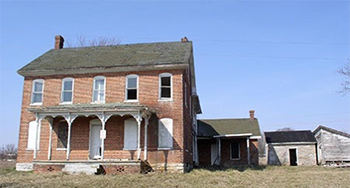 Figure 1. The Brumbaugh-Kendle-Grove Farmstead before demolition. Photo from
www.washingtoncountyhistoricaltrust.org.
Figure 1. The Brumbaugh-Kendle-Grove Farmstead before demolition. Photo from
www.washingtoncountyhistoricaltrust.org.
The Farmstead had been occupied from its establishment in the second half of the 18th century until
1997, after which the site was managed by the Board of County Commissioners of Washington
County (AECOM 2019:2.11).
A variety of buttons were recovered during the excavation, among which was a small brass shank button
unearthed in an agricultural-related feature within the west yard (AECOM 2019.8.52). The Connecticut
state seal and the letters "CONNECTICUT" and "QUI TRANST. SUST." (see Figure 3) can clearly be seen
on the obverse face, and "SCOVILL MF'G CO. WATERBURY" are visible on the reverse.
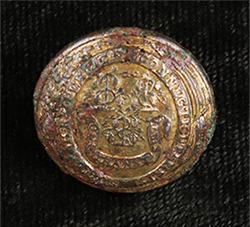 Figure 2. Obverse face of the shank button recovered from the BKG Farmstead site, showing
Connecticut state seal and motto.
Figure 2. Obverse face of the shank button recovered from the BKG Farmstead site, showing
Connecticut state seal and motto.
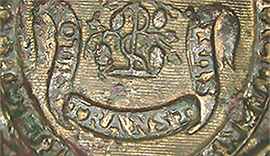 Figure 3. Close up of the BKG Farmstead button, showing the abbreviated state motto of Connecticut.
Archaeologists from AECOM researched and identified the button as a Civil War military button created by
the Scovill Manufacturing Company of Waterbury, Connecticut. "QUI TRANST. SUST." is short for "Qui
Transtulit Sustinet," which is the state motto of Connecticut. In Latin, it means "he who transplanted
continues to sustain" (Hughes and Lester 1991:723). The backstamp indicates that the button was made
between 1850 and 1865 (Tice 1997:32-25) and worn by a Connecticut Regiment soldier (AECOM 2019:8.52).
The Scovill Manufacturing Company of Waterbury, Connecticut began its life in 1802 as the Abel Porter and
Company. Its founders were the brothers Abel and Levi Porter, Silas Grilley, and Daniel Clark (Luscomb
1967:174). The Grilley brothers were experts in casting pewter buttons and had operated a shop out of their
home. Together with Porter and Clark, they created an industrial button-making operation (Tice 1997:25).
Scrap metal was melted into ingots, alloyed with zinc to create brass, and formed into sheets which would
be fed into large steel rollers turned by workhorses (Connecticut History 2020).
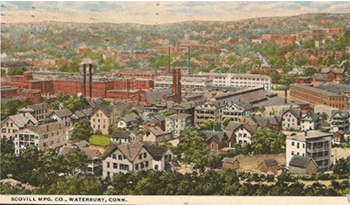 Figure 4. Artistic rendition of the Scovill Manufacturing Company. Photo from
www.scovill.com.
Figure 4. Artistic rendition of the Scovill Manufacturing Company. Photo from
www.scovill.com.
Access to British buttons was limited during the Napoleonic Wars, and this gave a boost to American manufacturers
like Abel Porter and Company. The company responded to the demand and began to produce military buttons, and
by 1808, a water-powered mill had replaced the horse-turned rollers (Tice 1997:25). "Scovill" first appeared
in the company name in 1811 when James Mitchell Lamson Scovill took over with his partners, Hayden and Leavenworth
(Luscomb 1967:174). By the 1840s, the company had fine-tuned its gilding and engraving techniques, and by the
dawn of the Civil War, the Scovill Manufacturing Company was producing "millions" of military buttons (Tice
1997:27-28, 32). The company, which still exists today, expanded its offerings but continued to produce buttons
for both domestic and international use into the second half of the 20th century (Luscomb 1967:174, Morito
Scovill Americas 2020).
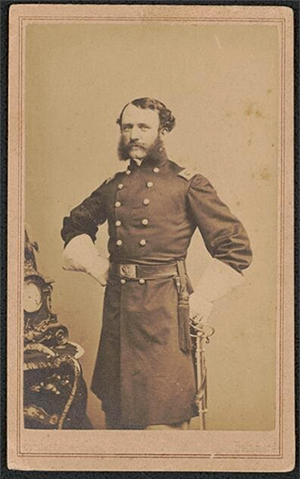 Figure 5. Brevet Brigadier General William Grosvenor Ely of 1st Connecticut Infantry Regiment,
6th Connecticut Infantry Regiment in uniform with sword. Photo from www.loc.gov.
Figure 5. Brevet Brigadier General William Grosvenor Ely of 1st Connecticut Infantry Regiment,
6th Connecticut Infantry Regiment in uniform with sword. Photo from www.loc.gov.
Curiously, the Scovill Manufacturing Company button is the only identified Civil War artifact that was found
in the excavations at the BKG Farmstead. Archaeologists at AECOM hypothesized that the button became loose and fell
off of someone's uniform as they came onto the property to look for supplies. Historical records support this,
and indicate that a number of Connecticut regiments were either stationed in or moved through the area adjacent
to the BKG Farmstead between 1861 and 1864 (AECOM 2019:8.52).
A single, datable artifact can be interesting on its own, and can provide valuable clues to the archaeologists
who unearthed it. But when an artifact is viewed through the evolution of the techniques that humans used to
make it and the legacy of human innovation, it becomes a richer and more engaging story.
References
AECOM
2019 Phase I-III Archaeological Investigations, Brumbaugh-Kendle-Grove
Farmstead (18WA496), Washington County, Maryland. Burlington, published by the author. Report accessed on
December 14, 2020 at https://www.washco-md.net/wp-content/uploads/articulate_uploads/BKG_Website_20200715/assets/bkgfarmstead_phi-iii-final_report_20190326.pdf
connecticuthistory.org
2020 Birth of the Brass Valley. Connecticuthistory.org: Business and
Industry, Waterbury. Website accessed on December 14, 2020 at https://connecticuthistory.org/birth-of-the-brass-valley/.
Hughes, Elizabeth and Lester, Marion
1991 The Big Book of Buttons. New Leaf Publishers, Sedgwick.
Luscomb, Sally C.
1967 The Collector's Encyclopedia of Buttons. Crown Publishers, Inc., New York.
Morito Scovill Americas
2020 History. Morito Scovill Americas. Website accessed on December 14, 2020
at http://www.scovill.com/about-us/history
Tice, Warren K.
1997 Uniform Buttons of the United States 1776-1865. Thomas Publications, Gettysburg.