At first glance, this copper alloy token from the collection of The Portsmouth Arts & Cultural Center
(Figure 1), could be mistaken for an example of conventional coinage often found in a museum's historical
currency collection. However, upon further inspection and with the aid of conservation treatment, this coin's
unique role in the history of the American economy becomes more apparent.
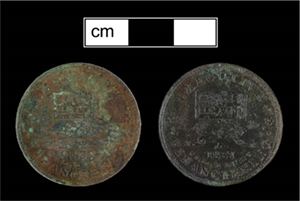 Figure 1: Hard Times Token before and after conservation, from The
Portsmouth Art & Cultural Center.
Figure 1: Hard Times Token before and after conservation, from The
Portsmouth Art & Cultural Center.
The tokens themselves (colloquially referred to as 'Hard Times Tokens') were an invention of necessity,
reflecting the resentment of those most affected by the Panic of 1837 (Figure 2) and served as an alternative
form of payment. At the time, financial institutions had begun to place limitations on specie payments in an
effort to prevent further bank runs. This, in conjunction with the decline of cotton prices (stemming from more
readily available products due to improved transportation systems), the sudden destabilization of the real
estate market, and restrictive trade and lending practices with the Bank of England, threatened an already
weakened American economy. The resulting economic downturn led to unemployment and businesses failing, further
frustrating the average American who relied heavily on lower denominations of currency for everyday transactions;
currency that was now in short supply. The solution came in the form of clever satirical coinage, often depicting
the source of the people's resentment.
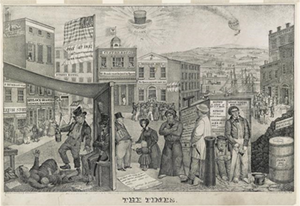 Figure 2: A political cartoon depicting the desperate state of the US Economy during the Panic of
1837, from the Library of Congress.
Figure 2: A political cartoon depicting the desperate state of the US Economy during the Panic of
1837, from the Library of Congress.
Fortunately, several different examples of Hard Times Tokens exist today in museum and private collections. Most
are identified by the words 'Not One Cent/But Just As Good' or other witty sayings differentiating them from official
legal tender (counteracting the counterfeit regulations of the day). The satirical imagery accompanying the
inscriptions on the coins varied from a leaping donkey or shipwreck (Figure 3), to then President Andrew Jackson himself
popping out of a coffer (Figure 4). The Portsmouth coin depicts a turtle carrying a treasure chest (labeled 'SUB Treasury')
with the words 'Fiscal Agent' directly underneath. Much like the political cartoons, one finds in the news of today,
this unofficial form of currency acted as a commentary on American's dissatisfaction with their politicians and
policies.
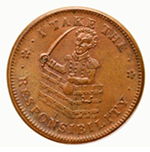 Figure 3. Hard Times Token depicting President Andrew Jackson, from The National Museum of
American History.
Figure 3. Hard Times Token depicting President Andrew Jackson, from The National Museum of
American History.
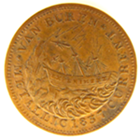 Figure 4. Hard Times Token depicting a metaphorical shipwreck, from The National Museum of
American History.
Figure 4. Hard Times Token depicting a metaphorical shipwreck, from The National Museum of
American History.
References
Clay, Edward Williams and Robinson, Henry R.
1897 The Times. New York: printed and published by H.R. Robinson. Photograph.
The Library of Congress. (https://www.loc.gov/item/2008661304/)