Among the many eye-catching artifacts recovered from the Smith's St. Leonard site (c. 1711-1754) here at Jefferson Patterson
Park are glass beads. These beads range in style, color, and form and were used in different ways. But what can the
distribution of these beads across a large complex site tell us about the people who used them?
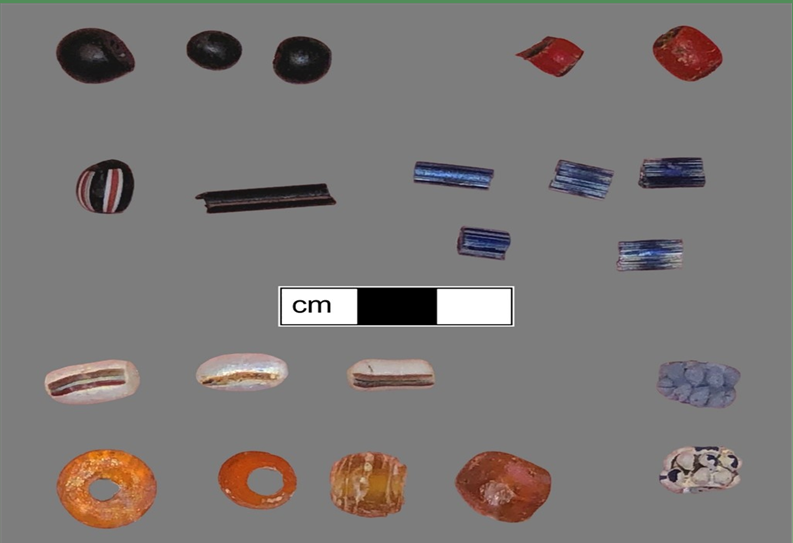 Figure 1. Sample of beads recovered from the Smith's St. Leonard site.
Archaeologists classify beads by their construction, shape, color, and decorative style. Beads can be simple, consisting of
a single color of glass, or compound, which uses multiple layers of different colored glass that can be used to create
decorative patterns such as stripes. The most common types of beads were manufactured by drawing out and stretching a
piece of molten glass from which many beads could be cut. Other beads were individually made by winding glass around
a wire. Some styles of wire-wound beads were pressed into molds while the glass was still pliable, creating complex
decorative geometries (Kidd and Kidd 2012).
Beads recovered from the Smith's St. Leonard site contain a mix of simple and compound drawn beads, as well as wire
wound beads, both molded and unmolded (Figure 1). These beads were most frequently found in spaces that were occupied
by people of African descent enslaved by the Smith family. While bead style and color may be a product of personal
or familial preference, as an object of personal adornment, beads also could have functioned as a form of cultural
signaling. Adornment items such as beads have been described by archaeologist Barbara Heath as possibly being used
in "identifying those seeking spouses, those with specialized occupations, or those with memories of Africa" (Heath
1999:50).
Distributions of beads by style and color at the Smith's St. Leonard site demonstrate that some bead types appeared
in greater frequencies within different spaces at the site. For example, white beads with alternating blue and
white stripes were recovered primarily in two spaces — a single quarter structure and an early laundry
building. The individual in possession of this bead type likely resided within that quarter and may have worked
almost exclusively within the laundry. Likewise, blue tubular-shaped beads were recovered in greater frequencies
within a separate quarter building, while also appearing north of a stable structure, within the laundry, and
in an adjacent kitchen (Figure 2).
 Figure 2. Distribution of white striped beads and blue tubular-shaped beads
at the Smith's St. Leonard Site.
Figure 2. Distribution of white striped beads and blue tubular-shaped beads
at the Smith's St. Leonard Site.
There also appeared to be a differentiation between beads present in public spaces versus private spaces. Public
spaces refer to areas outside of the homes of enslaved people, such as the Smith family residence and within
workspaces such as the laundry and kitchen. Simple opaque black beads were recovered primarily within these
public spaces, with very few having been recovered from within quarters of enslaved people. Large wound donut-
and spherical-shaped beads of bright amber, yellow, and transparent colors were excavated exclusively from
within quarters, or private spaces. These beads were also the most dominant varieties recovered from the
Kings Reach site — another Smith family plantation site that may have been occupied by enslaved people
during a portion of the occupation of Smith's St. Leonard (Figure 3). The role and significance of these colors
is not yet fully understood. Use of beads has been interpreted as a form of community resistance and as an
expression of identity that could be implemented in plain sight despite the bondage of slavery. The symbolism
imbued by the wearing of beads escaped the attention of white slave owners and overseers, who only interpreted
them at face value as simple decorative elements (Yentsch 1995:48). What Smith's St. Leonard can reveal is
that there are notable differences in their use and appearance within a single plantation site —
demonstrating there is much more to the story than that.
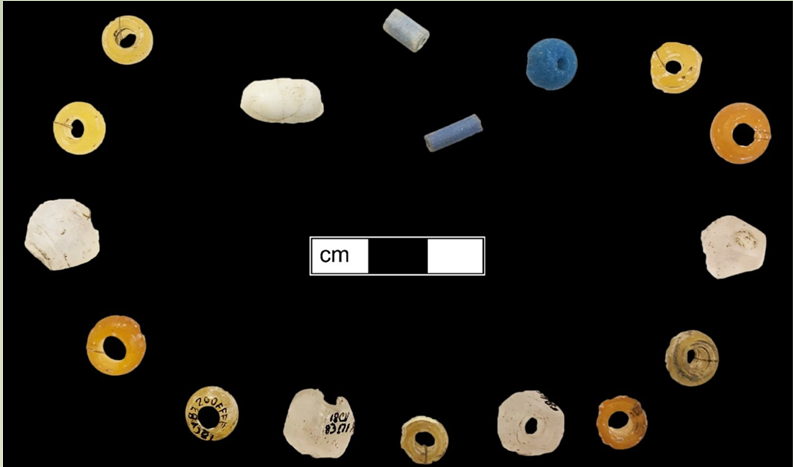 Figure 3- Sample of beads recovered from the King's Reach Site.
References
Heath, Barbara J.
1999 Buttons, Beads, and Buckles: Contextualizing Adornment Within the
Bounds of Slavery. In Historical Archaeology, Identity Formation, and the Interpretation of Ethnicity.
Maria Franklin and Garrett Fesler (eds.). Colonial Williamsburg Research Publication, Colonial Williamsburg
Foundation, Williamsburg, VA.
Kidd, Kenneth E., and Martha Ann Kidd
2012 A Classification System for Glass Beads for the Use of Field
Archaeologists. BEADS: Journal of the Society of Bead Researchers 24: 39-61. Available online
at: https://surface.syr.edu/beads/vol24/iss1/7
Yentsch, Anne
1995 Beads as Silent Witness of an African-American Past: Social
Identity and the Artifacts of Slavery in Annapolis, Maryland. Papers. Kroeber Anthropological Society
vol. 79: 44-60.