With additional stories shared by: Matt McKnight, Zachary Singer, Dennis Curry, Ed Chaney,
and Christa Conant
One of the most frequently asked questions of any archaeologist is "what is the coolest thing that you’ve ever found?"
It is a difficult question to answer, and you’d think that at this point I should have a ready-to-go answer to default
to, but I don't. A photo collage of artifact memories floods through my head as I recount figures from reports with
the grooviest objects. Most of the images that my mind digs up, however, end up being objects I played little to no
part in finding. It is the volunteers that end up finding all the cool stuff!
Case in point – In the summer of 2011, a unique find was made at the Zekiah Fort site near Waldorf, in Charles County by
a long-time volunteer of St. Mary’s College of Maryland named Kevin. Zekiah Fort was a Piscataway settlement occupied
from 1680 to 1692 (Flick et al. 2012:35). Among the recovered artifacts was a silver scabbard hook that Kevin found
while carefully sifting through the dirt (Figure 1). Scabbard hooks, which were more commonly made of cheaper
copper-alloy, were used to fasten the sheath of a sword blade to a sword belt. This silver scabbard hook features an
elaborate Baroque design with a face! How cool is that?! It is possible the item was traded by Native people because
of this depiction, as effigy figures had different meanings for Native groups than Europeans.
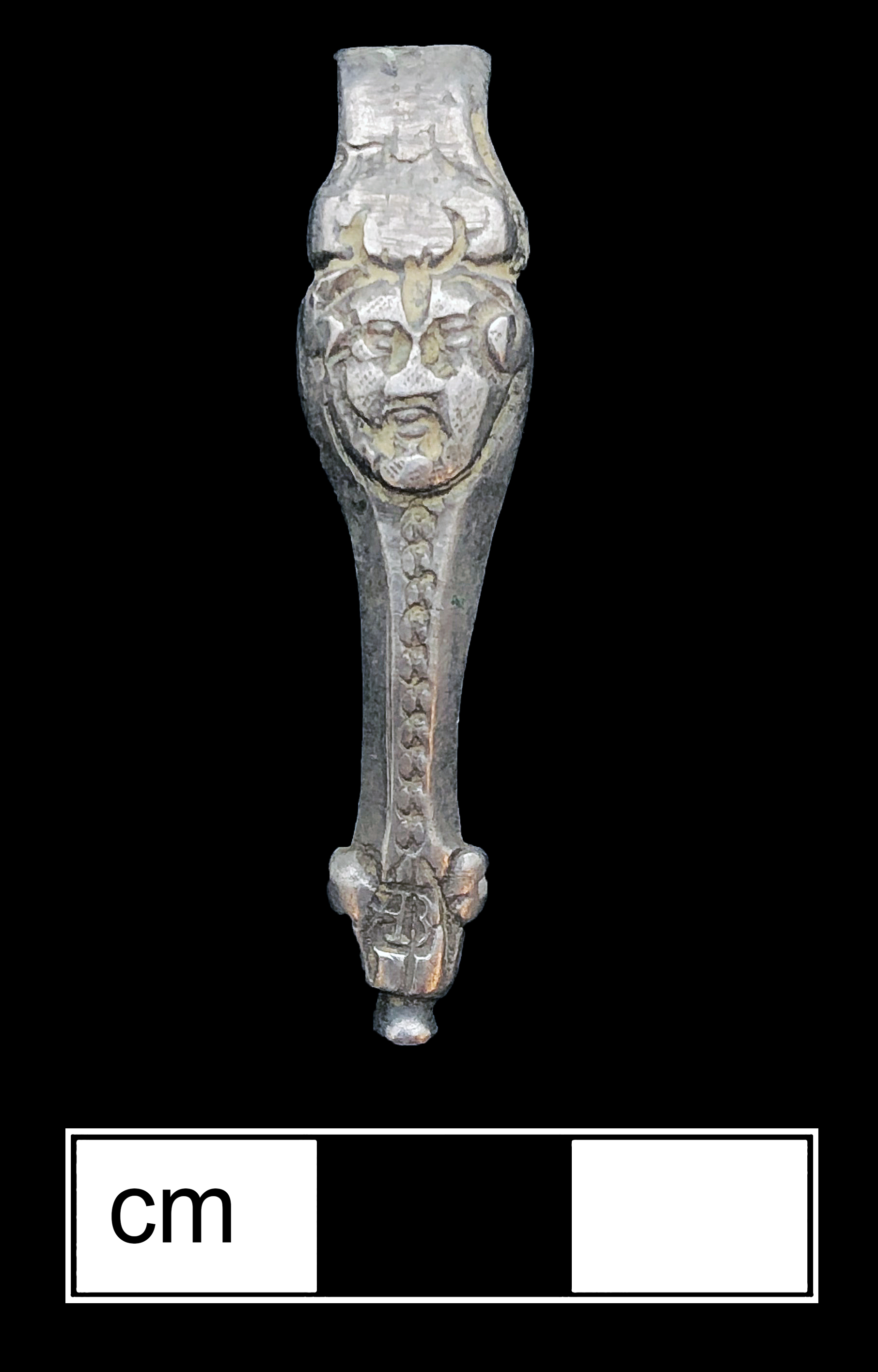 Figure 1 – Silver scabbard hook from the Zekiah Fort site.
The true meaning behind effigies on Native-made objects/artifacts is unclear. As Erin Wingfield wrote in a past Curator's
Choice 11 years ago, "effigies may have had specific meaning based on the type of object and who used them" (Wingfield
2011). A Native-made effigy face was recovered in 1990s from the Rosenstock site along the Monocacy River in Frederick
County and is among the most unique objects recovered from that site to date. The steatite effigy, or maskette, was found
by a then-11-year-old girl named Christine who volunteered at the site with her parents. Dr. Zachary Singer, Research
Archaeologist for the Maryland Historical Trust, recently made a digital 3D model of the maskette as a feature in the
2022 Maryland Archaeology Month booklet on the use of photogrammetry in archaeology (Figure 2). With the help of Dr.
Troy Townsend and students at St. Mary’s College of Maryland, the model was 3D printed so you can grab your own on
April 9, 2022 during Discovering Archaeology Day at Jefferson Patterson Park and Museum!
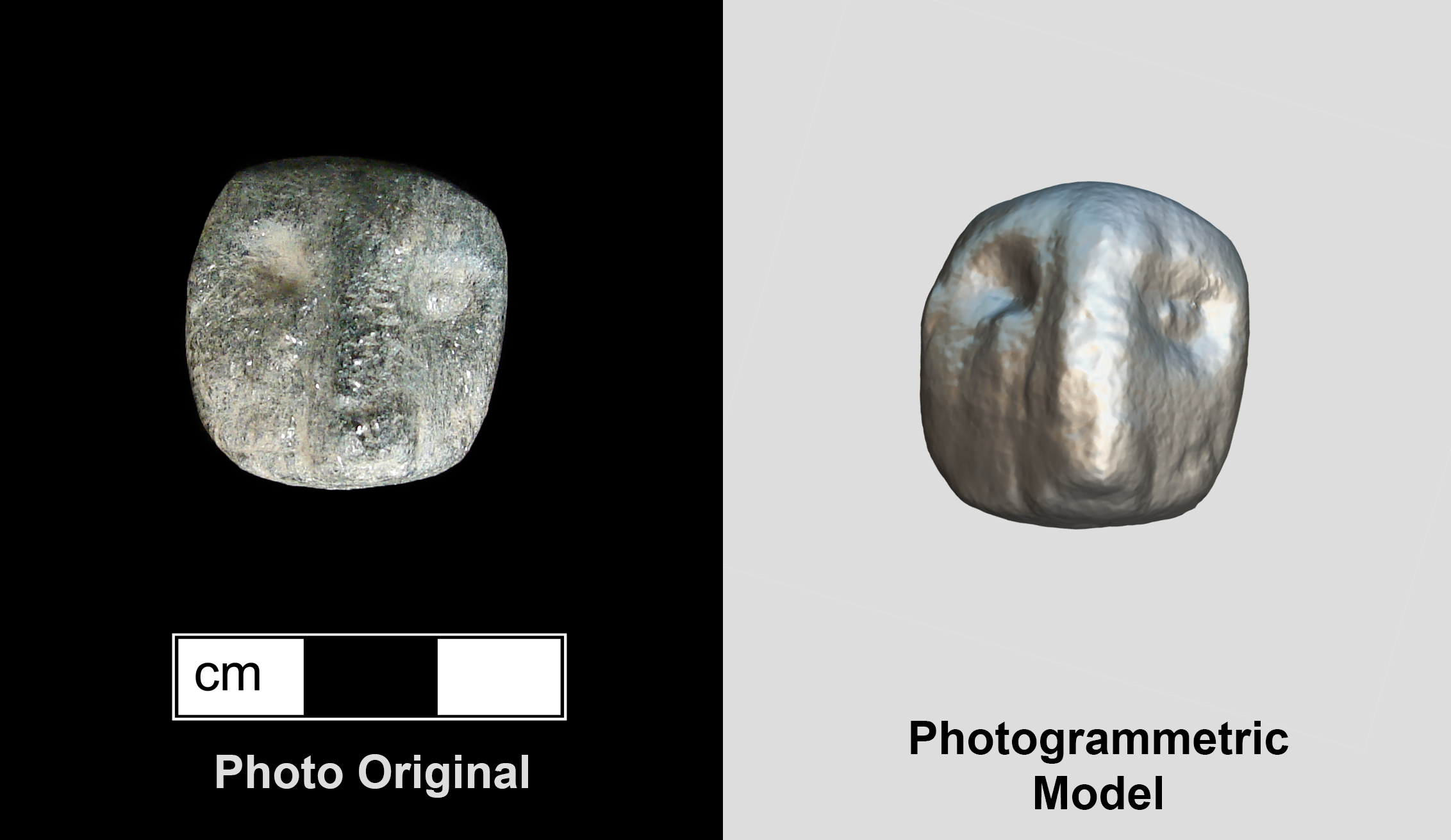 Figure 2 – 3D Photogrammetric model of a stone maskette from the Rosenstock site.
Sites located at Jefferson Patterson Park and Museum are not short on groovy finds either. Some cool objects aren't
fully realized until after field work is completed and lab work begins. Our faithful volunteer Christa dedicates a
lot of time to the archaeology of the park and is no stranger to lab work. Whilst washing artifacts from the Smith's
St. Leonard Site (c. 1711 – 1754), Christa had found a piece of corroded iron with some peculiar white inclusions.
Handing the object to the then-Deputy Director Ed Chaney, she asked "what about the white bits on it?" While
examining the artifact under a microscope it was determined that the peculiar inclusions were very small "seed"
beads! Sara Rivers-Cofield, curator of Federal Collections, was able to determine that it was part of an elaborate
embroidered wire basket (Rivers Cofield 2019). More pieces of the basket were later found by another then-volunteer
named Moira. The fragments found by Christa and Moira can be seen in Figure 3.
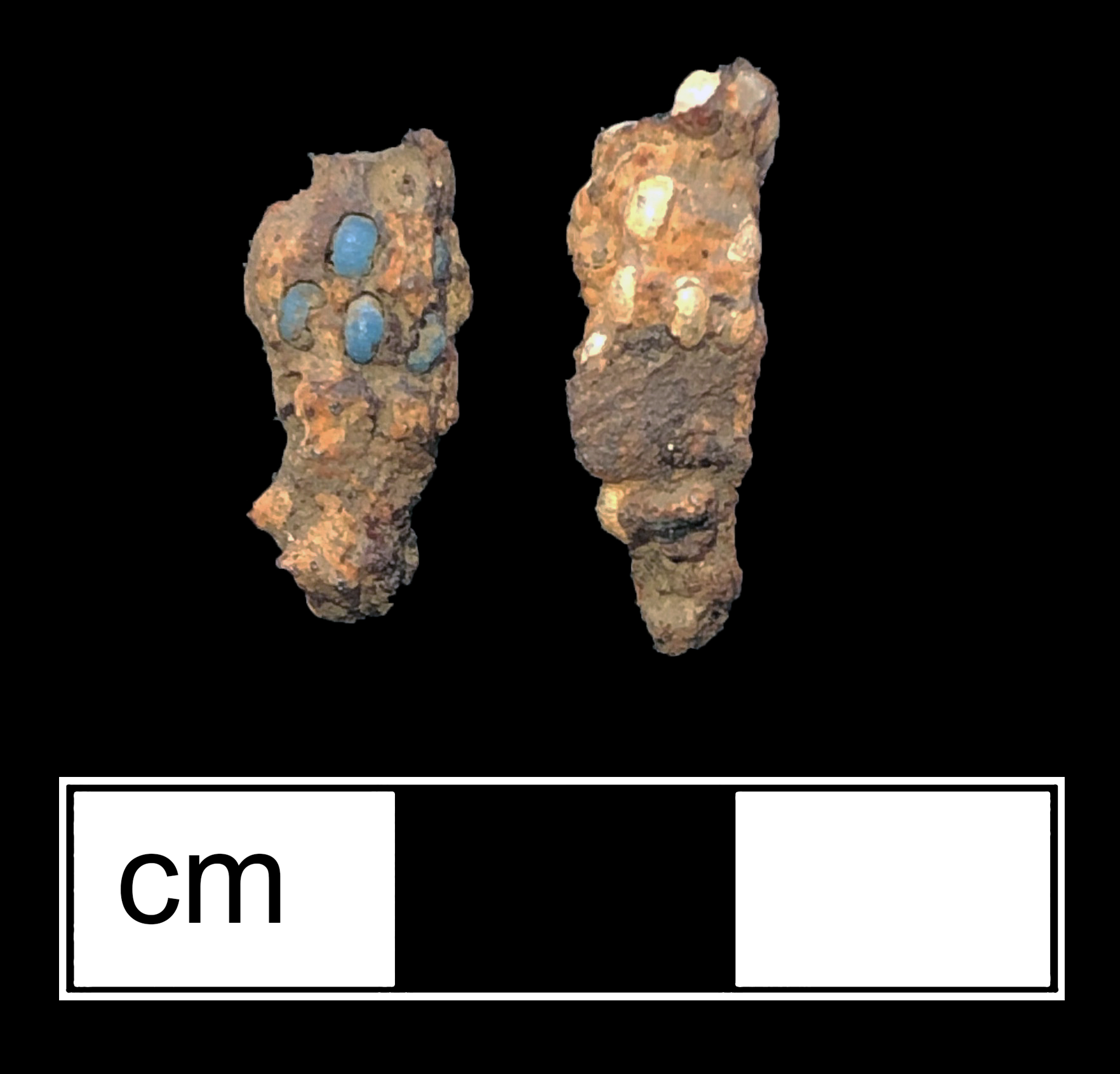 Figure 3 – Embroidered wire basket fragments from the Smith’s St. Leonard site.
It goes without saying that volunteers are invaluable in archaeology. Whether it be out in the field or in the lab,
the things they find and the stories behind them are remembered. So, am I bitter that volunteers keep finding all
the cool stuff? Not at all! Quite the contrary. If you’d like to add your name to the pantheon of volunteer greats,
join us during Public Archaeology, happening every Thursday, Friday, and Saturday this May and the first week of June!
References
Flick, Alex J., Skylar A. Bauer, Scott. M. Strickland, D. Brad Hatch, and Julia A. King
2012 "…a place now known unto them:" The Search for Zekiah Fort. St.
Mary’s College of Maryland. St. Mary's City, Maryland.
Rivers Cofield, Sara
2019 A Tisket, a Tasket, a Beaded Wire Basket. In Curator’s Choice 2019.
Maryland Archaeological Conservation Laboratory. Available online
(https://jefpat.maryland.gov/Pages/mac-lab/curators-choice/2019-curators-choice/2019-03-tisket-tasket-wire-basket.aspx).
Wingfield, Erin
2011 Native American Effigies. In Curator's Choice 2011. Maryland
Archaeological Conservation Laboratory. Available online
(https://jefpat.maryland.gov/Pages/mac-lab/curators-choice/2011-curators-choice/2011-04-native-american-effigies.aspx).