This month's Curator’s Choice is yet another example of "This is why we Re-examine Collections
(again, and again, and again)." The artifact has been on display at the Patuxent River Naval Air
Station (NAS PAX) since 2002, and it is still on display at the golf course there. It was
originally identified as a pendant, but it is so tiny it would hardly weigh down a chain (Figure 1).
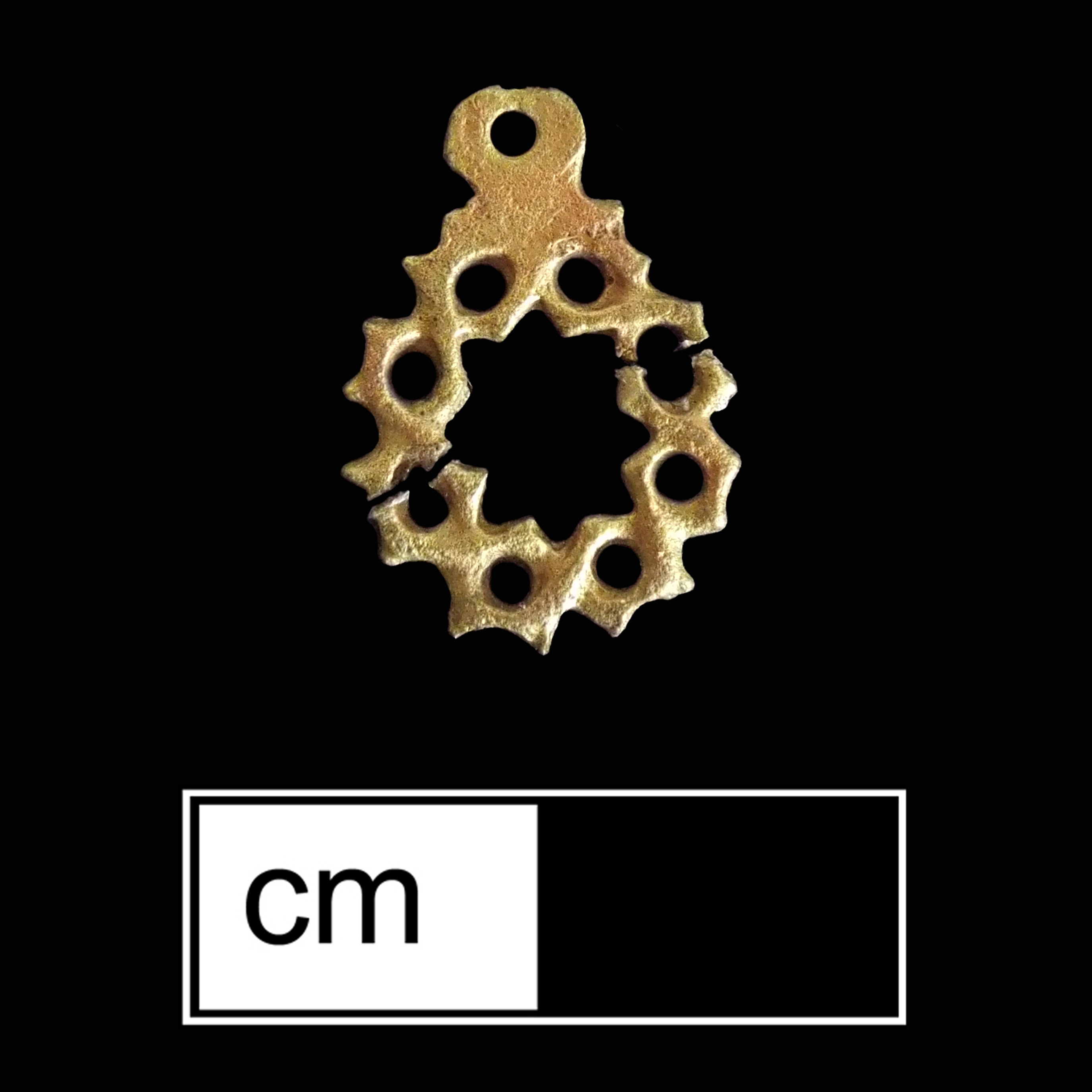 Figure 1: This tiny copper alloy pendant or charm was recovered at the Charles' Gift site over 20 years ago. Courtesy
Naval District Washington, Naval Air Station Patuxent River.
Figure 1: This tiny copper alloy pendant or charm was recovered at the Charles' Gift site over 20 years ago. Courtesy
Naval District Washington, Naval Air Station Patuxent River.
The little pendant was recovered at the Charles’ Gift site when plans to reconfigure the parking lot at
the old NAS PAX Officer’s Club triggered the need to do archaeology. The site was the home of Nicholas
Sewall, his wife Susanna, and their family beginning around 1675. Sewall was the stepson of Charles
Calvert, who was Maryland’s Proprietary Governor from 1661-1676. In 1675, Calvert became the 3rd Baron
Baltimore upon the death of his father, increasing his responsibilities in England. His stepson Nicholas
was one of the elite Catholic men Charles Calvert left in charge of Maryland’s government when he returned
to England in 1684.
Calvert's departure took place at a time when Catholic-Protestant divisions contributed to a great deal of
unrest in Maryland. This tension erupted in 1689 when word of England's Glorious Revolution reached the
colony. After William and Mary moved to England to replace the unpopular Catholic James II, armed Protestants
used intimidation and superior numbers to overthrow the Catholic Calvert family’s control of Maryland. Nicholas
Sewall fled to Virginia, where he lived in exile for years, complaining that his plantation suffered in
his absence.
Nicholas was able to return home eventually in the 1690s, not as a political leader, but still a wealthy
landowner. Archaeology from his home under the NAS PAX parking lot revealed that upon his return, a huge
borrow pit was excavated to get clay for brick making, and a new home with a brick foundation was erected to
replace a post-in-ground house that had suffered rot and disrepair. The bottom of this pit was filled with
daily trash plus construction debris from the new home, while the top was filled with trash and debris from
the destruction of the older house. The copper alloy pendant that is the subject of this Curator's Choice was
found in that filled borrow pit, so it has a date of ca. 1675-1700.
While preparing a scholarly article about the about the site in partnership with the archaeologist who originally
oversaw the excavations, I went to NAS PAX take new pictures of the exhibit artifacts this spring. Perhaps it
was the raking light, or the fact that Easter was coming up, but suddenly it didn’t look like just a pretty
wreath shape, it looked like a Crown of Thorns. This led to a new avenue for research.
It turns out that some rosaries from the 16th-18th centuries had beads or charms in the shape of the Instruments
of the Passion of Christ, such as a hammer, nails, hands, feet, and the crown of thorns (Figure 2). Also, the
only two beads found at the site were in the same soil level as the pendant, further suggesting it had been
part of a disarticulated rosary (Figure 3A). After 20 years on display, we now think this artifact is not
just any piece of jewelry; it’s an expression of faith with much more meaning.
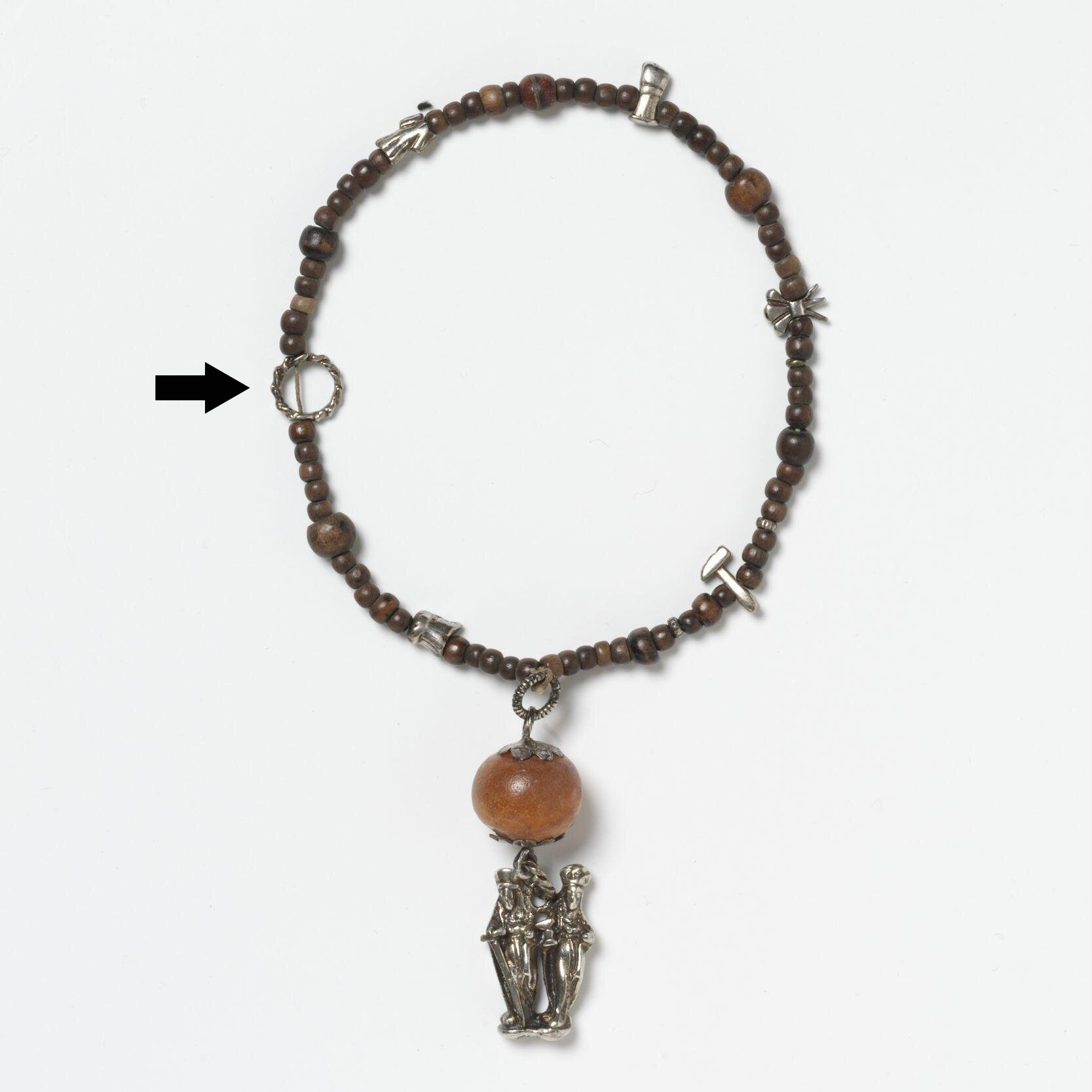 Figure 2: This rosary was made in Germany ca. 1475-1500 and every 10th bead is a silver representation of one of the
Instruments of the Passion. The arrow points to the crown of thorns, which is strung as a bead instead of a charm
like the example from Charles' Gift. Victoria and Albert Museum Accession 517-1903,
https://collections.vam.ac.uk/item/O17404/paternoster-unknown/
Figure 2: This rosary was made in Germany ca. 1475-1500 and every 10th bead is a silver representation of one of the
Instruments of the Passion. The arrow points to the crown of thorns, which is strung as a bead instead of a charm
like the example from Charles' Gift. Victoria and Albert Museum Accession 517-1903,
https://collections.vam.ac.uk/item/O17404/paternoster-unknown/
Other artifacts in the feature might also have Catholic associations, such as a king figurine that might have
been perceived by Protestants as an idol, and a book clasp dating to a time when most books people owned were
religious ones (Figure 3B-C). The fact that these artifacts—all of which would have been highly valued by the
Sewalls—ended up in the trash in the aftermath of Maryland’s Protestant uprising suggests that Nicholas fled
with good reason, and his home was probably ransacked while he was away.
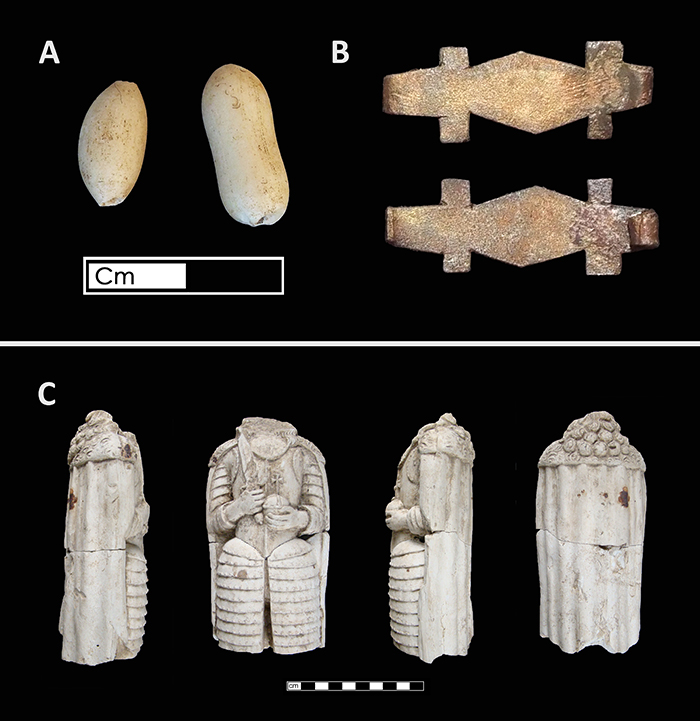 Figure 3: More artifacts from the borrow pit where the pendant was found. A. The only beads in the feature were these
two opaque white beads, found in the same soil layer as the pendant. B. A book clasp which probably adorned a
Bible, prayer book, or other religious text. C. Four angles of a pipe clay figurine of a king. While not
necessarily a Roman Catholic item, Protestants might have considered this to be an idol and attributed its presence
to the Sewalls' Catholicism. Courtesy Naval District Washington, Naval Air Station Patuxent River.
Figure 3: More artifacts from the borrow pit where the pendant was found. A. The only beads in the feature were these
two opaque white beads, found in the same soil layer as the pendant. B. A book clasp which probably adorned a
Bible, prayer book, or other religious text. C. Four angles of a pipe clay figurine of a king. While not
necessarily a Roman Catholic item, Protestants might have considered this to be an idol and attributed its presence
to the Sewalls' Catholicism. Courtesy Naval District Washington, Naval Air Station Patuxent River.
Over 20 years after the tiny copper alloy artifact went on exhibit, we can still learn about the site by researching
its presence from a new angle. It was not just evidence of jewelry or wealth; it was a symbol of the faith that
put the Sewall family in the crosshairs of conflict at the end of the 17th century.
References
Hornum, Michael B., Andrew D. Madsen, Christian Davenport, John Clarke, Kathleen M. Child, and
Martha Williams
2001 Phase III Archaeological Data Recovery at Site 18ST704, Naval Air
Station Patuxent River, St. Mary's County, Maryland. Report Prepared for Tams Consultants, Inc., Arlington, Virginia.
Hornum, Michael B., and Sara Rivers Cofield
2022 Archaeological Deposits from Site 18ST704 Associated with Maryland's
1689 Revolution in Government. Manuscript in progress for the journal Maryland Archaeology.