An estimated 68 million turkeys are eaten in the last two months of the year in the United
States with nearly seventy percent consumed in November (Banks and Wolford 2022). While this
level of consumption is largely due to the domestication and industrial-scale raising of
turkeys, both the historical record and archaeological evidence suggest that turkey has
always been a common food source.
The use of turkey has been identified in archaeological contexts from Mesoamerica dating
between 2,800 and 2,100 years ago with evidence for domestication occurring roughly 1,800
years ago. At least two domesticated turkey species, originating from Mesoamerica and southwest
North America, were imported to Europe in the early 1500s where additional varieties of the
Mesoamerican species were produced and re-introduced to North America (Speller et al. 2010).
The use of turkey spread so quickly European colonists were already familiar with the bird
when they immigrated in the 17th century.
While it is less clear whether turkey domestication or management occurred in pre-Contact
eastern North America, we do know that turkeys were a local wild resource for the inhabitants
of the Smith St. Leonard site in the 18th century. The Smiths were a wealthy planter family who
lived in Calvert County from the mid-17th until the mid-18th centuries at various locations
within what is now Jefferson Patterson Park and Museum. As wealthy landowners, meals would
have followed particular social guidelines, especially when involving guests outside of the
family. Dinners were often several courses with presentations of multiple dishes laid out
on the table (Figure 1). Domestic artifacts recovered alongside the turkey remains indicate
that whichever meals the turkey was part of occurred towards the end of the family's
occupation of the site in the 1740s to 1750s.
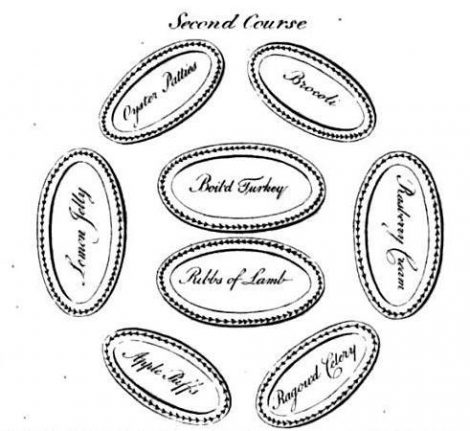 Figure 1. Illustrated example of an 18th century second course. Boiled Turkey is
featured as a central dish alongside lamb ribs and other sweet and savory dishes. From
https://www.manuscriptcookbookssurvey.org/what-exactly-was-the-tudor-and-stuart-banquet/
Figure 1. Illustrated example of an 18th century second course. Boiled Turkey is
featured as a central dish alongside lamb ribs and other sweet and savory dishes. From
https://www.manuscriptcookbookssurvey.org/what-exactly-was-the-tudor-and-stuart-banquet/
The bird bones pictured here are remains from multiple turkeys (Meleagris gallopavo)
recovered from a kitchen cellar at the 18th-century Smith's St. Leonard site (18CV91). Nearly
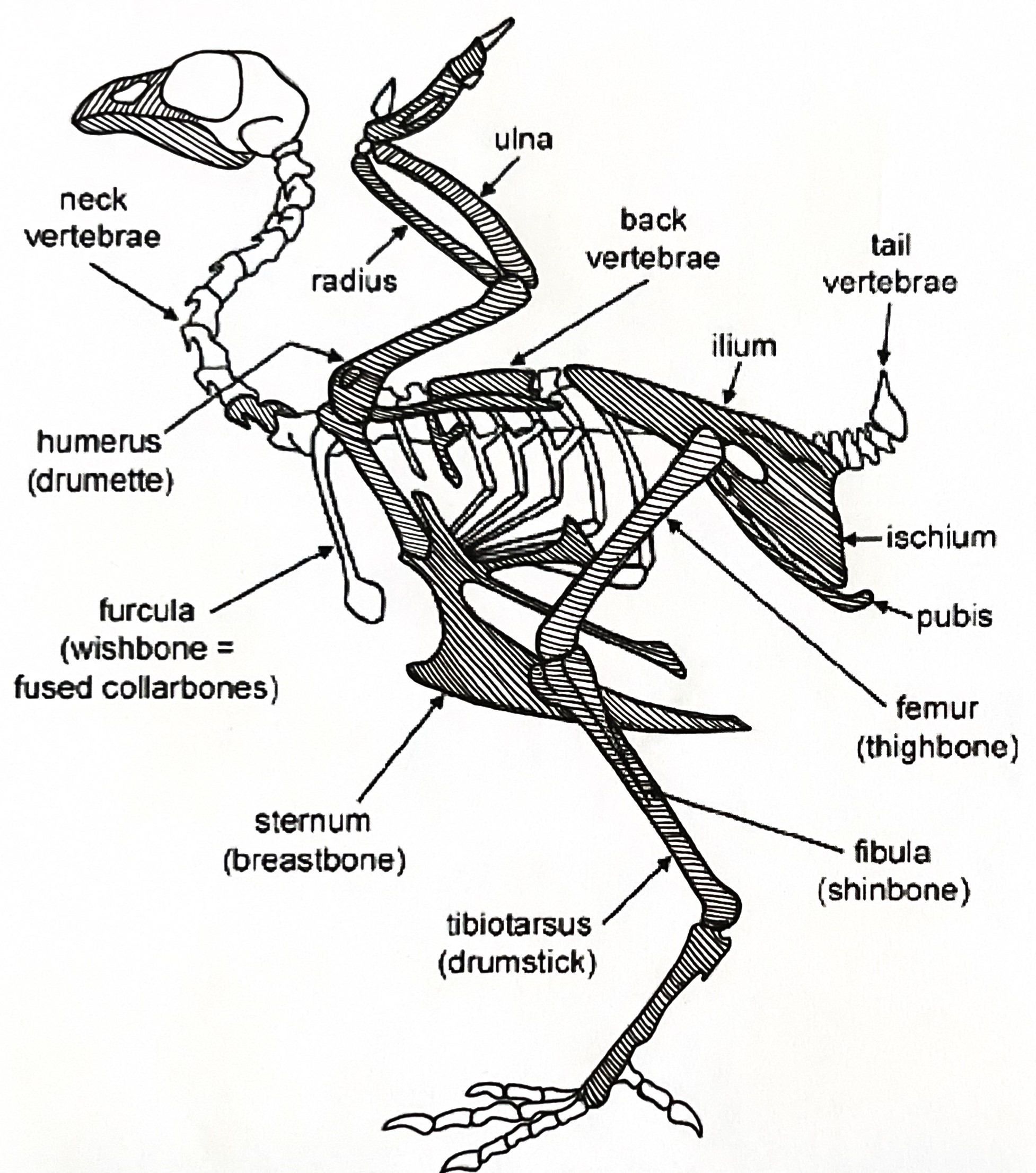
every skeletal element is accounted for, indicating that the birds were brought to the
kitchen area whole rather than being butchered into smaller pieces first (Figure 2). Some
of the bones show evidence of slicing, cutting, and possibly even boiling which are
visible since these activities leave thin scratches, clean broken edges, and change the
surface texture of bones. Analyzing these characteristics can tell archaeologists how foods
were used and prepared.
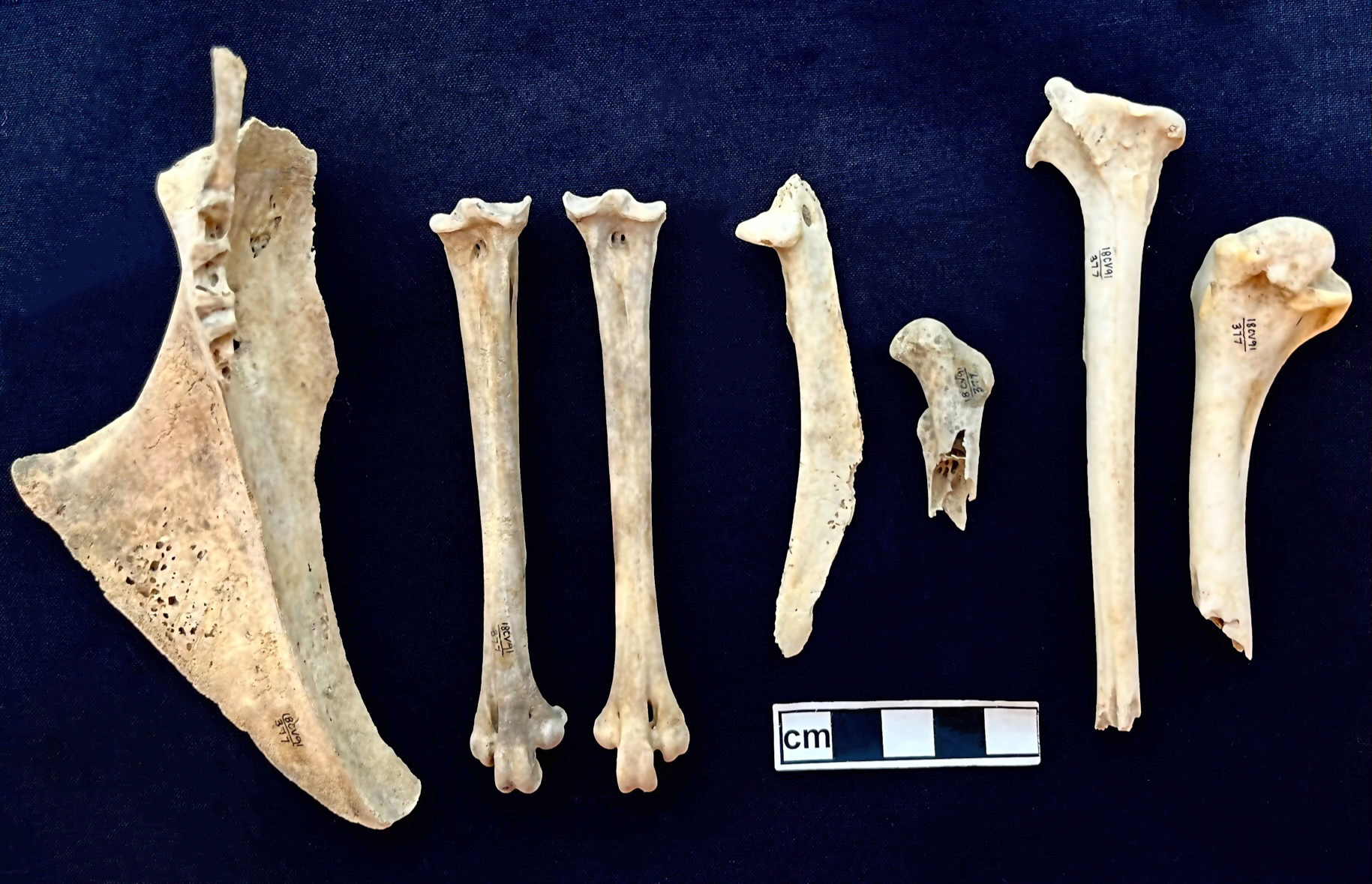 Figure 2. Fragments of turkey bones (left to right, sternum, tarsometatarsus, scapula,
coracoid, tibiotarsus, and humerus) from 18CV91 and the skeletal anatomy of a turkey. Hatched
areas represent elements identified in the cellar fill. Image adapted from CFAES Ohio State
University Extension.
Figure 2. Fragments of turkey bones (left to right, sternum, tarsometatarsus, scapula,
coracoid, tibiotarsus, and humerus) from 18CV91 and the skeletal anatomy of a turkey. Hatched
areas represent elements identified in the cellar fill. Image adapted from CFAES Ohio State
University Extension.
While turkey is generally consumed on a less regular basis now, it was not reserved primarily
for holidays in the past. Recipe books from the 18th century provide instructions on how to
choose meats at the market, prepare turkey boiled, roasted, and stewed as well as suggestions
for different sauces and garnishes. Perhaps if anyone feels like experimenting with a new
recipe this holiday season try Hannah Glasse's recipe for roasting a turkey, "the genteel way,"
by cutting it down the back, stuffing it with various ingredients, and then roasting it.
She goes on to suggest serving it with oyster sauce, celery sauce, or a good gravy — and
then garnish it with lemon (Figure 3).
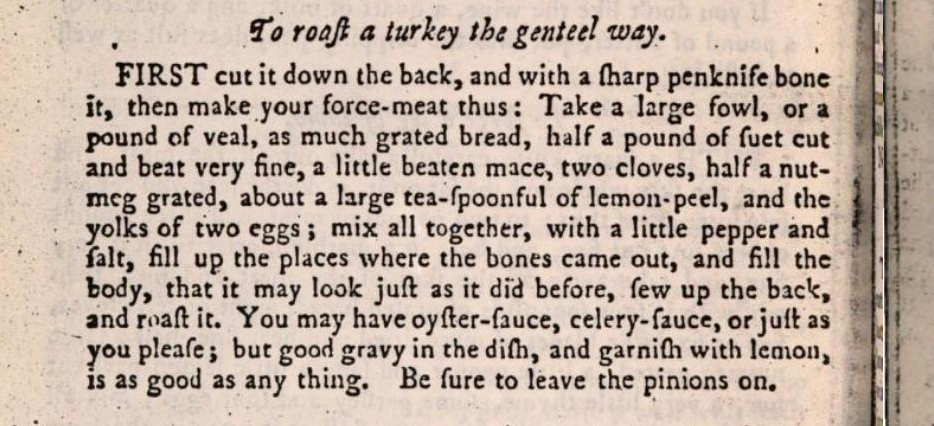 Figure 3. Instructions for roasting a turkey, from Hannah Glasse's The Art
of Cookery, Made Plain and Easy.
Figure 3. Instructions for roasting a turkey, from Hannah Glasse's The Art
of Cookery, Made Plain and Easy.