It's the holiday season, and that means it's time to hope the supply chain is running at full
strength in time for Christmas. It’s been hard to have America’s mail-order retail addiction
disrupted by the pandemic and its cascade effects. Having to wait two weeks instead of two days
for shipping? Seriously? Thanks to this experience I’ve gone from thinking this month's Curator's
Choice is just, "That's so cool!" to feeling a deeper sympathy with whoever had a hand in
creating this unusual find.
The object is a curb bit from the ca. 1689-1711 King's Reach site at Jefferson Patterson Park and
Museum (Figure 1). At that point in Maryland’s colonial history, most people lived on dispersed
tobacco plantations, and horses had become a necessity for traveling to visit neighbors or gather
for church and court sessions (Breen 1977). Horse racing was one of the popular entertainments
at these gatherings, and apparently it was rare to see anyone traveling on foot.
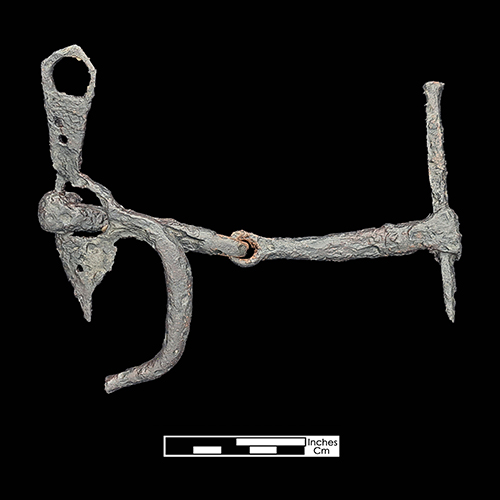 Figure 1: Altered curb bit from the King’s Reach site (c. 1689-1711) showing
a broken curb cheek piece on the left, and a nail wedged in the mouthpiece on the right.
18CV83-197K, Lot 300. Photo by the author.
Figure 1: Altered curb bit from the King’s Reach site (c. 1689-1711) showing
a broken curb cheek piece on the left, and a nail wedged in the mouthpiece on the right.
18CV83-197K, Lot 300. Photo by the author.
Unfortunately for Maryland's planters, the area lacked local saddlery operations, and the specialized
metal workers who made bits, stirrups, spurs, and other riding hardware were across the Atlantic.
Merchants shipped English-made saddles and bridles to Maryland and Virginia by the thousands every
year to help the colonists outfit their steeds, but the bit from King's Reach may be evidence that
the supply chain perhaps wasn't robust enough to suit the site's residents.
At the turn of the 18th century, a typical English curb bit was symmetrical with a chain that attached
under the horse's chin and reins connected to rings at the bottom (Figure 2, top). The reins hang below
the horse's mouth and a chain attaches under the horse's chin. This contrasts with a snaffle, which has
a rein loop at each edge of the mouth (Figure 2, bottom).
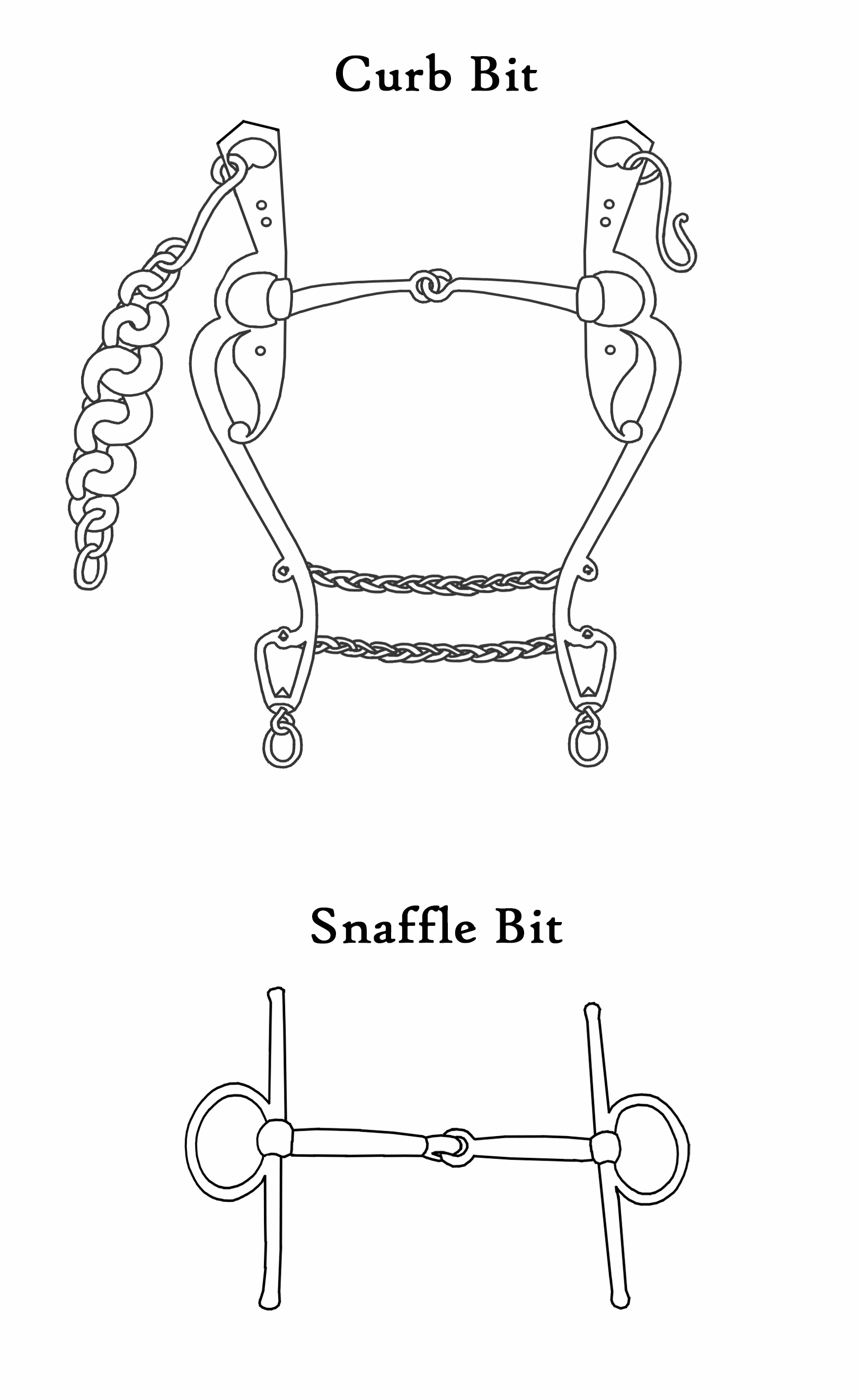 Figure 2: Examples of curb bit and snaffle bit forms. Figure by the author.
When I first saw the King's Reach bit it looked like a curb on one side and snaffle on the other, until
I realized the snaffle side had no ring. Instead, it just has a long nail shoved into the mouthpiece
where the other side of the curb bit used to be. That is… not normal. I don’t know what happened to
motivate someone to lodge a nail in this bit, but I'd be willing to wager cursing was involved, and
I have two completely unprovable theories.
Theory 1: The bit broke and someone tried to rig it. I don’t know exactly how that would have worked,
but it seems like the result would not have been ideal. In this scenario, the desperate rider I
envision would have tossed the bit as soon as a replacement could be obtained. Curb bits were
imported from England though, and before 1760 ships typically only made the trip once a year (Carr
and Walsh 1994). Unless a local merchant’s store had a new curb bit, there might have been a long
wait for a new one.
Theory 2: My second theory has to do with the non-expletive kind of curses-—witchcraft. At the turn
of the 18th century, Maryland’s colonists believed in the influence of witches and the impact curses
could have on the health of people and animals. One of the materials valued for its ability to
combat witchcraft was iron. To protect themselves, people put a horseshoe over the door, iron
in the threshold or hearth, etc. Having pointy things also helped, like using a horseshoe with nails
in it, or putting pins in a witch bottle (See past Curator’s Choices from August 2009 and March 2021).
The archaeological context of the bit with the nail is a subfloor pit inside the main dwelling at
King's Reach. Maybe when the bit broke, people decided to keep it for the protective value of iron,
add a pointy nail to make it even more fierce as a weapon against witchcraft, and then place it
under the house for protection.
Both of my theories could be completely wrong and something else motivated someone to alter this bit
as they did, but no matter what, this is the kind of artifact that shows not just something people
owned, but something people altered. The bit had one straightforward function for a horse, and then
it had a second mysterious life involving a nail. Whether it was the iron itself that retained value
for reuse, or the functionality of the bit, I can sympathize with the possible supply chain problems
that might have led to this discovery. Imagine relying heavily on imported goods when shipping might
take a year instead of a few days, and if the goods are unsatisfactory your chance to give a zero star
review in an angry letter might take another year to reach the seller. It's a wonder we don't find
more innovative alterations of imported artifacts like this as people squeezed whatever value they
could out of the things that had traversed an ocean to reach them.
References Cited
Breen, T.H.
1977 Horses and Gentlemen: The Cultural Significance of Gambling
among the Gentry of Virginia. The William and Mary Quarterly 34(2):239-257.
Carr, Lois Green, and Lorena S. Walsh
1994 Changing Lifestyles and Consumer Behavior in the Colonial
Chesapeake. In Of Consuming Interest: The Style of Life in the Eighteenth Century, edited
by Cary Carson, Ronald Hoffman, and Peter J. Albert, pp. 59-166. U. Press of Virginia,
Charlottesville, Virginia.