It is a common challenge for parents to persuade their young children to brush their teeth. Let's
face it, kids don't tend to think a lot about the future consequences of their actions and, besides,
standing at a sink for two or three minutes when there are video games to be played is just plain
boring.
Perhaps if today's youngsters understood that they have it easy compared to kids from just over one
hundred years ago, they would consider themselves lucky to be getting up close and personal twice
a day with nylon bristles set in a plastic handle. Up until the 1920s, when the use of plastic
became common in toothbrush manufacture, they were made from cow bone with bristles of hog's
hair. Unlike wood, bone stood up well to being wet and was also inexpensive. Cattle femurs were
shaped and then bleached or boiled in hydrogen peroxide to remove grease (Mattick 2010:11).
Bristles were made of natural materials-—primarily boar bristles--until 1937, when shortages were
caused by the war between China (the leading source of bristles) and Japan (Segrove 2010). The
bristles were attached in a series of drilled holes using copper wire or thread to keep them in
place.
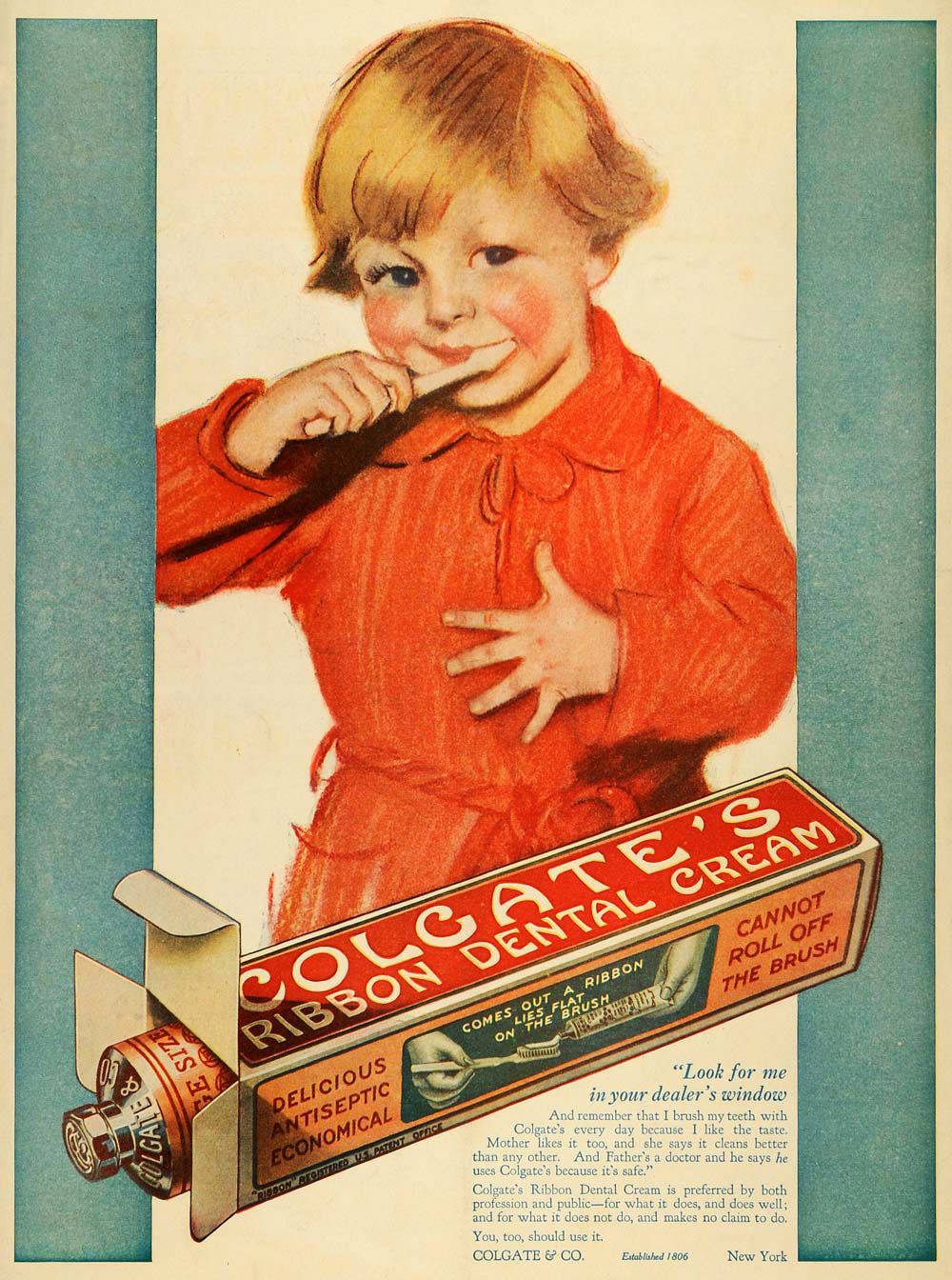 Figure 1. Colgate advertisement by unknown artist, from Saturday Evening
Post, September 7, 1918. Toothpaste company advertisements invariably showed
children enjoying the process of cleaning their teeth.
Figure 1. Colgate advertisement by unknown artist, from Saturday Evening
Post, September 7, 1918. Toothpaste company advertisements invariably showed
children enjoying the process of cleaning their teeth.
While most toothbrushes found by archaeologists have been broken (hence discarded), this toothbrush
from the Howard-McHenry Mill (18BA100) is complete. Also unusually, the handle is stamped with
identifying information: "Geo. E. Seal Baltimore; O/68/M." Baltimore business directories show
Seal was in business as a druggist in Baltimore between 1883 and 1906 (Woods 1883:1107, Polk
1906:1803). Green staining from the copper wire is visible on the back of the toothbrush.
.jpg) Figure 2. Complete toothbrush from near the house at the 19th-century Howard-McHenry
Mill site in Baltimore County.
Figure 2. Complete toothbrush from near the house at the 19th-century Howard-McHenry
Mill site in Baltimore County.
.jpg) Figure 3. Reverse side of the toothbrush, showing staining from the copper
wire used to hold the bristles in place.
Figure 3. Reverse side of the toothbrush, showing staining from the copper
wire used to hold the bristles in place.
Toothbrushes have become such a fundamental part of our daily hygiene routine that it is sometimes
easy to overlook the fact that they were not in common, widespread use in North America until the
twentieth century. It is estimated that only one person in four in the United States owned a
toothbrush in the 1920s (Segrove 2010:19).
References Cited
Hurry, Silas, and Maureen Kavanagh
1983 Intensive Archeological Investigations at the
Howard-McHenry Site, a Nineteenth Century Mill/Tenancy. Maryland Geological Survey Division
of Archeology File Report 182. Prepared for the Maryland State Highway Administration.
Mattick, Barbara E.
1993 The History of Toothbrushes and Their Nature as
Archaeological Artifacts. The Florida Anthropologist. Volume 46, Number 3.
September 1993. Pp. 162-184.
Polk, R.L.
1905 Baltimore city directory for the year
commencing …: containing an alphabetical list of business firms and private citizens,
a directory of the city officers, terms of court, churches … also a revised
street directory, and a complete classified business directory … of all trades,
professions and pursuits. (1906). R.L. Polk & Co., Baltimore.
Segrove, Kerry
2010 America Brushes Up; The Use and Marketing
of Toothpaste and Toothbrushes in the Twentieth Century. McFarland and Company
Publishers, Jefferson, North Carolina.
Woods' Baltimore City Directory
1883 Woods' Baltimore City Directory.
John W. Woods, Baltimore. https://archive.org/details/woodsbaltimoreci1883balt