In the early 1930s, diplomat Jefferson Patterson constructed a small beach cottage on his new country
estate in Calvert County, Maryland. Patterson would stay in the cottage while his much larger Colonial
Revival brick house overlooking the Patuxent River was being built. One of the features of the rustic
cottage that survives to the present day were wall mounted fire grenades, designed to shatter and
disperse fire-quenching chemicals when heated. Of course, these grenades have been supplanted by fire
extinguishers, but they are a fun throwback to the early twentieth century.
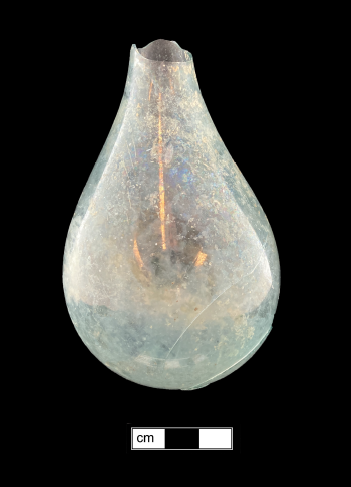 Figure 1. Tear-drop shaped fire grenade from the Schifferstadt site (18FR134). The
rounded base of this grenade indicates that it was probably mounted in a wall bracket and may
have been a grenade that had a spring-loaded trigger that reacted to heat.
Figure 1. Tear-drop shaped fire grenade from the Schifferstadt site (18FR134). The
rounded base of this grenade indicates that it was probably mounted in a wall bracket and may
have been a grenade that had a spring-loaded trigger that reacted to heat.
A similar object, resembling an elongated light bulb, was discovered in a privy that was filled in
the third quarter of the nineteenth century at the Schifferstadt site (18FR134) in Frederick County
(Ballweber et al. 1997) and is now in the collections of the Maryland Archaeological Conservation
Lab (Figure 1). At first, the function of this object was a mystery; it was similar in shape to
some early baby bottles, but the thinness of the glass made this use impractical. The mystery was
ultimately cracked by a lab volunteer who collects bottle and table glass.
Fire grenades, most common between the 1870s and the 1920s, were small (4" diameter) glass globes.
While the Schifferstadt fire grenade is plain and more tear-drop shaped, many of the fire grenades
manufactured in the United States were molded in bright colors with ornate patterns depicting company
names, stars and quilted backgrounds (Figure 2). The thin-walled vessels were designed to be thrown
at the fire, shattering easily and dispersing chemicals that robbed the fire of oxygen (McCormick
2022). Their compact size made them easy to store and use in homes, businesses, trains, and even
automobiles (Kohlstedt 2016). They could be deployed quickly when a fire broke out and since they
were thrown, it was not necessary to get as close to the fire to use it (Figure 3).
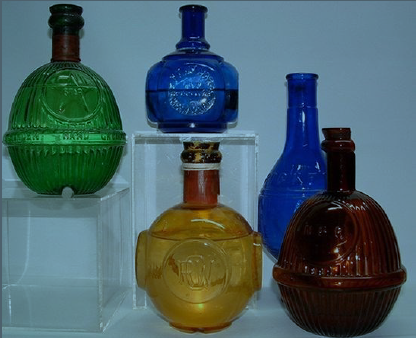 Figure 2. A range of brightly colored and decorated orb shaped fire grenades from the late
1800s. From Antiquebottledepot.com.
Figure 2. A range of brightly colored and decorated orb shaped fire grenades from the late
1800s. From Antiquebottledepot.com.
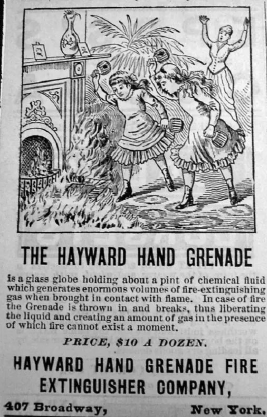 Figure 3. Advertisements for fire grenades often showed women and children deploying them,
demonstrating how easy they were to use. Image from
Antiquetrader.com.
Figure 3. Advertisements for fire grenades often showed women and children deploying them,
demonstrating how easy they were to use. Image from
Antiquetrader.com.
Some grenades contained a mixture of salt water and sodium bicarbonate. The carbonic acid reputedly had forty
times the extinguishing power of plain water (Scientific American 1884). Other grenades contained carbon
tetrachloride—a toxic chemical that converted to deadly phosgene gas and hydrochloric acid when mixed with
water (Kohlstedt 2016). Fire grenades fell out of use by the second quarter of the twentieth century as fire
extinguishers become more common. They are highly sought after today by collectors.
References Cited
Ballweber, Hettie L., Lori Frye, Justine McKnight, Edward Otter, Paula Mask, and Eric Jenkins
1997 History and Archaeology at the Schifferstadt Site (18FR134), Frederick,
Maryland. 2 vols. ACS Consultants, Columbia, MD.
Kohlstedt, Kurt
2016 Stop, Drop & Roll (or Throw): Fighting Fires with Fire Grenades.
99PercentInvisible. Online source accessed 1-13-2023 at
https://99percentinvisible.org/article/stop-drop-roll-throw-fighting-fires-fire-grenades/
McCormick, David
2022 Vintage Fire Grenades History and Value. Antique Trader. April 6, 2022.
Online source accessed 1-13-2023 at
https://www.antiquetrader.com/collectibles/fire-grenades-history-and-collectability
Scientific American
1884 The Harden Hand-Grenade Fire Extinguisher. Scientific American,
volume 51, No. 2 (July 12, 1884), p. 19. Online source accessed 1-13-2023 at
https://www.jstor.org/stable/10.2307/260880341