As the weather starts to warm up, the hibernating research archaeologist begins to head back into the
field. Here at Jefferson Patterson Park and Museum we invite the public to excavate with us. Through
our Public Archaeology program we show people the ropes on how to carefully excavate and document a
site. Part of that work involves separating artifacts in the field into different categories – iron,
brick, shell, bone, lithics (stone artifacts), and everything else (which we call the "groovy" bag).
Being able to quickly and correctly sort artifacts recovered makes the job in the lab go by more
efficiently (Figure 1).
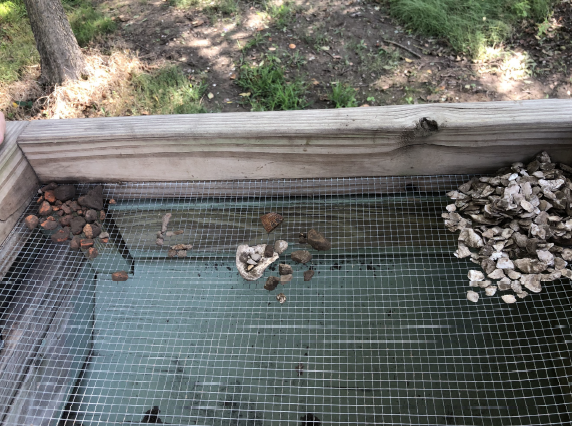 Figure 1 – Dirty artifacts sorted in the field
When screening excavated dirt, artifacts will be mixed up along with organic plant material and various
pebbles. Artifacts come out of the ground dirty, but it is not until we bring them into the lab that
we thoroughly wash them. In the field we must be creative when identifying small, uncleaned bits and
pieces. Iron objects are easy – simply use a magnet and find what sticks. For other artifact types,
there are several tactile ways in which we can narrow any prospective artifact's material type.
One of the first things we might try is the pinch test. Plant material like roots often have the
appearance of dirty tobacco pipe stems. Tobacco pipes are made of hard fired clay, while roots are
pliable or soft. Lightly pinching the object with your fingernail is one way to see if an object is
hard or soft. If it is a root, fingernail impressions will be left behind. Other artifact doppelgangers
that you can try to pinch test on could be seeds that look like beads or bark that resembles
earthenware ceramics.
Pebbles, which can range in shapes and colors, can often be mistaken for a number of different artifact
types, such as ceramic sherds, brick fragments, tobacco pipes, and shell. Things start to get a little
gross at this point, but bear with me! Pebbles pass the pinch test, so we have to kick it up a notch.
One quick and dirty method for determining pebbles versus another artifact is to use your mouth, all
because of one characteristic – porosity. Earthenware ceramics, brick, clay tobacco pipes, and shell
all have one thing in common, which is that they are ever so slightly porous. Porous materials have small,
almost imperceptible, voids in the material like a sponge that can absorb liquids – like your saliva
(Figure 2). Pressing a potential artifact against your tongue can give you a sense of its porosity.
Porous materials will stick slightly, whereas a dense rock will not (Figure 3).
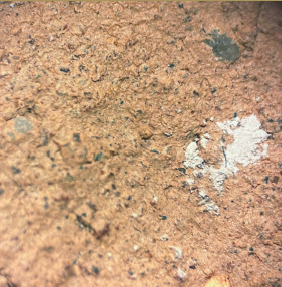 Figure 2 – Porous earthenware ceramic closeup
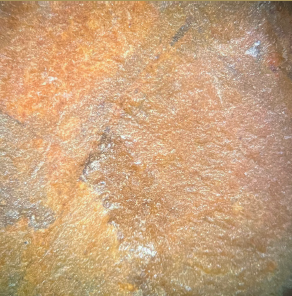 Figure 3 – Non-porous stone closeup
If the thought of licking an artifact grosses you out, there is a slightly more sanitary method called
the tooth-tapping test. Lightly tapping an object on your front teeth is another way to gauge porosity.
It is hard to describe (but obvious once you try), but tapping a stone against your teeth will give
off a higher pitched "dink"-like sound that you can perceive, whereas a porous object will give off
more of a thud-like sound. Try these methods out yourself and become a certified "sherd licker" by
joining us for our Public Archaeology program here at the park every Thursday, Friday, and Saturday
in May and the first week of June. Registration is required through our Eventbrite page (scan
the QR code to the right to sign up today!).