In the 18th and 19th centuries, people had limited options for artificial lighting. They
could use firelight, candles, rushlights, or a type of lamp called a pan lamp. A pan lamp
was made of a solid piece of iron or tin and had a shallow reservoir with at least one spout
and an upright handle (Hayward 1962). A wick made of cloth, reed, or flax was placed into the
spout (Hebard 1964). Rendered animal fat or fish oil poured into the reservoir fueled the
flame (Woodhead 1984). Some pan lamps had a second, slightly larger pan suspended below the
lamp (Figure 1) to catch drips (Perry 1969). The handle held the reservoir and drip pan together.
The lamp also had a pick attached to clean the wick and remove any debris that may have fallen
into the uncovered reservoir.
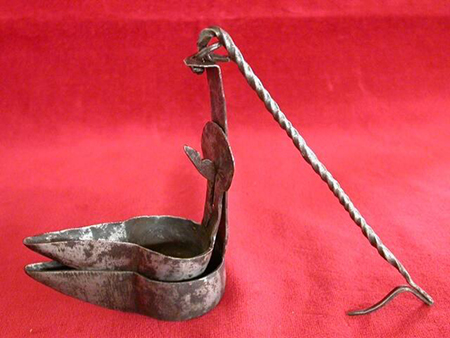 Figure 1. Fat lamp (twin pan crusie lamp), 1750-1850. New York Historical
Society Museum and Library. Gift of Miss Caroline Phelps Stokes.
Figure 1. Fat lamp (twin pan crusie lamp), 1750-1850. New York Historical
Society Museum and Library. Gift of Miss Caroline Phelps Stokes.
Pan lamps were commonly hung from a chain attached to the handle with a spike at one end which
was driven into a wall, ceiling, or from a post (Figure 2). They could also be placed on a
purpose-made stand with a handle and drip tray (Figure 3).
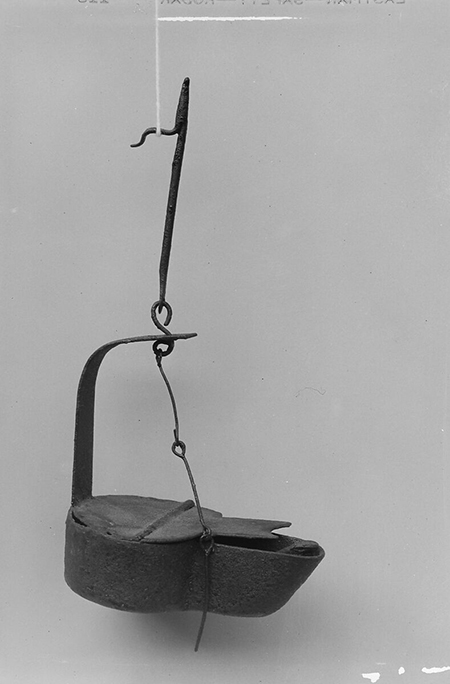 Figure 2. Betty Lamp, 1725-1775. The Metropolitan Museum of Art. Gift of Mrs.
Robert W. de Forest, 1933.
Figure 2. Betty Lamp, 1725-1775. The Metropolitan Museum of Art. Gift of Mrs.
Robert W. de Forest, 1933.
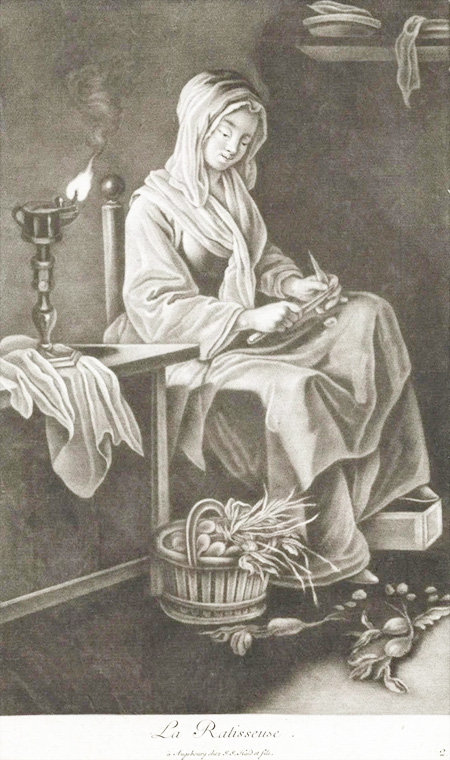 Figure 3. "La Ratisseuse" by Johann Jacobus Haid and Johann Elias Hind. Undated.
(Haid n.d.) Yale Center for British Art, Paul Mellon Fund. An example of a betty lamp on a stand.
Figure 3. "La Ratisseuse" by Johann Jacobus Haid and Johann Elias Hind. Undated.
(Haid n.d.) Yale Center for British Art, Paul Mellon Fund. An example of a betty lamp on a stand.
Various terms are used to describe pan-type lamps, including cruises, frog lamps, and kays.
These names often originate from regional or national conventions (Woodhead 1984). An enhanced
version of the pan lamp is the betty lamp, which got its name from a German word, "besser" that
means better (Perry 1969). The betty lamp sets itself apart from other pan lamps by having a
hinged or sliding lid and a slanted wick holder in the oil reservoir. The wick holder raised
the wick above the oil inside the reservoir, preventing drips.
An example of a betty lamp in the archaeological record was found at the Brumbaugh-Kendall-Grove
Homestead (18WA496) site located near the Hagerstown Regional Airport (Figure 4). The site
contains a 19th to 20th-century standing farmstead, an 18th-century house site, and a
precontact period component consisting of Middle Archaic through Middle Woodland camps.
There were three major building phases related to the principal dwelling of the farmstead.
The first stage was established by Jacob Brumbaugh in the mid-18th century, with the house
expanded by his son Henry sometime within the first decade of the 19th century. The
temporal breakdown of the features suggests that the late 18th-century occupation of the
site was centered near Feature 6, the mid-18th-century Jacob Rumbaugh Flurküchenhaus
structure. This betty lamp was found in a yard adjacent to a porch on the south side of
the house. This lamp is missing its lid and the handle riveted onto the reservoir
(Dworsky 2019).
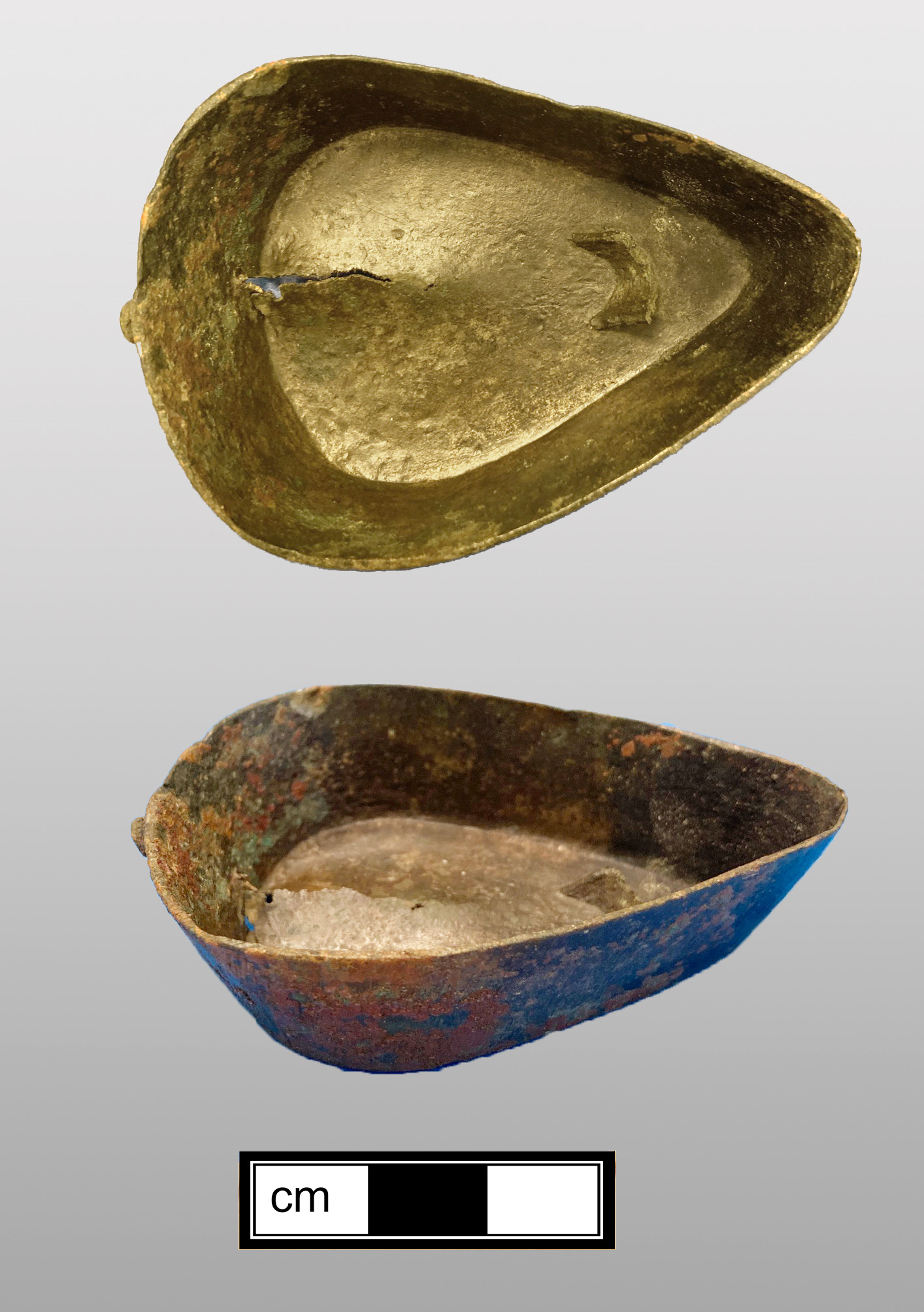 Figure 4, Betty Lamp, interior (top) and profile (bottom) views. Brumbaugh-Kendall-Grove
Homestead (18WA496) in Washington County.
Figure 4, Betty Lamp, interior (top) and profile (bottom) views. Brumbaugh-Kendall-Grove
Homestead (18WA496) in Washington County.
References Cited
Dworsky, Joel G., M.A., RPA
2019 Phase I-III Archaeological Investigations, Brumbaugh-Kendle-Grove
Farmstead (18WA496), Washington County, Maryland. Burlington: AECOM.
n.d. Fat lamp (twin pan crusie lamp).
https://emuseum.nyhistory.org/objects/37882/fat-lamp-twin-pan-crusie-lamp.
Haid, Johann Jacobus and Haid, Johann Elias
n.d. La Ratisseuse. Yale Center for British Art, Paul Mellon
Fund, New Haven. https://collections.britishart.yale.edu/catalog/tms:23255.
Hayward, Arthur H.
1962 Colonial and Early American Lighting.
New York: Dover Publications.
Hebard, Helen Bringham
1964 Early Lighting In New England.
Rutland: Charles E. Tuttle Company.
Perry, David H.
1969 Out of Darkness: A History of Lighting<.
Rochester: Rochester Museum and Science Center.
The Metropolitan Museum of Art
n.d. Betty Lamp.
https://www.metmuseum.org/art/collection/search/509?what=Betty+lamps&ao=on&ft=*&offset=0&rpp=20&pos=1.
Woodhead, E. I.
1984 Lighting Devices in the National Reference Collection, Parks Canada.
Hull: National Historic Parks and Sites Branch, Parks Canada.