These bones, either sheep or goat, were recovered in the early 1980s during excavation of
a 19th- to early 20th-century privy in Baltimore (Figure 1). Rodent marks on some of the bones
indicate they were first deposited somewhere exposed, and later re-deposited into the privy
to fill it. Fragments of lower leg bones, these probably represent sheep or goat shank, a
type of cut which generally requires slow cooking to make it tender.
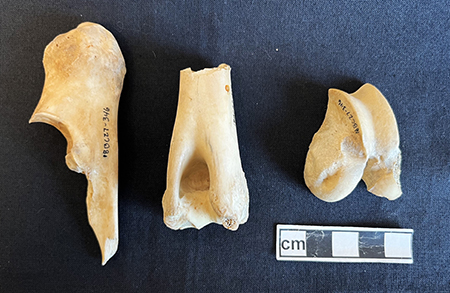 Figure 1. Goat or Sheep leg bone fragments from the Aged Home (18BC27).
Left to right: Ulna, Humerus (distal end), and femur (distal end).
Figure 1. Goat or Sheep leg bone fragments from the Aged Home (18BC27).
Left to right: Ulna, Humerus (distal end), and femur (distal end).
Documentary research revealed the privy was in the backyard of a dwelling which functioned as
a home for elderly African Americans from 1870 until 1910, including many who were formerly
enslaved (Figure 2). The Aged Home for Men and Women of the Methodist Episcopal Church was
funded almost exclusively by members of the church community. Thousands of fragments of animal
bones were recovered from the privy soils and analysis of a small sample has identified the
remains of numerous fish species, pig, cattle, muskrat, and goat/sheep bones. The bones are
the partial remnants of meals which fed the Aged Home residents (Figure 3).
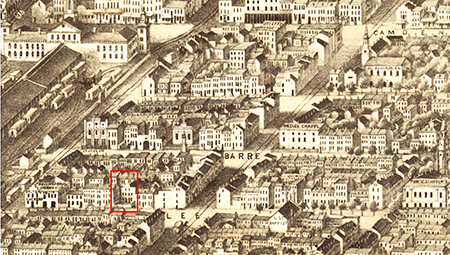 Figure 2. 1869 Sasche Map of Baltimore. Red rectangle highlights the location of
the Aged Home in Baltimore City.
Figure 2. 1869 Sasche Map of Baltimore. Red rectangle highlights the location of
the Aged Home in Baltimore City.
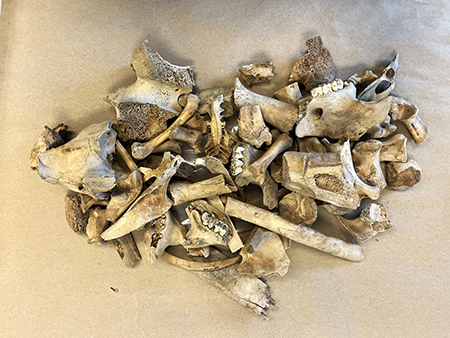 Figure 3. Assorted unanalyzed bird and mammal bone from the Aged Home (18BC27).
Some butcher marks are also evident on the bones, either from cleavers or saws.
Figure 3. Assorted unanalyzed bird and mammal bone from the Aged Home (18BC27).
Some butcher marks are also evident on the bones, either from cleavers or saws.
At first glance, these fragments may not be the most eye-catching of artifacts; however, they
can provide a lot of additional information about a site. Goats and sheep are multi-purpose
livestock. In addition to being a potential source of meat, they are often used for textiles
or milk. These uses leave different signatures in the archaeological record. Animals used
for wool are often older when they die, meaning their bones have fully fused and they may
show signs of age such as arthritis or healed injuries. Animals used for meat are often
slaughtered at a younger age, when they’ve reached peak size, but their bones are not yet
fully fused. By studying these characteristics in bones which get left behind archaeologists
can identify different patterns in animal husbandry. Many of the mammal bones from the
Aged Home are from younger individuals whose bones have not yet fully fused, suggesting they
were used for meat rather than other products.