When examining an artifact and trying to interpret its context, the focus is often
on what it is (shoe, scissors, button) and any unique characteristics. In some
instances, the material it is made of can be equally significant. For example, a
knife handle retrieved from the archaeological site of Angelica Knoll (18CV60) is
of interest due to a distinctive inscription adorning its base: *I*R*E [Figures
1 & 2]. Noteworthy in this context is the orthographic convention of the 18th
century, wherein the letter "J" bears a resemblance to the contemporary capital
"I." These initials may belong to Richard and Elizabeth Johns who moved to Angelica
Knoll between 1677 to 1717 (Sara Rivers-Cofield 2015). Of additional significance
is that the knife handle is made of ivory.
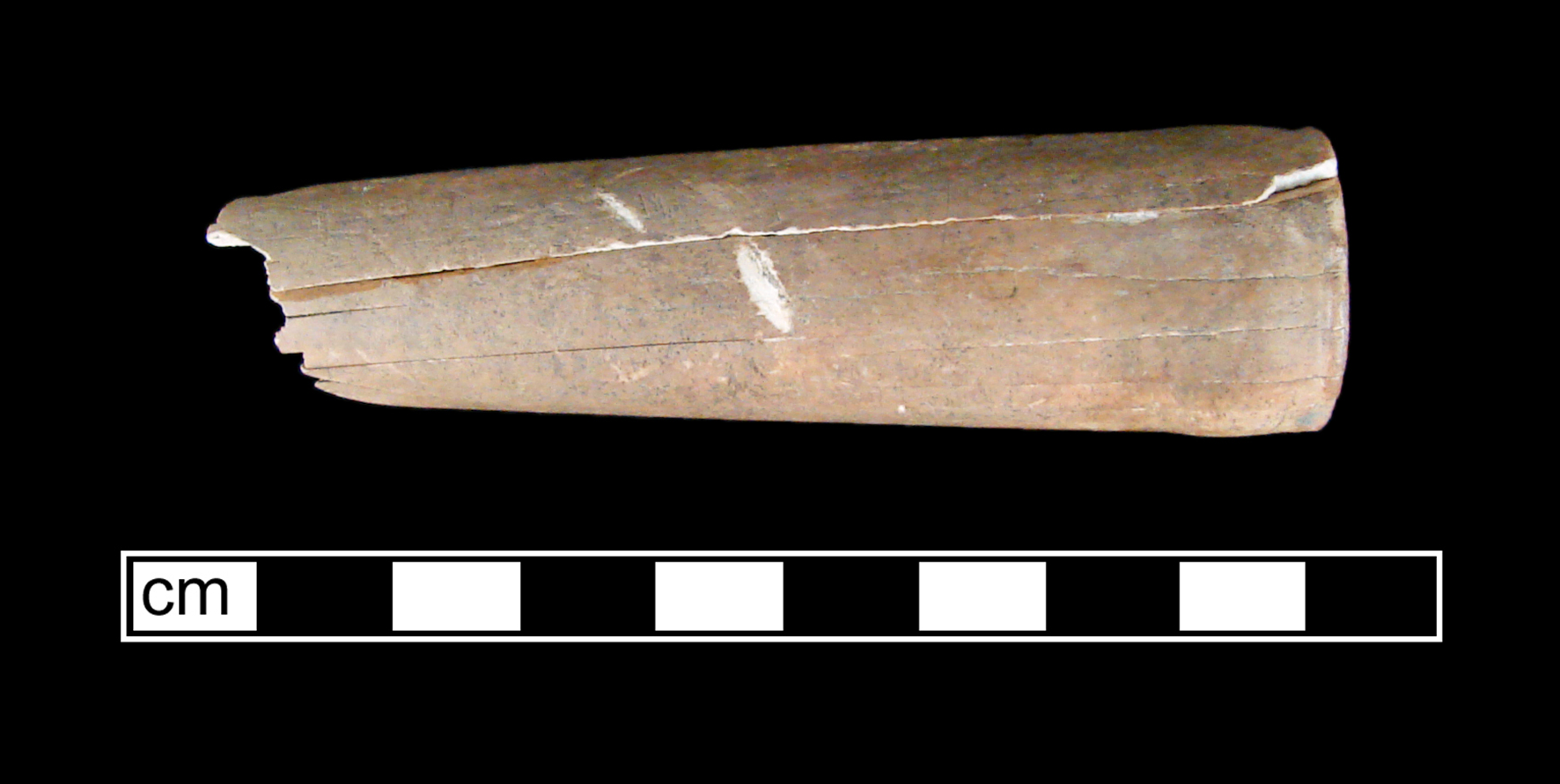 Figure 1: Ivory knife handle from the Angelica Knoll site (18CV60) missing
the iron blade.
Figure 1: Ivory knife handle from the Angelica Knoll site (18CV60) missing
the iron blade.
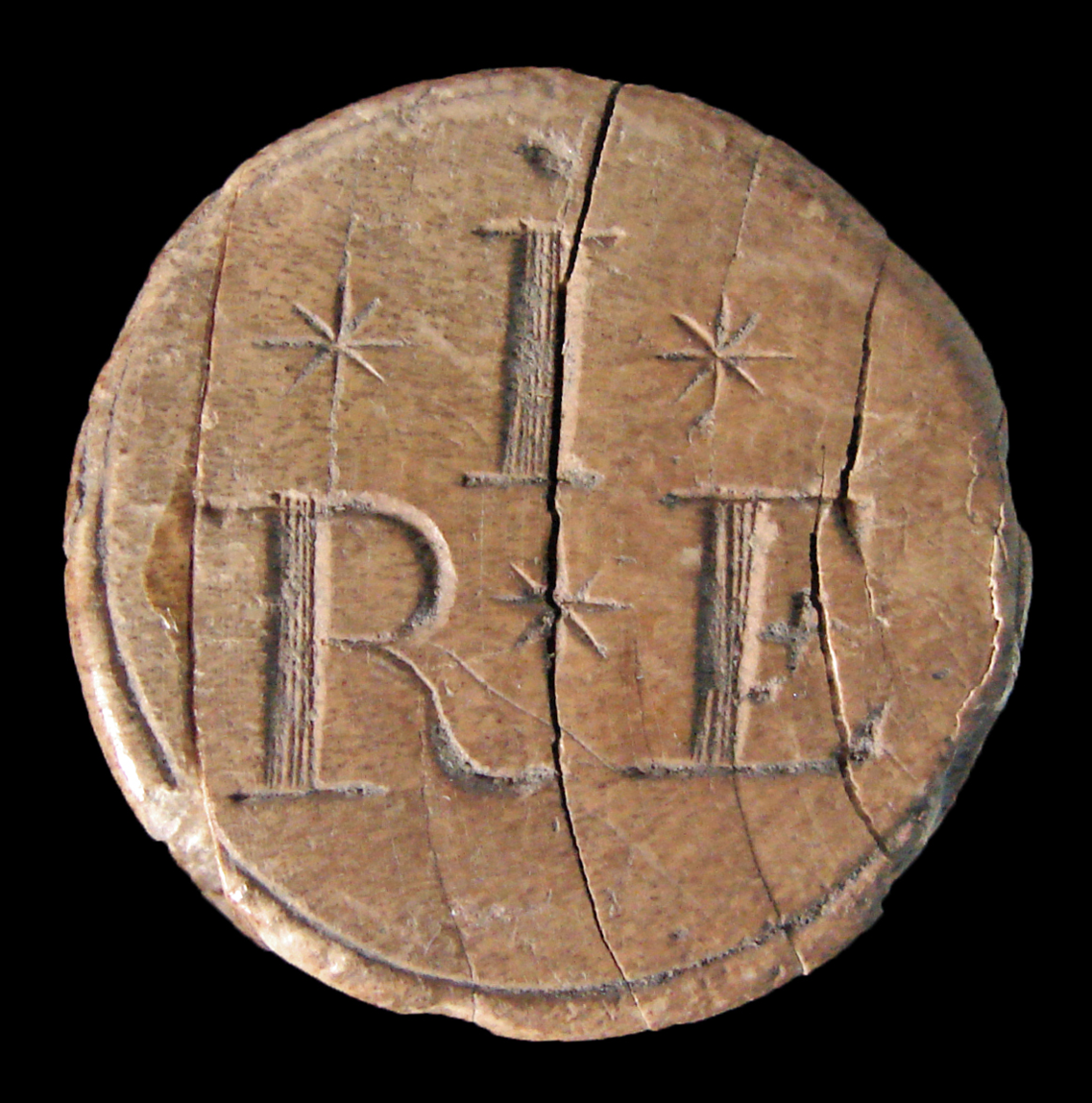 Figure 2: Base view of the handle showing the initials *J*R*E.
Ivory, as an imported luxury material, appears sporadically in archaeological contexts.
Its uses can range from decorative and artistic to plain and utilitarian. Depending
on the degree of weathering and soiling, this can make ivory difficult to identify
given its visual and functional similarities to bone. This can make it hard to
differentiate based solely on form or function. It's necessary to observe subtle
physical characteristics to correctly identify it.
As the tusk of an elephant* grows, cones of dentine form crossed by radial tubule
bundles carrying blood. The pattern formed by the dentine and tubules can be viewed
in cross section as chevrons or intersecting arcs known as Schreger lines [Figure 3].
By carefully examining all worked surfaces of an artifact, these characteristic
Schreger lines may be observed. However, soiling, weathering, or the wrong cut
angle can obscure these lines. It is also possible to identify ivory by the way
it deteriorates. Ivory is prone to delamination and cracking due to its multidirectional
structure and the susceptibility of ivory to environmental factors, particularly
changes in relative humidity and moisture.
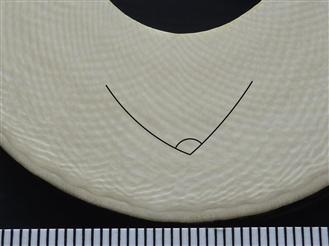 Figure 3: Schreger lines. Photo courtesy of Dr. Sonia O'Connor.
This layered cracking exhibited in the Angelica Knoll knife handle is a good indication
that it is made of ivory rather than bone, establishing it as a luxury item. It may
have been commissioned by the aforementioned couple or presented as a traditional
wedding present from friends or family. In any case, it represents not just the
relationship of the site’s inhabitants but their social status as well.
References
Rivers Cofield, Sara
2015 Explore the Artifacts of Outlander.
Web resource, https://apps.jefpat.maryland.gov/outlander/Artifacts/Slainte/Utensils.html, accessed January 2024.