Sometimes it is not just the object itself that is intriguing, but rather the
context and history behind it. Buttons are not an uncommon occurrence on
archaeological sites. What is unusual is to find many buttons from only limited
testing at a site.
A total of 8 buttons (Figure 1) were found in shovel tests in November 2023 at
the Straiten site (18CV307), a site that consisted of three dwellings that were
part of the larger community known as Wallville, here at Jefferson Patterson Park
and Museum (JPPM). Site testing sampled less than 2% of the entire site. Recovering
this many buttons during just a small survey is very unusual!
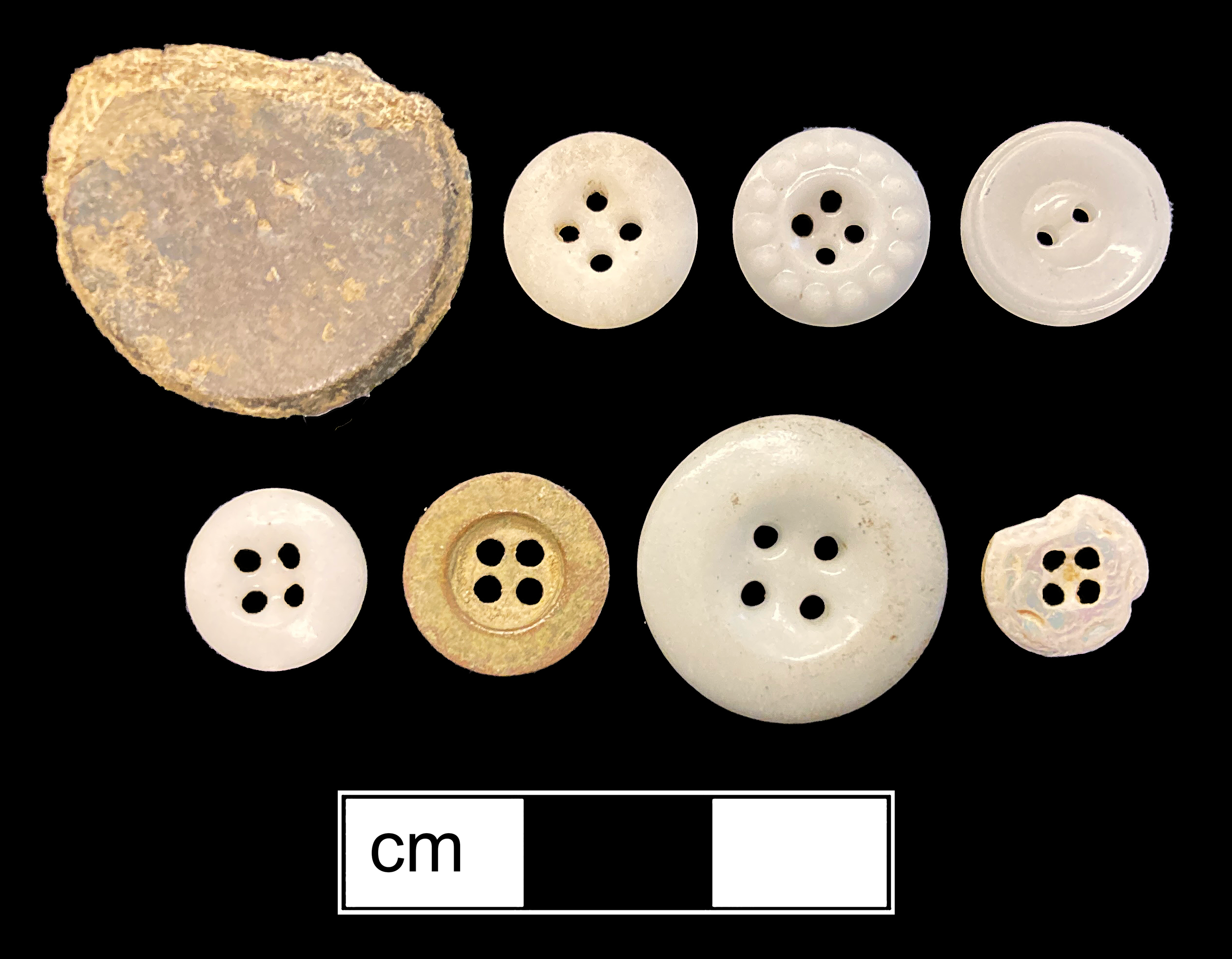 Figure 1: Buttons recovered from the Straiten site.
Located near the Patterson House at JPPM, the Straiten site gets its name from the
Straiten family, who were the last occupants of one of the three dwellings that
stood at the site beginning in the early 19th century. The Straiten home was the
last of those structures that remained standing into the 1930s, just a stone's
throw away from the old Peterson House – where the Patterson House is today.
The site’s first occupants were initially enslaved families. After emancipation
the dwellings were later lived in by some of the same families and their
descendants. In the 1880 census, the household of John W. Peterson included a
servant named Georgia Anne Egins. By the 1930 census Georgia Anne was one of
the last residents of the Straiten site, alongside her daughter Georgia and
her daughter's husband James Straiten. As a servant of the Petersons, Georgia Anne
may have worked as a laundress.
Of the buttons recovered, one stood out from the rest – a shell button with
a hexagonal decoration (Figure 2). Shell buttons, also called pearl buttons, are
made from the pearl-like iridescent lining of marine or freshwater mollusk shells.
Shell buttons from the late 18th century and into the first half of the 19th
century were typically disc-shaped with a wire pin shank on the back. They were
often expensive because they were handmade from fine colorful and iridescent
shells originating from warmer climates (Hughes and Lester 1991).
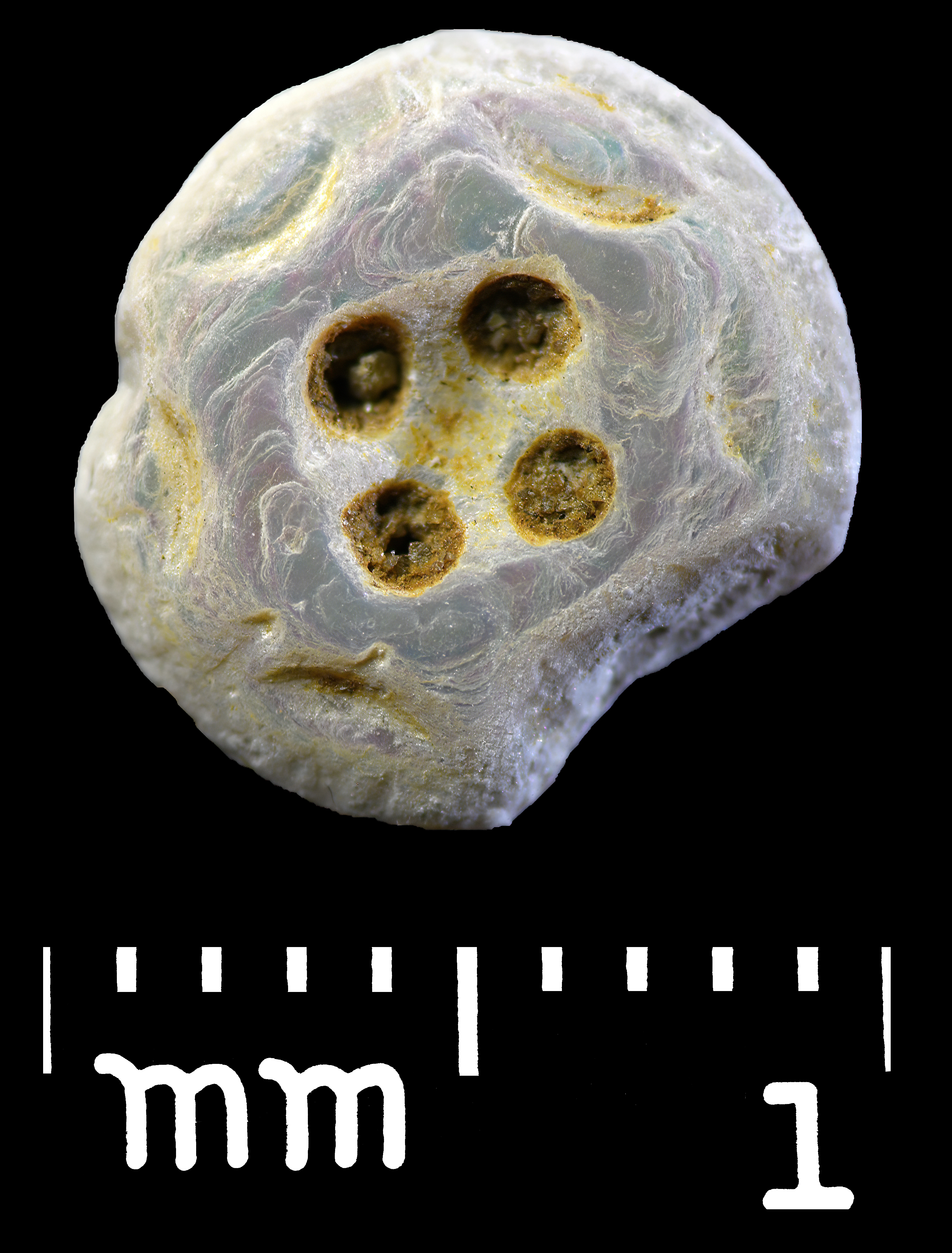 Figure 2: Shell button with lathed geometric design recovered from the
Straiten site (Photo by Michael G. Block).
Figure 2: Shell button with lathed geometric design recovered from the
Straiten site (Photo by Michael G. Block).
During the Industrial Revolution in the second half 19th century, buttons were
being mass-produced in the United States using less iridescent clam shells
available along the northeastern seaboard and later from freshwater sources
along the Mississippi River. Tubular saws were used to cut out several round
blanks from the shell (Figure 3). Holes for fastening to clothing were drilled
simultaneously on a drill press. Geometric designs like the one found on the
button from the Straiten site were made with a machine engraver in a process
called "eccentric lathe work" (Albert and Kent 1949).
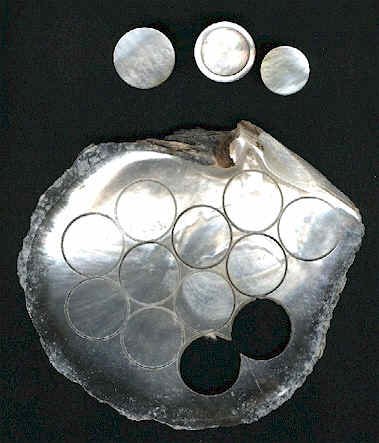 Figure 3: Button blanks cut from shell, Keep Homestead Museum, Massachusetts
(Hatton 2001).
Figure 3: Button blanks cut from shell, Keep Homestead Museum, Massachusetts
(Hatton 2001).
By the 1890s, freshwater mussels found along the Mississippi River became the
dominant source for shell buttons, which led to a thriving industry in the
Midwest. By 1900, Muscatine, Iowa was dubbed "the Pearl Button Capital of
the World," manufacturing millions of buttons per year. The overharvesting
of these shells from the Mississippi created a problem, with sources being
depleted around Muscatine and elsewhere – essentially killing the
once thriving regional industry. Plastic buttons, which were easier to
manufacture, would ultimately replace shell as a prominent button
material (Sirmans 2023).
A shell button manufacturing industry grew on the Delmarva Peninsula in Maryland
and Delaware beginning in the 1930s, using shells imported from the Mississippi
Valley and around the world. Archaeologists from the Smithsonian Environmental
Research Center documented three factories that remained in operation for several
decades: the Schwanda factory in Denton (1936 – 1996), Martinek's button shop
on Elliot Island (1949–1992), and Parizek’s button shop (1940–1972)
near Milford, Delaware (Biuk 2018).
The Straiten site was abandoned in the early 1930s, so it was unlikely that the
button originated from these more local shops and factories. It was most likely
produced sometime during the second half of the 19th century. Evidence points to
Georgia Anne being the last person to touch it. Putting a name to a specific
object is pretty rare in archaeology! To learn more about the Straitens and
other families, scan the QR code below to visit the Witnesses of Wallville
website.

References
Albert, Lillian Smith and Kathryn Kent
1949 The Complete Button Book. Doubleday &
Company, Inc. Garden City, New York.
Biuk, Siara L.
2018 Shell Button-Making on the Delmarva
Pensinsula, ca. 1930s-1990s. In Northeast Historical Archaeology, Vol. 47,
Article 3.
https://orb.binghamton.edu/cgi/viewcontent.cgi?article=1507&context=neha, accessed
March 27, 2024
Hatton, Jacquie M.
2001 Shell Buttons. Keep Homestead Museum, Monson
Massachusetts. https://keephomesteadmuseum.org/shell-buttons/, accessed March 27, 2024
Hughes, Elizabeth and Marion Lester
1991 The Big Book of Buttons. New Leaf
Publishers. Sedwick, Maine.
Sirmans, Harikleia
2023 The Pearl-Button Fever: Fishing Fortunes
from the Mississippi River Bend. PieceWork Magazine.
https://pieceworkmagazine.com/the-pearl-button-fever-fishing-fortunes-from-the-mississippi-river-bend/,
accessed March 27, 2024