Between 2008 and 2019, archaeological fieldwork was done on the Richard J. Duckett site (18PR955) ahead
of the construction of a retirement community. The property called the "Enclave at Beechfield A"
contained a plantation yard that was in use from the late 18th through the early 19th century, and
a tenant house dating to the turn of the last century (Samford 2016). Harmonica reed fragments
(see Figure 1) were recovered in a test unit associated with a temporary wooden structure or
outbuilding.
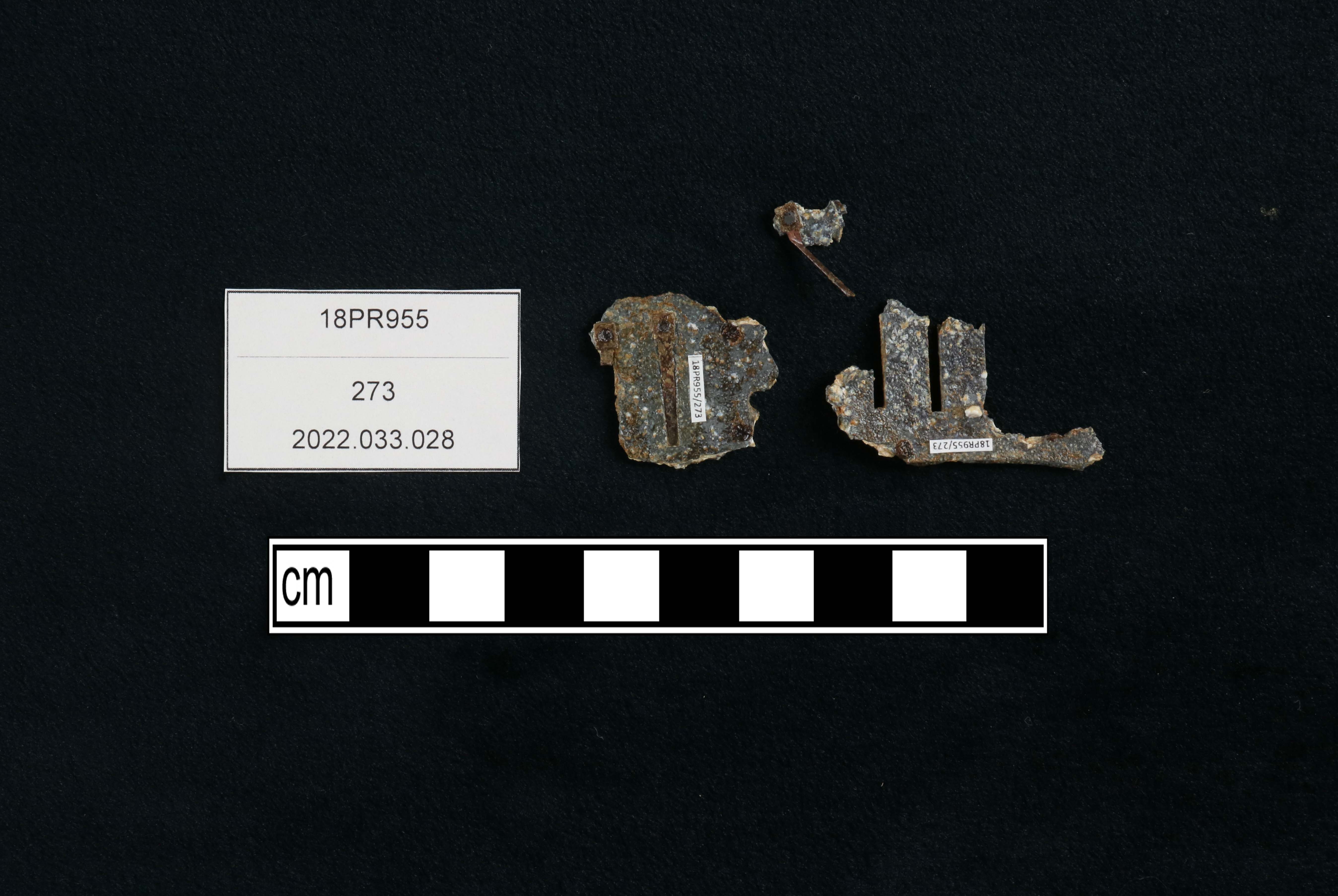 Figure 1: Harmonica reed plate fragments from the Richard J. Duckett site/Enclave at Beechfield A.
Over the centuries, the harmonica has become an iconic instrument, featured prominently in genres
like the blues, folk, and rock music. Virginie Ternisien presented an overview of the harmonica's
history in her July 2013 Curator’s Choice article, as well as a brief discussion of the structure
of the instrument and degradation of its components in archaeological contexts. But in between
the Chinese sheng (see Figure 2) – heralded as the ancestor of the harmonica – and the
Hohner Company's mass-production of the modern harmonica, there's an even stranger origin story
that many overlook (Knopper 2021).
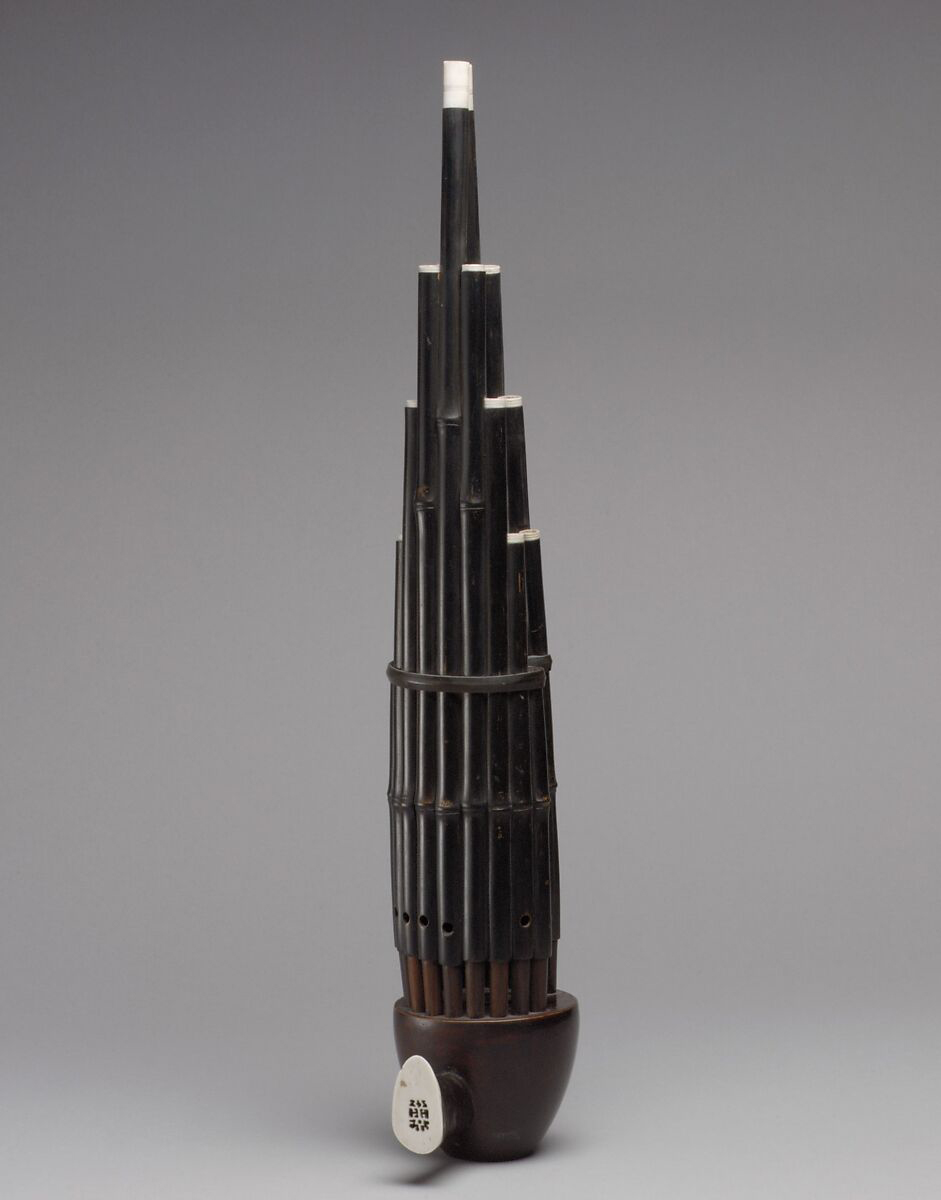 Figure 2: An example of a Chinese sheng (Metropolitan Museum of Art 2024).
In 1780, the St. Petersburg Academy of Sciences issued a challenge: explain how different vowel
sounds were made, and to replicate those tones with a device. A German physicist named
Christian Gottlieb Kratzenstein answered the call. Luckily, he had already been hard at work for
at least a decade prior to the competition on this exact scientific mystery. Many think that
his "talking machine" was modeled after the Chinese sheng, but it was considerably bigger –
estimated to be the size of a modern day piano (Great Big Story 2023).
Kratzenstein theorized that sound in humans was produced by the epiglottis, or the flexible covering
behind the tongue and above the trachea (Harvard Health Publishing 2022). According to his theory,
the epiglottis worked like a valve and vibrated as air flowed past it via the lungs.
His "talking machine" implemented this idea with a series of "flutes," each of which was fashioned
from tubes cut in half lengthwise, with one end open to airflow and the opposite end closed. Each
tube was then covered with a free reed that was made from a material that could bend and vibrate
as air was pumped through the tube (see Figure 3), thus producing sound (Ohala 2011:157).
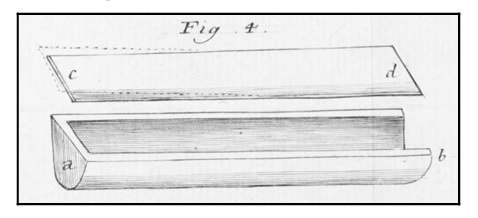 Figure 3: Diagram of one of Kratzenstein's "flutes" for his talking machine (Ohala
2011:157).
Figure 3: Diagram of one of Kratzenstein's "flutes" for his talking machine (Ohala
2011:157).
Subsequent explorations of the human voice proved his theory incorrect, but Kratzenstein's simple
device ultimately won the competition and revolutionized not only the harmonica, but other
related instruments such as the accordion, saxophone, and the reed organ (Frederick Acoustic
2024). His work inspired other innovators to scale his creation down to a more manageable
size, resulting in the modern harmonica that emerged in the 1820s in Europe (Knopper 2021).
Like Kratzenstein's machine, the modern harmonica utilized thin, brass reeds positioned over
slots that vibrated as air passed through the instrument (Yerxa 2016).
The modern harmonica owes its unique sound to not only to the Chinese sheng instrument, but
also to the work of later inventors whose efforts to fine-tune Kratzenstein's use of free
reed technology gave us the music we enjoy today. The context of the building associated with
the harmonica fragments at the Richard J. Duckett site matches the timeframe of the availability
and increasing popularity of the harmonica in the United States during the latter half of the
19th century (Ternisien 2013). It’s unlikely that we’ll ever know to whom the harmonica fragments
belonged. But the portability, simplicity, and unique sound of the harmonica undoubtedly brought
the harmonica's owner joy and respite.
References
Frederick Acoustic
2018 Pull Up a Chair – The History of The Harmonica
By Frederick Folklorist. Website accessed on June 6, 2024 at
https://frederickacoustic.org/pull-up-a-chair-the-history-of-the-harmonica-by-frederick-folklorist/.
Great Big Story
2023 The History of the Harmonica. Website Accessed on
June 24, 2024 at https://greatbigstory.com/the-history-of-the-harmonica/.
Harvard Health Publishing
2022 Epiglottis: What Is It? Website accessed on June 24,
2024 at https://www.health.harvard.edu/a_to_z/epiglottitis-a-to-z.
Knopper, Steve
2021 "A Brief History of the Harmonica." Smithsonian
Magazine. https://www.smithsonianmag.com/arts-culture/history-harmonica-180977157/.
The Metropolitan Museum of Art
2024 "Sheng, Chinese, late 19th century." The Metropolitan
Museum of Art. https://www.metmuseum.org/art/collection/search/503632.
Ohala, John J.
2011 "Christian Gottlieb Kratzenstein: Pioneer in Speech
Synthesis." In Proceedings of the 17th International Congress of Phonetic Sciences, Hong Kong,
17-21 August 2011. 156-159.
https://www.internationalphoneticassociation.org/icphs-proceedings/ICPhS2011/OnlineProceedings/SpecialSession/Session7/Ohala/Ohala.pdf.
Samford, Patricia
2016 Enclave at Beechfield A (18PR955). In Maryland Unearthed:
A Guide to Archaeological Collections at the Maryland Archaeological Conservation Laboratory.
https://apps.jefpat.maryland.gov/mdunearth/SiteSummaries/Site18PR955.aspx.
Ternisien, Virginie
2013 Fourth of July for the Harmonica! In Curator's Choice.
https://jefpat.maryland.gov/Pages/mac-lab/curators-choice/2013-curators-choice/2013-07-fourth-of-july-for-the-harmonica.aspx.
Yerxa, Winslow
2016 "How a Harmonica Works." For Dummies: A Wiley Brand.
https://www.dummies.com/article/academics-the-arts/music/instruments/harmonica/how-a-harmonica-works-146680/.