When people think of the kind of foundations archaeologists uncover, they tend
to picture the remnants of an old building, but this Curator's Choice is all
about the foundations of fashion. Clothing can be hard to identify archaeologically
because fabric rarely survives underground. To understand what people were wearing,
we rely heavily on durable fasteners (buttons, buckles, hooks and eyes, etc.) and
accessories (purse frames, parasol parts, jewelry, etc.). Metal hardware from late
19th- and early 20th-century foundation garments can also offer clues about what
people were wearing if one knows what to look for.
Excavations of the Dallam Farm/Fanny’s Inheritance site (18HA312) in Harford County,
Maryland, recovered evidence of both a corset and a hoop skirt (Figure 1). Both were
in a kitchen cellar that was abandoned around 1900. Artifacts from the cellar fill
primarily date to the second half of the 19th century.
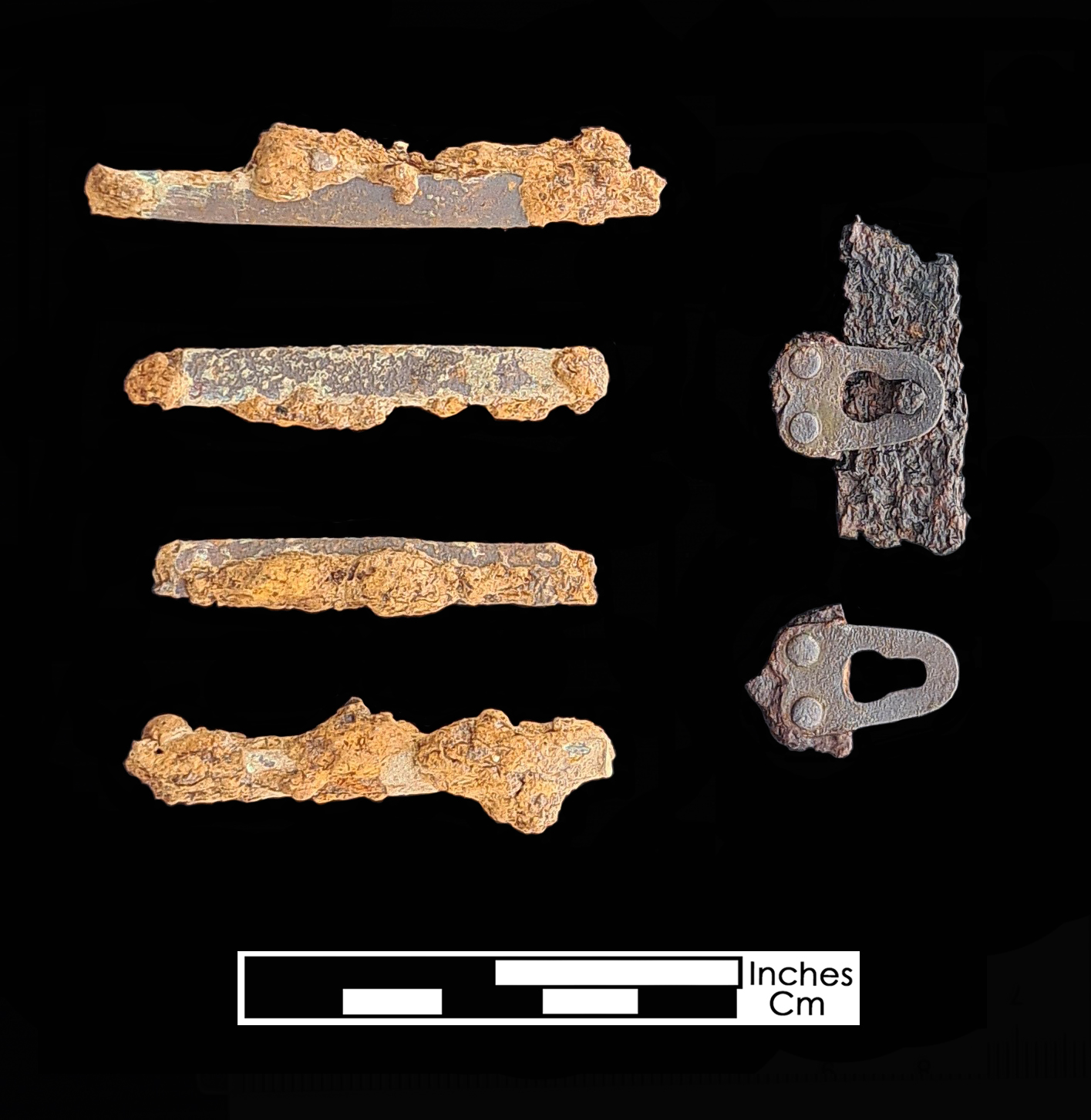 Figure 1: Four copper alloy hoop skirt brackets with iron corrosion from
the wires they encased (left) and slot-and-stud closured for a corset (right)
were recovered in Feature 23, kitchen cellar fill, at 18HA312. Courtesy U.S.
Army Garrison, Aberdeen Proving Ground.
Figure 1: Four copper alloy hoop skirt brackets with iron corrosion from
the wires they encased (left) and slot-and-stud closured for a corset (right)
were recovered in Feature 23, kitchen cellar fill, at 18HA312. Courtesy U.S.
Army Garrison, Aberdeen Proving Ground.
That date falls after the adoption of slot-and-stud closures for corsets, which were
invented in 1848 to allow wearers to leave back laces in place except for tightening
(Figure 2: Bloomingdale Brothers 1988[1886]; Lynn 2010; Takeda and Spilker 2010). These
foundations served to mold women’s bodies to fit changing trends. Similarly, a variety
of inventive foundation garments embraced lightweight metal hardware to support
fashionable skirts. Cage crinolines made of flexible wire hoops gave the skirts of
the 1850s and 1860s their famously extreme shape. In the 1870s, rear-oriented
crinolettes made of wire started to concentrate skirt volume into a bustle at the
back. This trend reached its full glory in the 1880s when bustles reached extreme
heights (Lynn 2010). This look required a great deal of architecture to achieve,
and various contraptions made of wire, springs, and ruffled canvas were available
to add body to the behind (Figure 3).
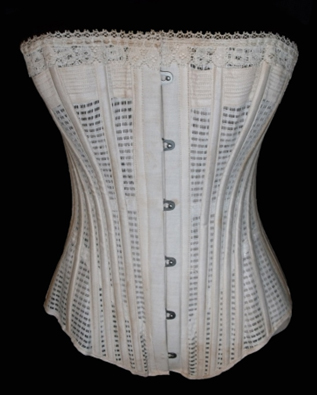 Figure 2: Late 19th-century corset with slot-and-stud front closure.
The metal busk that supports and shapes the front is covered in fabric, with
only the slots and studs visible. From the author's collection.
Figure 2: Late 19th-century corset with slot-and-stud front closure.
The metal busk that supports and shapes the front is covered in fabric, with
only the slots and studs visible. From the author's collection.
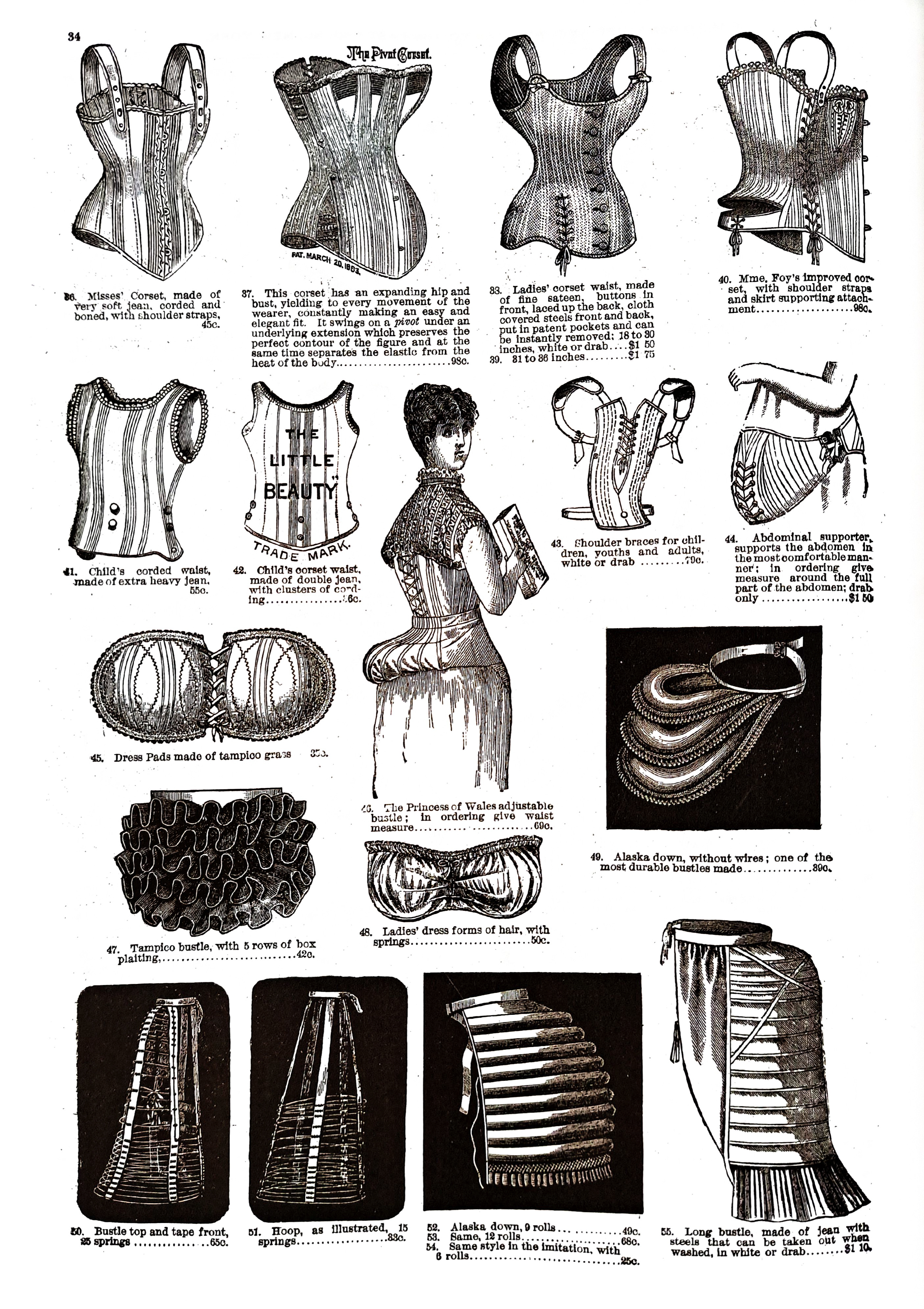 Figure 3: This page from the 1886 Bloomingdales Brothers catalog shows
a variety of foundation garments to help women boost the bust, narrow the waist,
and enhance the derriere (Bloomingdale Brothers 1988[1886]:34).
Figure 3: This page from the 1886 Bloomingdales Brothers catalog shows
a variety of foundation garments to help women boost the bust, narrow the waist,
and enhance the derriere (Bloomingdale Brothers 1988[1886]:34).
Unlike removable clothing buttons and fasteners that were frequently saved for reuse,
the hardware from rusting corsets and crinolines usually ended up in trash middens or
burn piles. That is likely how such garments ended up in the 18HA312 kitchen cellar
fill. Although the hoop skirt fragments are obscured by corrosion of the iron wires,
x-radiography reveals the form of the brackets that held the wire and secured hoops to
fabric tapes. Based on patents, the brackets found at 18HA312 were first introduced
in the mid-1860s (Figure 4).
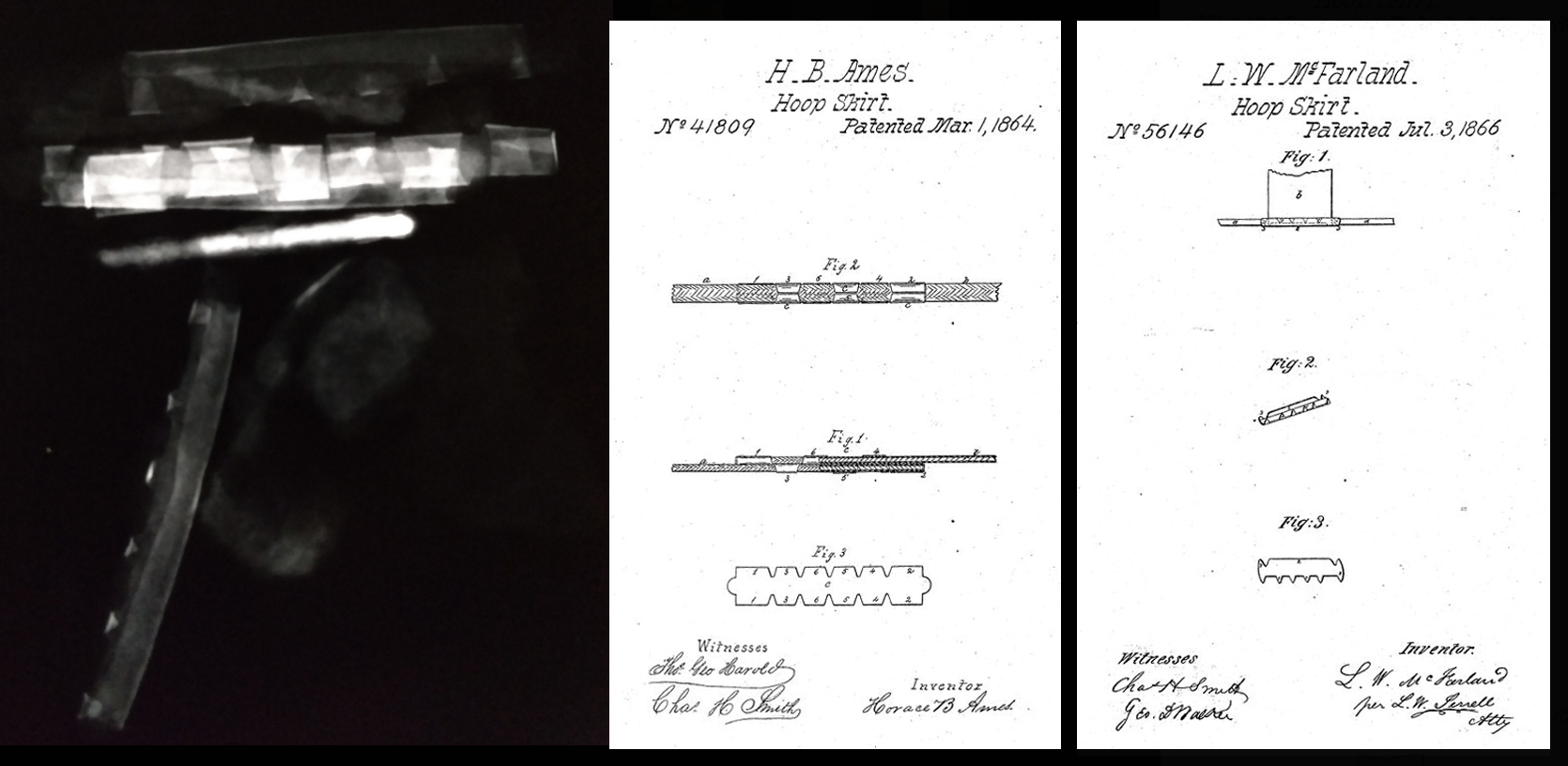 Figure 4: X-rays of the corroded hoop skirt fragments (left) show the
structure of the brackets that held iron wires and hung them from fabric
tapes (see Figure 3, bottom left). Patents from the 1860s (center and right) show
when the different bracket types were introduced (Ames 1864;
McFarland 1866).
Figure 4: X-rays of the corroded hoop skirt fragments (left) show the
structure of the brackets that held iron wires and hung them from fabric
tapes (see Figure 3, bottom left). Patents from the 1860s (center and right) show
when the different bracket types were introduced (Ames 1864;
McFarland 1866).
Between 1855 and 1878, 18HA312 was owned by Edward Boothby Dallam and Henry Clay Dallam,
but records indicate they primarily resided in Baltimore City, so the farm was either
a secondary residence or rented to tenants. In 1878 they sold the farm to William
Benjamin Baker who owned a canning business, spearheaded the formation of local banks,
acted as president of the Harford County telephone company, and served in several
political offices, including three congressional terms from1895 to1901 (Hornum 2011;
Wikipedia 2024).
Less is known about the women who lived at the site in the late 19th century. Mary
Catherne Baker née Hollis (b. 1847-d. 1922) and her young daughters Jessie (b. 1878)
and Nettie (b. 1883) presumably lived there with William Baker (Hornum 2011), so it
is tempting to conclude that the corset and hoop skirts helped keep Mary Baker at the
height of style as the matriarch of a prominent family. However, foundation garments
were not exclusive to the upper classes. Female tenants could have lived at
18HA312 before the Bakers moved in, and any household servants who possibly lived in
residence might not have made it into the historical record. Such women would not
have appeared on the deeds, but they would have adopted the dominant fashions that
called for corsets and skirt supports. Whether Mrs. Baker owned these artifacts or
another woman who is invisible in the historical records, it is important for
archaeologists to recognize the foundations of fashion that women of all classes
left behind.
References
Ames, Horace B.
1864 Improvement in Hoop-Skirts. U.S. Patent US41809A.
Google Patents, https://patentimages.storage.googleapis.com/ab/39/1d/25f8287df53f09/US41809.pdf,
accessed 26 August 2024.
Bloomingdale Brothers
1988 [1886] Bloomingdale’s Illustrated 1886 Catalog: Fashions,
Dry Goods, and Housewares. 1988 Facsimile ed. by Dover Publications, Inc., New York, New York.
Hornum, Michael B., Melissa Crosby, Sean P. Coughlin, Peter Godwin, and Jarrod Burks
2011 Phase III Archaeological Data Recovery Survey at Site
18HA312 for the G.A.T.E Enhanced Use Leasing Area, Aberdeen Proving Ground, Harford County, Maryland.
Lynn, Eleri
2010 Underwear Fashion in Detail. V & A Publishing, London.
McFarland, Luther W.
1866 Improvement in clasps for the bottom hoops of skirts.
Patent US56146A. Google Patents,
https://patentimages.storage.googleapis.com/be/b8/c6/7e8f241f55a8d2/US56146.pdf, accessed 26
August 2024.
Takeda, Sharon Sadako, and Kaye Durland Spilker
2010 Fashioning Fashion: European Dress in Detail 1700-1915.
Los Angeles County Museum of Art and Del Monico Books, New York, NY.
Wikipedia
2024 William Benjamin Baker.
https://en.wikipedia.org/wiki/William_Benjamin_Baker, accessed August 26, 2024.