Between 2008 and 2019, archaeological fieldwork was done on the Richard J. Duckett site (18PR955) ahead
This small ivory artifact, shaped like a horse’s head, was discovered in the early 1990s during
excavations under the kitchen at Cross Manor, a 18th-century house in St. Mary's County (Figure 1).
When this delicately carved artifact was rediscovered during a rehousing project, its identity and
purpose wasn't clear. But the MAC Lab’s “small finds guru,” Sara Rivers Cofield, knew immediately
what it was. She identified it as the top of a chess piece, specifically a knight. The horse head
would have been attached with a small pin to a simple turned baluster with a flat base (Figure 2,
third chess piece from the left).
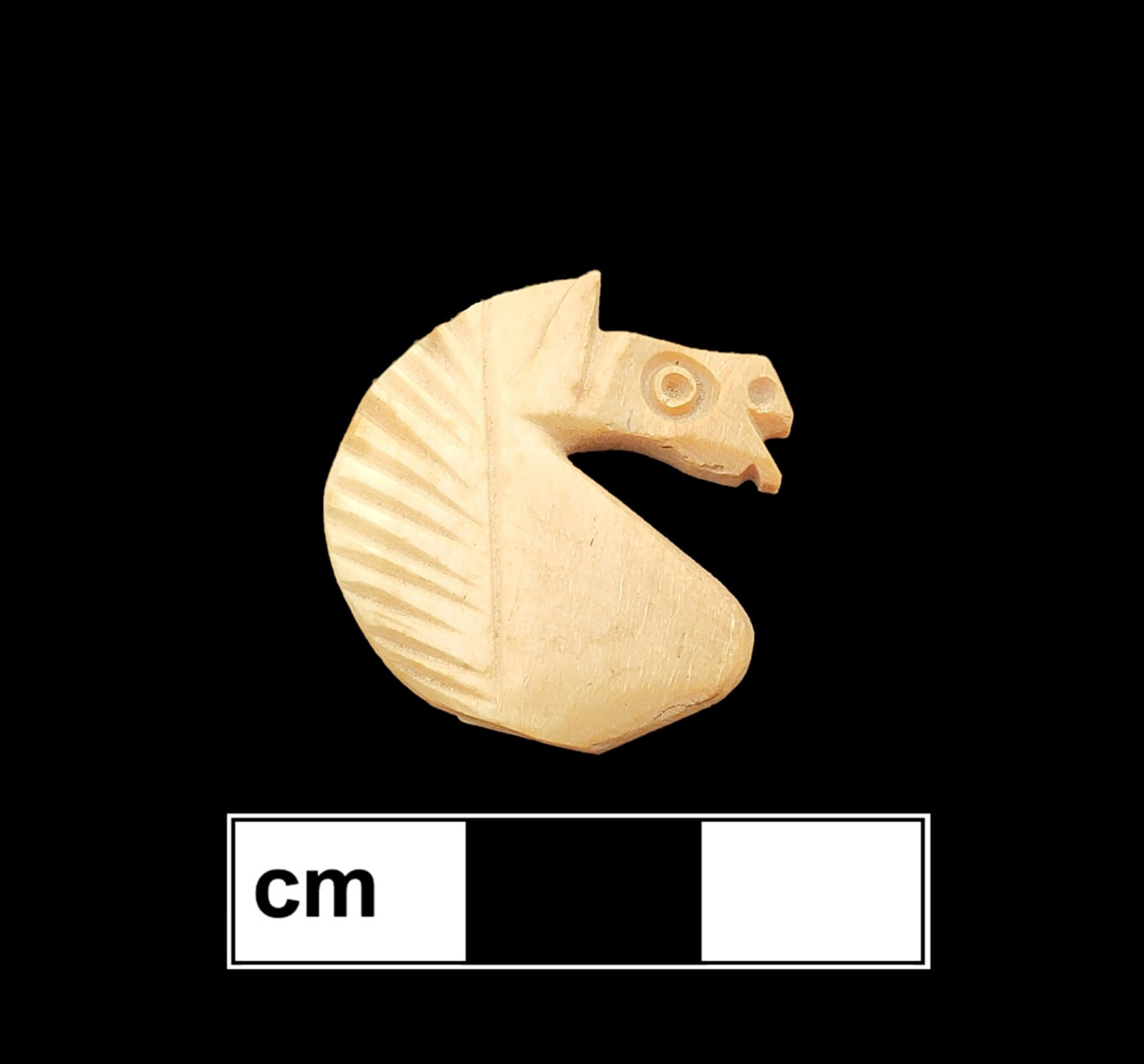 Figure 1: Ivory chess piece fragment from the Cross Manor site.
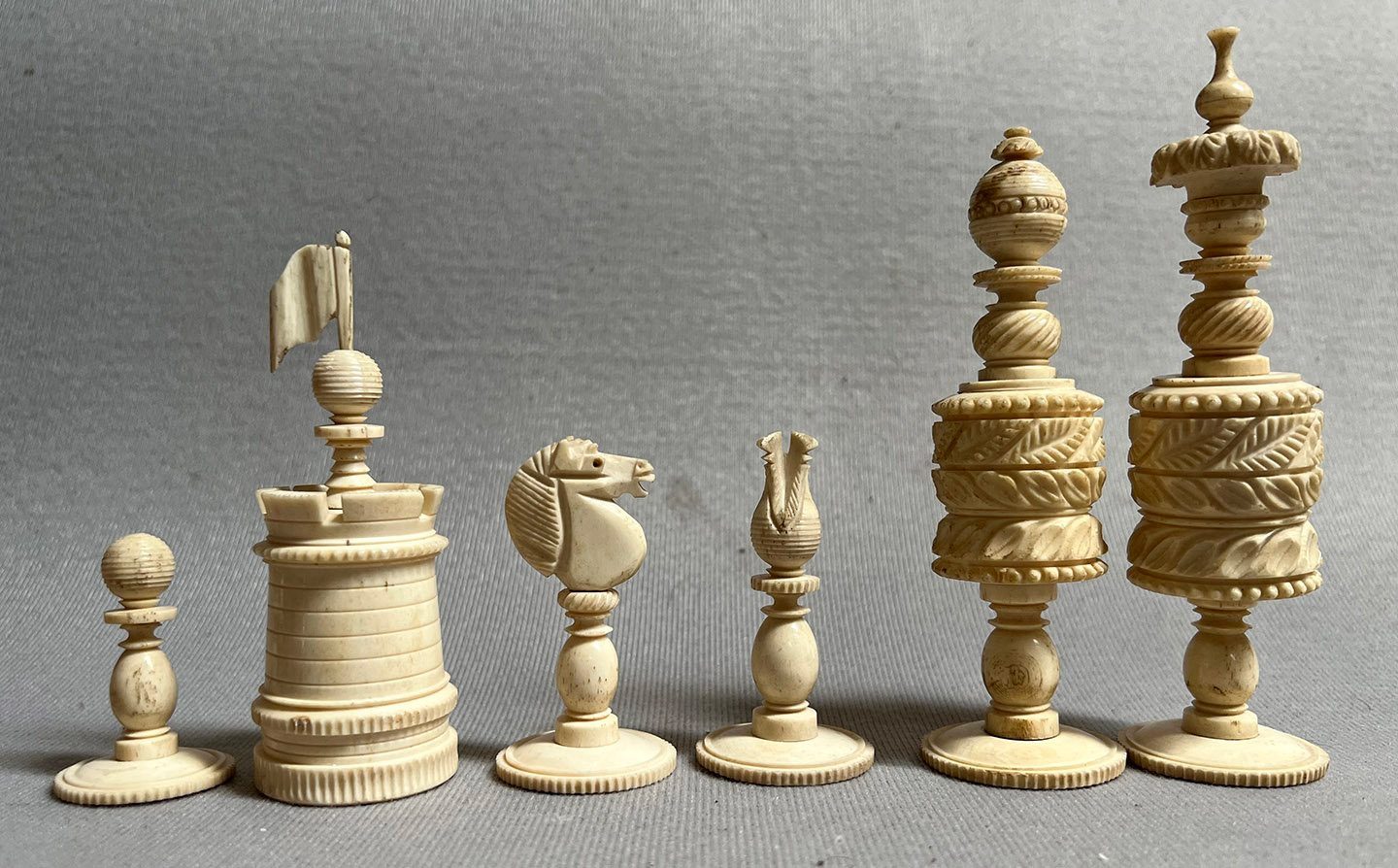 Figure 2: Pieces from a Barleycorn chess set from mid-19th century England (Chess
Antiques 2019).
Figure 2: Pieces from a Barleycorn chess set from mid-19th century England (Chess
Antiques 2019).
The game of chess is derived from an earlier war game from India called chaturanga, which is Sanskrit
for a battle formation mentioned in the ancient Indian epic Mahabharata (Soltis 2024). Chaturanga
dates to the 6th century CE and is considered the earliest precursor to the game of chess that is
played today. The word chaturanga means “having four limbs or parts” and was used to describe the
Indian army of Vedic times where a platoon had four divisions: infantry, cavalry, elephants and
chariots (The House of Staunton 2024; Kale 2021). The pieces of the game chaturanga represented each
of these military units and had four sets of pieces (Figure 3). The game was played with four players,
two on each team.
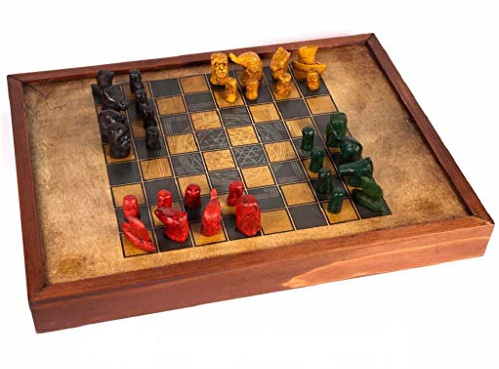 Figure 3: Four-player chaturanga game board with pieces representing the four
divisions of the Indian army: infantry, cavalry, elephants and chariots (The Big Game Hunter n.d.).
Figure 3: Four-player chaturanga game board with pieces representing the four
divisions of the Indian army: infantry, cavalry, elephants and chariots (The Big Game Hunter n.d.).
By the 16th century, chaturanga had spread through Asia and Europe and evolved into a game resembling
what we know as two-player chess today (Stapczynski 2023). It wasn’t until the 18th and 19th centuries,
however, that chess really started to gain popularity. Standardized chess sets and modern competitive
play in the form of tournaments arose in the second half of the 19th century (The House of Staunton
2024).
The chess piece from Cross Manor came from what is called a Barleycorn chess set, named for the ornate
foliate patterns present on some of the pieces (Figures 2 and 4). These chess sets, usually carved
from bone or ivory, appeared at the beginning of the 19th century, which coincided with the advent of
the ornamental lathe. They were made in England and Central Europe and remained popular throughout
the 19th century, one of the primary occupational periods of the Cross Manor site. Past presidents
Thomas Jefferson and John Quincy Adams were both avid chess players and each owned Barleycorn chess
sets (The House of Staunton 2024). Jefferson’s set can be seen on display in the parlor of his home,
Monticello (Thomas Jefferson Encyclopedia n.d.).
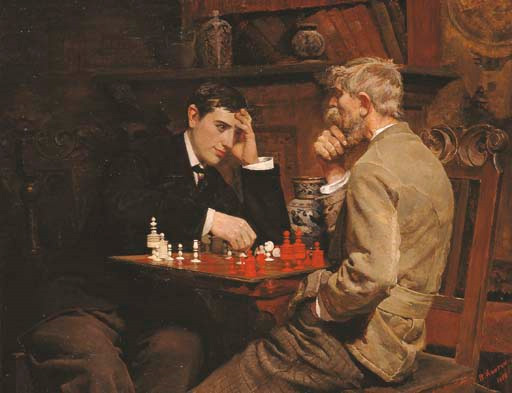 Figure 4: Painting The Chess Game by Julian Rossi Ashton, 1878, showing players
using a Barleycorn chess set (Artnet n.d.).
Figure 4: Painting The Chess Game by Julian Rossi Ashton, 1878, showing players
using a Barleycorn chess set (Artnet n.d.).
We will likely never know how this chess piece ended up buried under the kitchen at Cross Manor, but as
the only ivory chess piece found in the State’s archaeological collections, it provides rare, tangible
evidence of the game of chess as it was played in 19th-century Maryland.
References
Artnet
n.d.
https://www.artnet.com/artists/julian-rossi-ashton/the-chess-game-H6BdyckXbFFsqkvYAbSsww2,
accessed September 30, 2024.
The Big Game Hunter
n.d.
https://thebiggamehunter.com/games-of-the-world/,
accessed September 30, 2024.
Chess Antiques
2019
https://chessantiques.com/product/type-ii-english-bone-barleycorn-chessmen/,
accessed September 30, 2024.
The House of Staunton
2024 History of Chess.
https://www.houseofstaunton.com/history-of-chess,
accessed on September 30, 2024.
Kale, Sharwari
2021 From Chaturanga to Chess: The History of
the Origin of Chess.
https://homegrown.co.in/homegrown-voices/from-chaturanga-to-chess-the-history-of-the-origin-of-chess,
accessed on September 30, 2024.
Soltis, Andrew E.
2024 Chess History.
https://www.britannica.com/topic/chess/History,
accessed on September 30, 2024.
Stapczynski, Colin
2023 History of Chess: From Early Stages to Magnus.
https://www.chess.com/article/view/history-of-chess,
accessed on September 30, 2024.
Thomas Jefferson Encyclopedia
n.d. Chess Set-English.
https://www.monticello.org/research-education/thomas-jefferson-encyclopedia/chess-set-english/,
accessed on September 30, 2024.