Cast iron cookstoves, fueled by wood and later by coal, began to appear in the United States in the
early 1800s. They became a more common household appliance starting in the 1830s as the stove industry
began to flourish. In addition to having an oven and reservoir for heated water, a cookstove could have
as many as eight stovetop holes to seat pots for frying and boiling (Groft 2005:24). Purchasing a
cast iron stove was a substantial financial investment, but by the mid-nineteenth century, their
price had fallen enough that it was within the financial means of most families (Brewer 1987).
Cooking on these stoves required significant adjustments for the cook as the mechanics of preparing
food with scientifically designed stoves replaced long-held methods of open-hearth cooking (Brewer 1987;
Ellin 1985). Stoves provided more intense and longer-lasting heat than an open hearth. Stoves made
it possible to bake bread, meat, and pies more easily and fuel-efficiently, although the general
consensus at the time was that meats roasted over an open fire and bread cooked in a bake oven were
superior to those prepared using a stove.
Archaeologists from Jefferson Patterson Park and Museum discovered this New Emerald stove at the home
site of Elizabeth and William Gross (Figure 1). The stove was manufactured in Port Deposit by B. C.
Bibb & Son of Baltimore, Maryland. New Emerald models were among the first made by B. C. Bibb &
Son after they purchased the old Armstrong & Company foundry in Port Deposit in 1879. The Gross
family stove was manufactured around 1880 (Figure 2), fitting with the early 20th-century
residency of the family. Being a somewhat common design, the Welcome cookstove (Figure 3)
manufactured by the Armstrong foundry in 1874 was very similar in appearance to the New Emerald
stove. This New Emerald stove was one of two cast iron cookstoves found in the destruction
debris of the house, which had been abandoned by the late 1930s. It is possible that one was
used inside the house and the other was used outside for preparing meals in the warmer
months of summer.
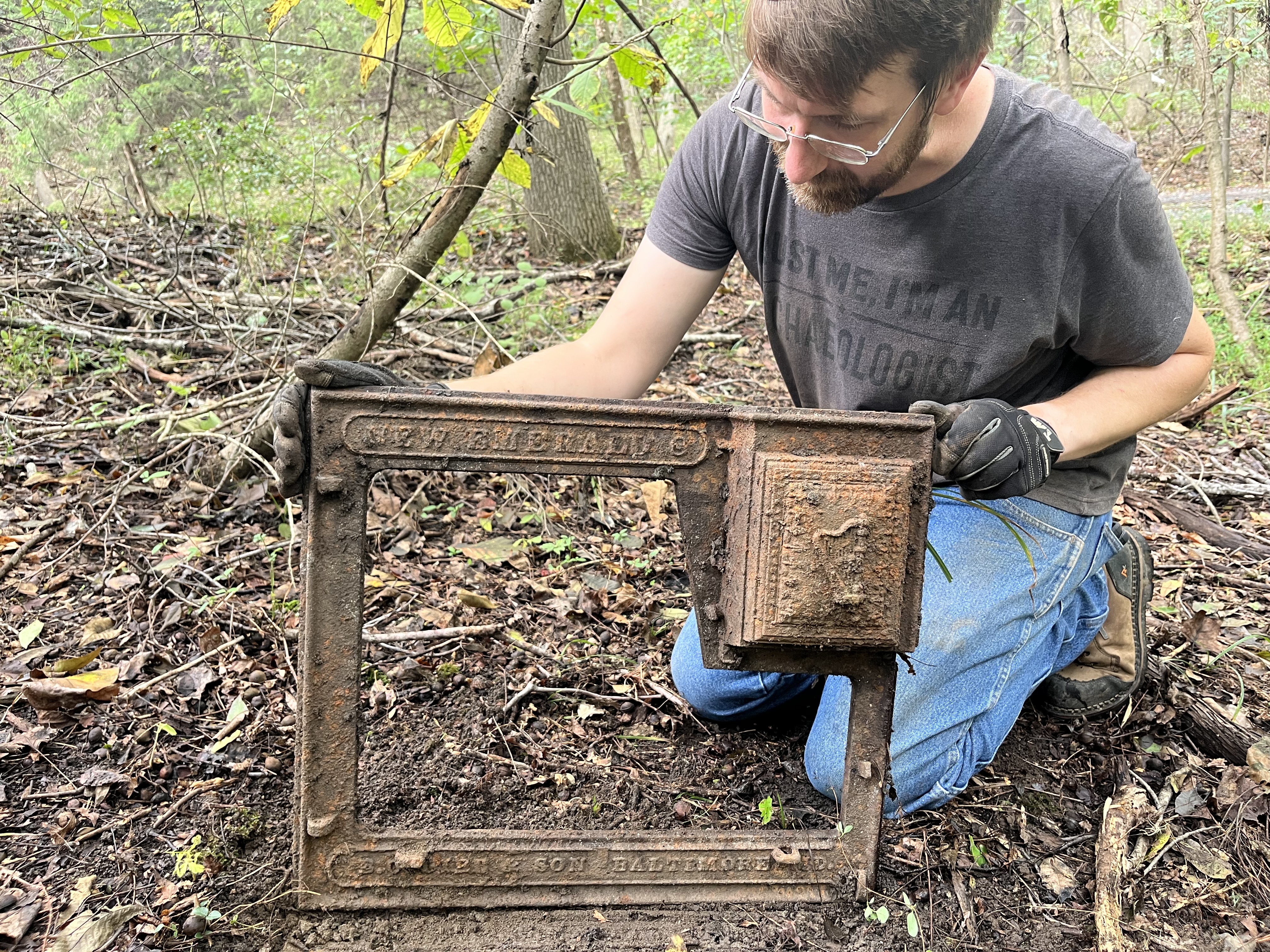 Figure 1: JPPM archaeologist Scott Strickland holding a piece of a New Emerald cast
iron stove from the Elizabeth and William Gross site.
Figure 1: JPPM archaeologist Scott Strickland holding a piece of a New Emerald cast
iron stove from the Elizabeth and William Gross site.
.png) Figure 2: 1880 advertisement for B.C. Bibb & Son’s New Emerald cooking stoves
in the official program for the 150th anniversary celebration of the founding of
Baltimore (Anonymous 1880).
Figure 2: 1880 advertisement for B.C. Bibb & Son’s New Emerald cooking stoves
in the official program for the 150th anniversary celebration of the founding of
Baltimore (Anonymous 1880).
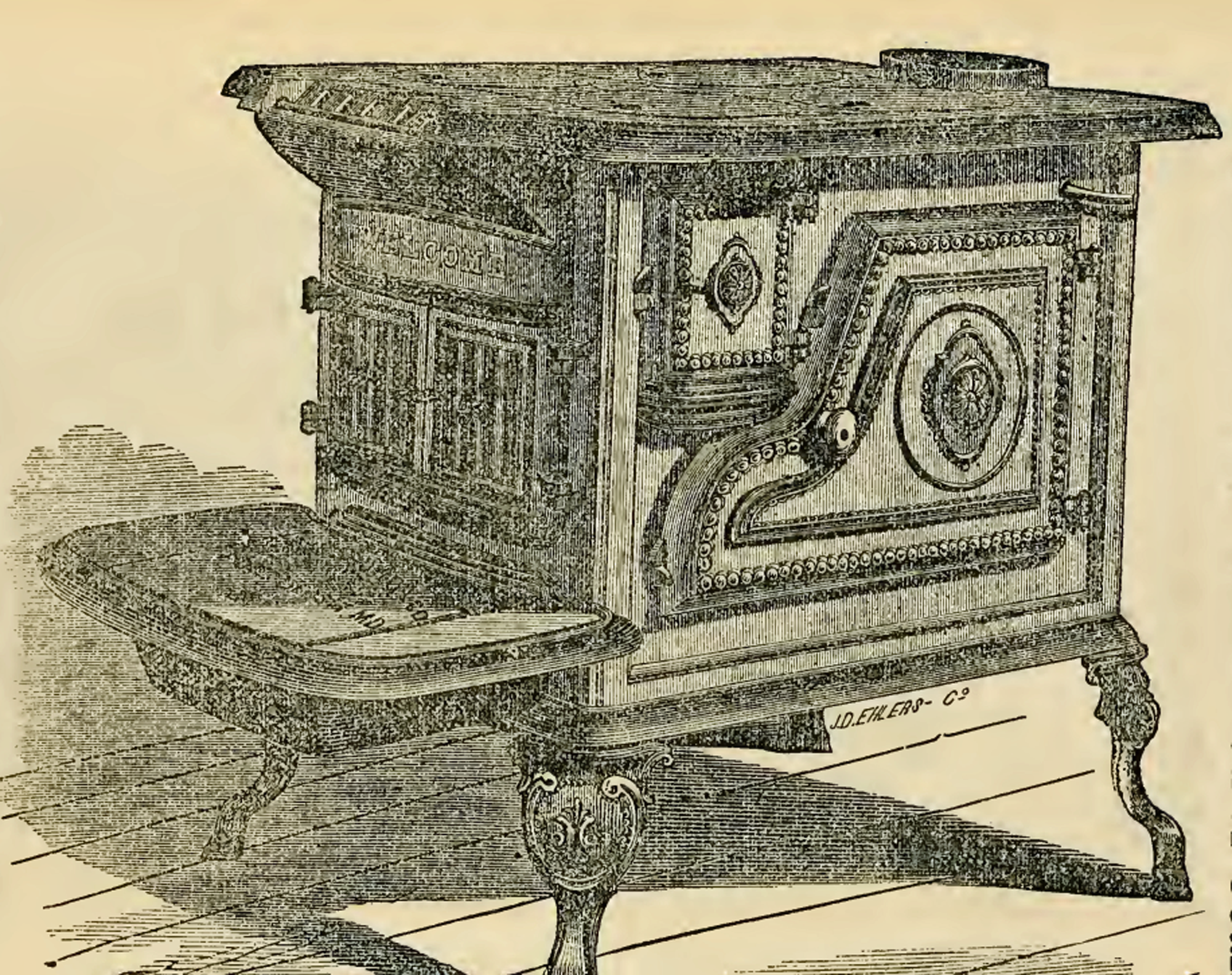 Figure 3: Advertisement for the Welcome model cookstove from the Guide to
Baltimore & Ohio Railroad (King1874). The Jas. Armstrong Foundry that made this
stove also produced the New Emerald model cookstove.
Figure 3: Advertisement for the Welcome model cookstove from the Guide to
Baltimore & Ohio Railroad (King1874). The Jas. Armstrong Foundry that made this
stove also produced the New Emerald model cookstove.
References
Anonymous
1880 150th anniversary of the founding of the city of
Baltimore. October 11th to 15th, 1880. Official programme. Printed by order of the
executive board, sesqui-centennial anniversary. Online resource accessed October 11,
2024 at https://archive.org/details/150thanniversary00balt/page/n5/mode/2up.
Brewer, Priscilla J.
1987 Home Fires: Cultural Responses to the Introduction
of the Cookstove, 1815-1900. PhD diss., Department of American Civilization, Brown University.
Ellin, Phyllis Minerva
1985 At Home with the Range: The American Cooking Stove,
1865-1920. Master’s thesis, Department of Historic Preservation, University of Pennsylvania.
Franklin Herald
1812 “Advertisement for Cooking Stove.” Franklin
Herald. Greenfield, Massachusetts. January 3, 1812.
King, John T.
1874 Guide to Baltimore & Ohio Railroad. Baltimore,
Maryland. Online resource accessed October 11, 2024 at
https://lccn.loc.gov/04006471.