This mystery artifact (Figure 1) recently underwent conservation treatment that revealed
some vital information! This artifact is part of the William Paca house collection from
Annapolis. William Paca was a signatory of the Declaration of Independence and the third
governor of Maryland. This artifact was lost far after Paca’s time, however, as aluminum
alloy did not become a popular material until the 20th century.
Originally listed as two disc fragments that mend, careful cleaning under the microscope
revealed a curious feature. A copper alloy tongue is riveted to one of the fragments. When
the two fragments are aligned along their narrow break edge, a rectangular slot in the
aluminum appears just below the copper alloy tongue. The tongue is broken, but looks
similar to copper alloy components found inside free reed aerophone instruments. This
instrument family includes harmonicas, accordions, and hand organs.
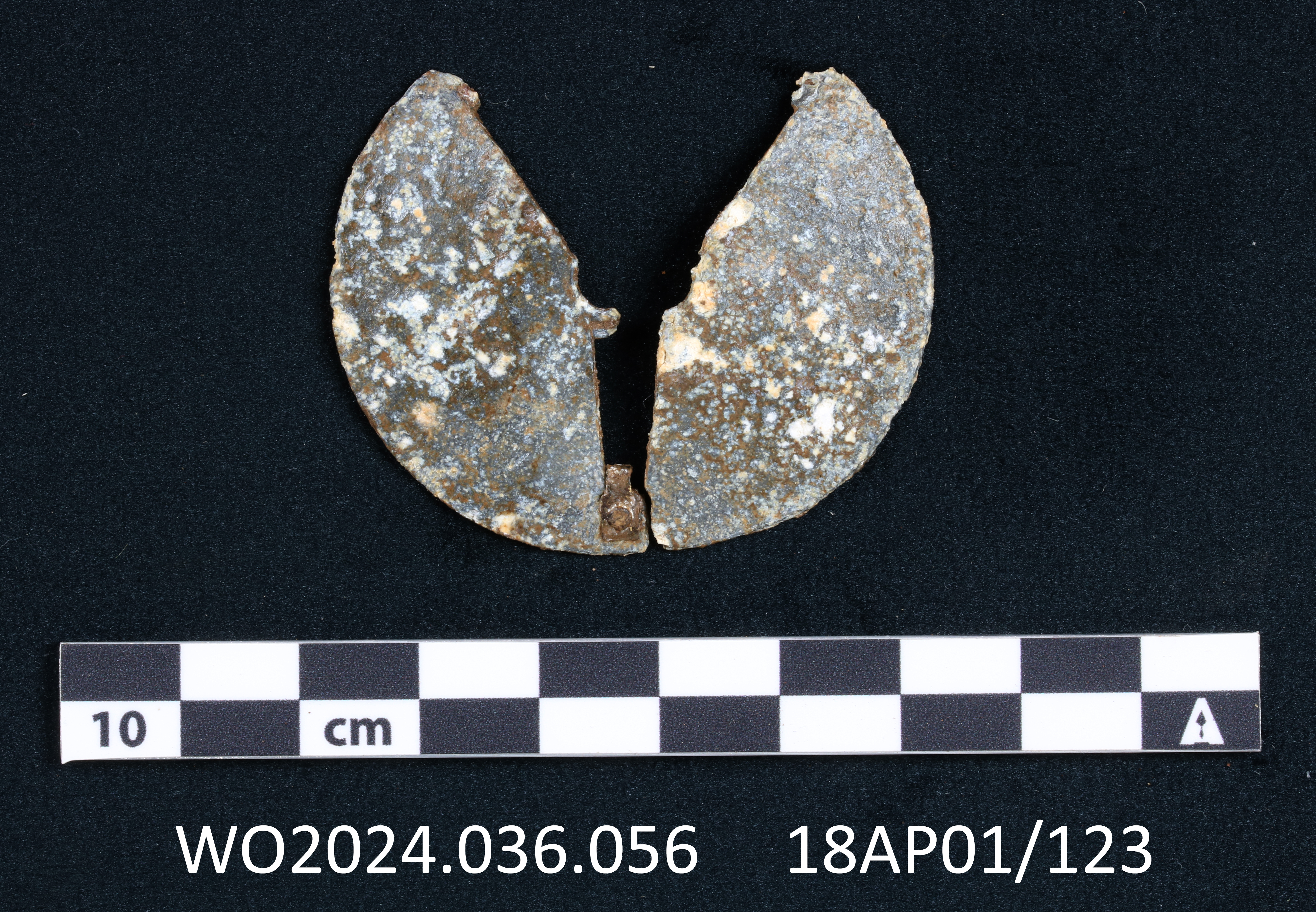 Figure 1. Mystery artifact, 18AP01/123
Harmonicas and their preservation have been a topic of discussion in previous Curator’s
Choice issues
(https://jefpat.maryland.gov/Pages/mac-lab/curators-choice/2013-curators-choice/2013-07-fourth-of-july-for-the-harmonica.aspx and https://jefpat.maryland.gov/Pages/mac-lab/curators-choice/2024-curators-choice/Strange-Voices.aspx),
and have been found in several other excavations across the state, perhaps demonstrating
their popularity. Another free-reed instrument plate was also found at the William Paca house
and received conservation treatment alongside the mystery artifact (Figure 2).
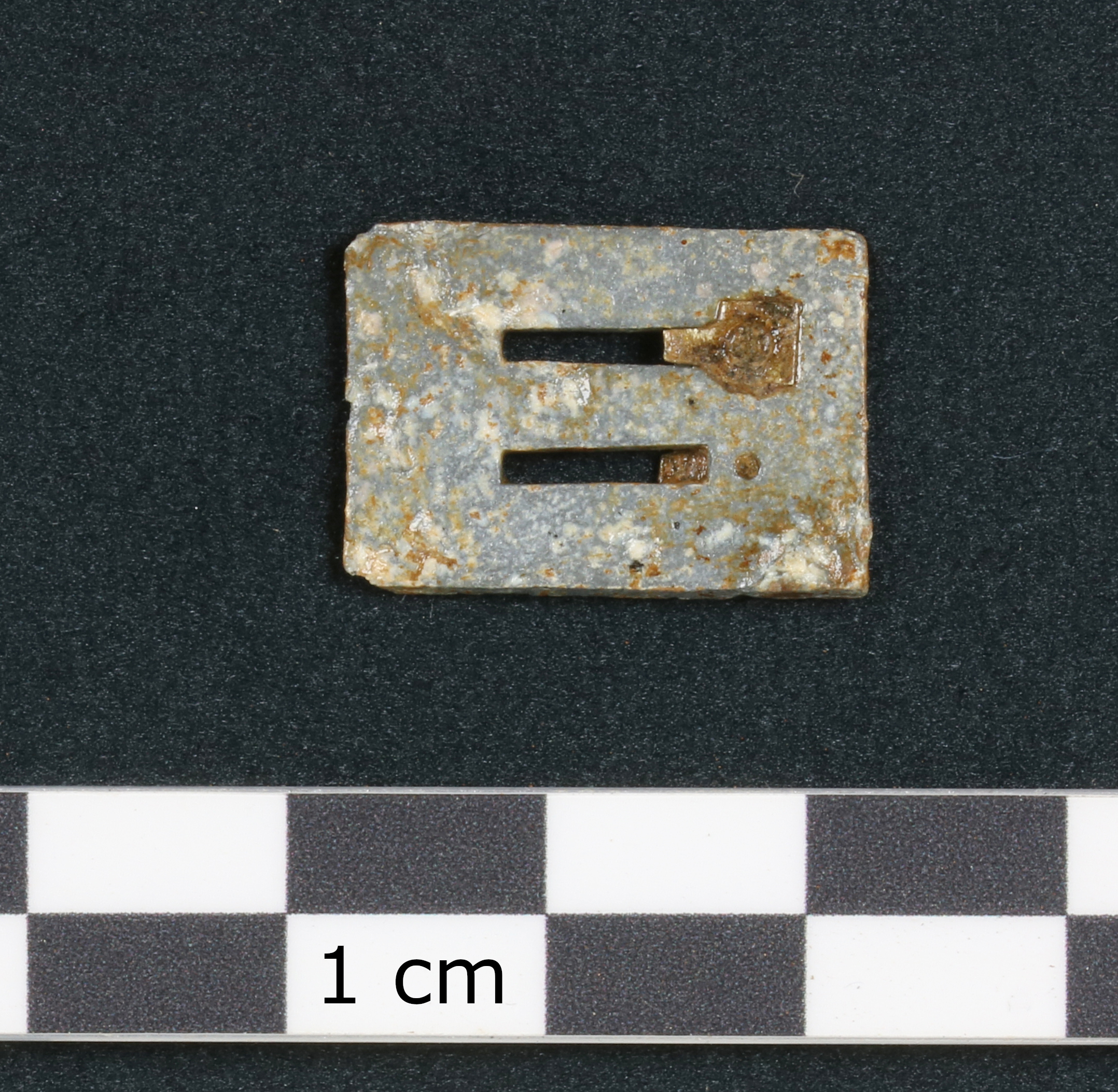 Figure 2. Possible harmonica plate, 18AP01/107, rectangular with two slots and reed fragments
Free reed aerophones make a sound when air is passed over a thin reed, causing it to vibrate
over an opening. In harmonicas, for example, reeds of several lengths are mounted to a metal
reed plate, and each reed/opening pairing creates a different musical note. Reed plates for
harmonicas and hand-held organs tend to be arranged in a rectangular plate format, as shown
in Figure 2.
So why is this mysterious object round?
One possibility is that this is part of a pitch pipe. Chromatic pitch pipes are harmonicas with
one full scale of notes arranged radially. This allows for one note to be played at a time
to tune instruments or provide a starting note for acapella music. The inside of this modern
pitch pipe (Figures 3 and 4) shows 13 reeds for each half step note that covers 1 full scale.
However our mystery object appears to only have one reed on the extant side, with a wide opening
positioned opposite this reed. Perhaps there was another section of the disk with other reeds
or another method to adjust the pitch is lost.
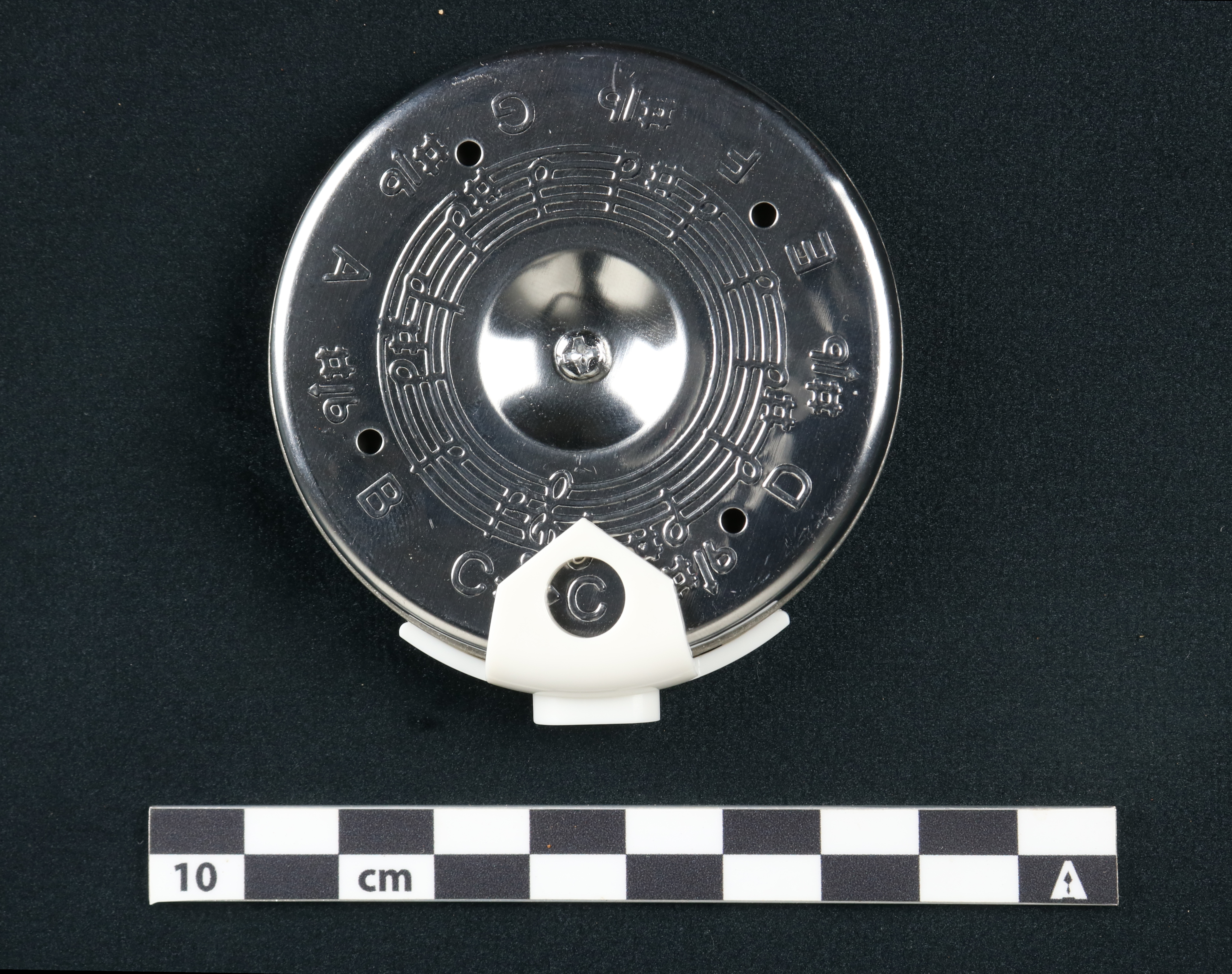 Figure 3. Exterior of a modern chromatic pitch pipe, with notes marked on the
case aligning with reeds inside
Figure 3. Exterior of a modern chromatic pitch pipe, with notes marked on the
case aligning with reeds inside
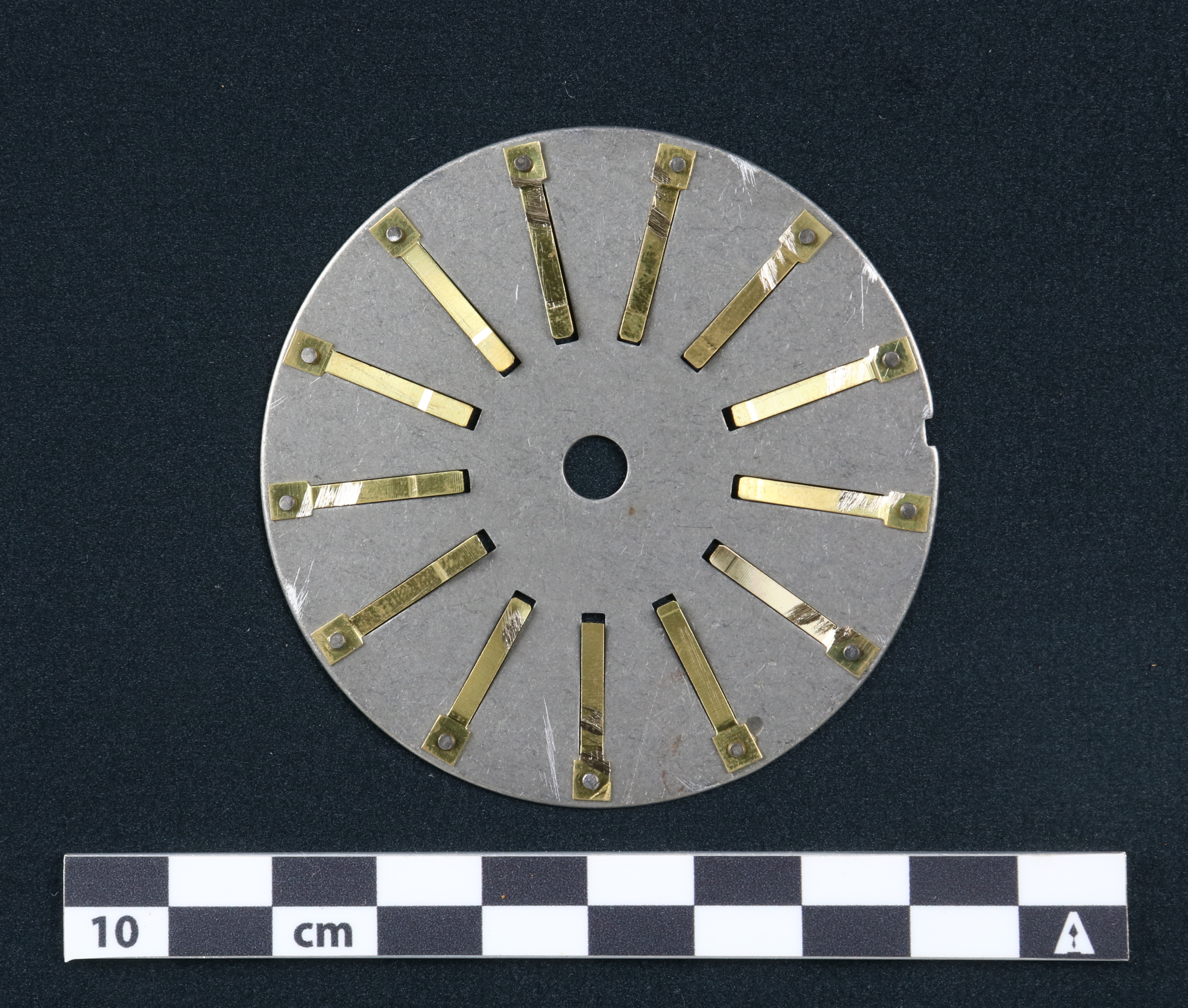 Figure 4. Round reed plate of a modern chromatic pitch pipe.
Another possibility is this is part of a noise-making toy, such as that presented in this
1889 patent (Brown 1889). The toy features a round disc with three reeds arranged around
a central pivot that whistles when the wheel is in motion (Figure 5). It’s unclear how
common these toys may have been in the early 20th century.
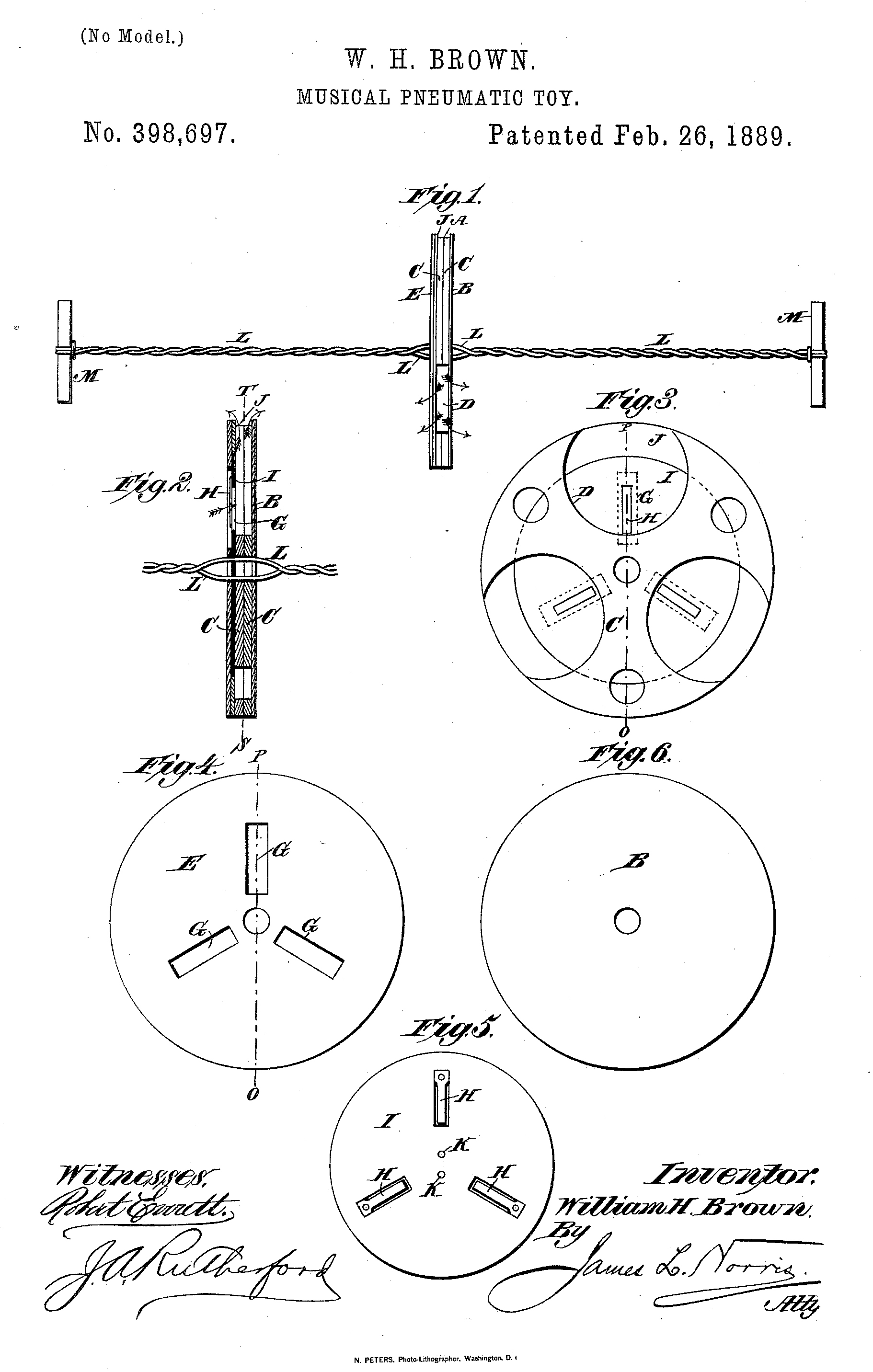 Figure 5. Patent diagram of a noise-making toy using harmonica reeds that
reacted to air when spun (Brown 1889)
Figure 5. Patent diagram of a noise-making toy using harmonica reeds that
reacted to air when spun (Brown 1889)
This delightful patent from 1908 reveals another (very unlikely) possibility. The patent
suggests a teething ring combined with a harmonica (Figure 6) would “distract the
attention of the child”, “quiet it when it bites on the ring,” and will “exercise
the lungs of the child” (Axel 1908). The patent diagram shows a round reed plate with
a wide central hole with 3 to 4 reeds opposite a blow hole. Perhaps a parent “lost” a
harmonica teething ring (i.e. threw it as far away from their child as possible) at
the Paca house, but the mystery continues.
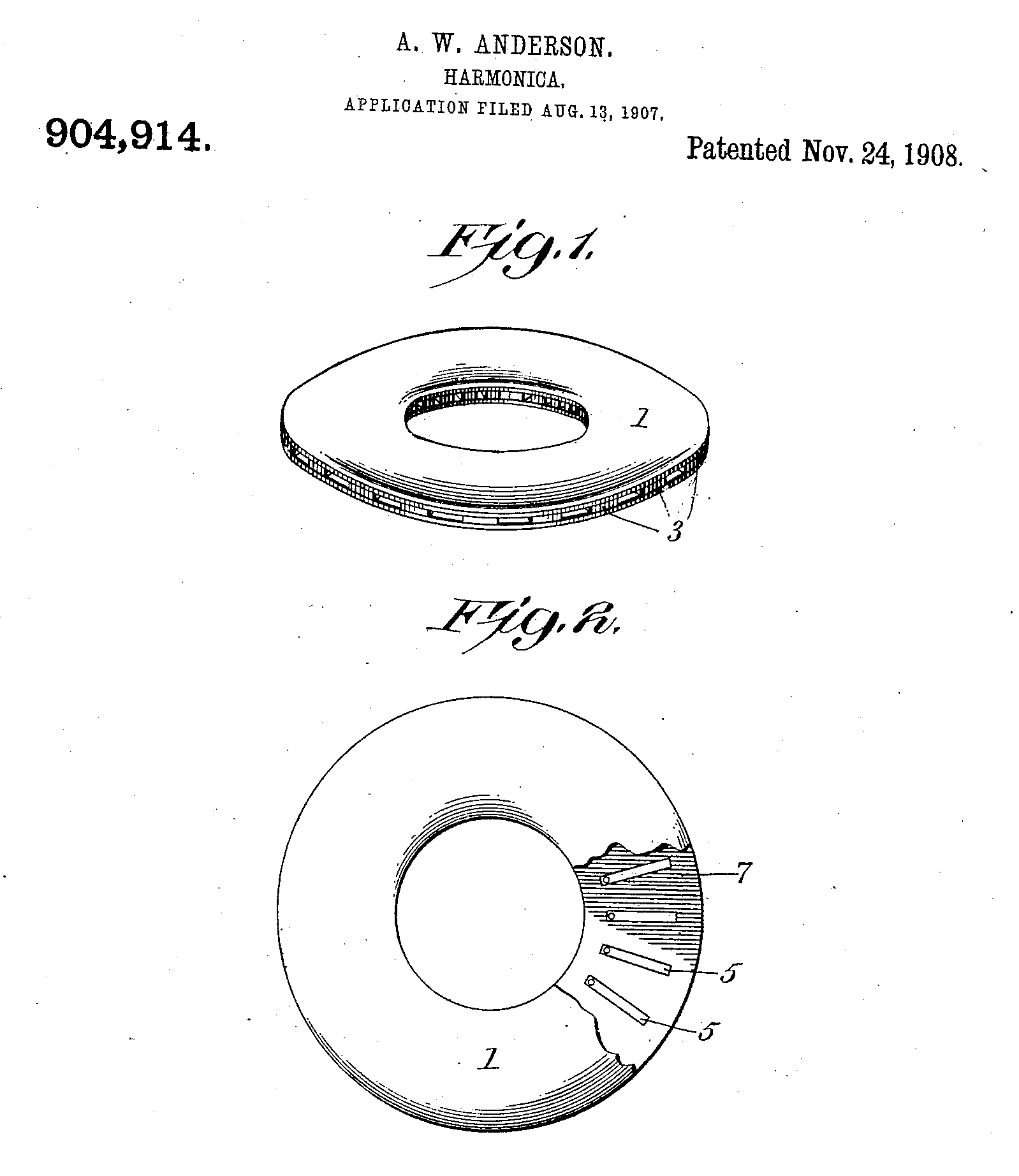 Figure 6. Patent diagram of a noise-making toy using harmonica reeds that
reacted to air when spun (Brown 1889)
Figure 6. Patent diagram of a noise-making toy using harmonica reeds that
reacted to air when spun (Brown 1889)
If you have any information on instruments or toys with round reed plates, please contact
the Maryland Archaeological Conservation Lab!
References
Anderson, Axel William
1908 Harmonica. US Patent 904,914, filed August
13, 1907, and issued November 24, 1908.
Brown, William Henry
1889 Musical Pneumatic Toy. US Patent 398,697,
filed November 15, 1888 and issued February 26, 1889.