Middle Plantation (18AN46) was the dwelling place of Mareen Duvall, a French Huguenot
who came to the United States as an indentured servant and ended his life as a wealthy
merchant landowner. Middle Plantation was excavated by William P. Doepkens, his wife
Marjorie, and children (Jean, William, Marjorie, Frederick, and Elizabeth) in the 1970s
in between planting and harvesting crops (Doepkens 1991). The Doepkens family took
incredible care in ensuring they were digging in a scientific manner. They consulted
with the State Archaeologist Tyler Bastian about excavation methods and recording finds
in a grid system. As his expertise was Native American sites, the family connected with
other archaeologists and researchers who knew more about early Colonial era
sites (Doepkens 1991).
One of the most noteworthy artifacts from Middle Plantation that survived in the archaeological
record is a pewter feeding bottle (figure 1). William P. Doepkens found it in the
area of the site he referred to as 5W. He interpreted the area close to a spring as a
cooler used to keep dairy products from spoiling in warm weather conditions. These cooler
buildings were raised off the ground on posts and usually under a shade tree. Air moved
freely around the cooler and kept the products stored inside cool and away from pests
(Doepkens 1991,105). Being a farmer who grew up in the area, Doepkens had used such
coolers himself. His own life experiences informed his interpretation of features such
as the coolers on the site. Perhaps someone stored the bottle in the cooler in an effort
to keep the milk inside from spoiling.
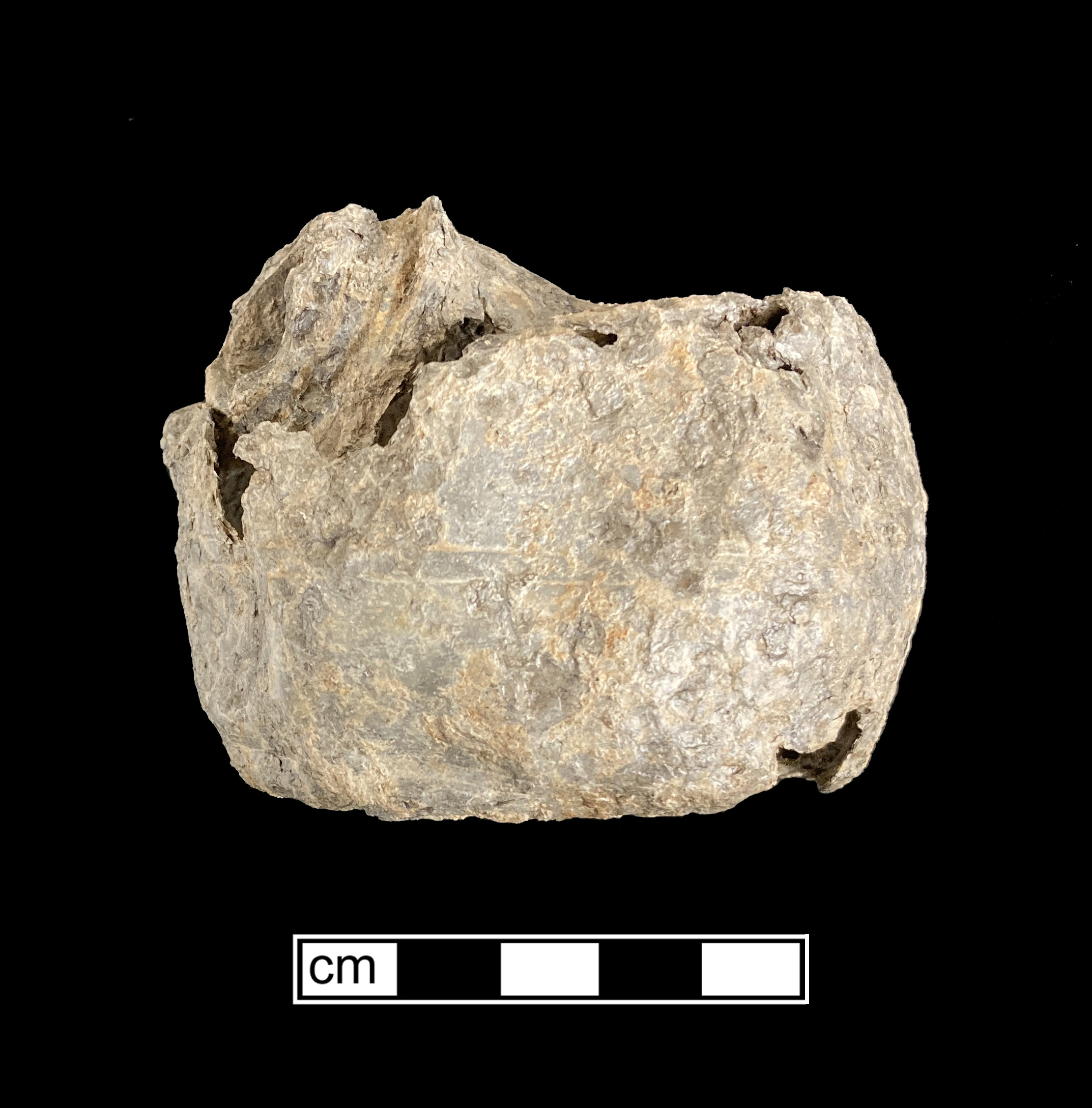 Figure 1. Incomplete pewter feeding bottle excavated from 18AN46. Note the
horizontal incised marks which are also visible on the complete bottle
(Figure 2).
Figure 1. Incomplete pewter feeding bottle excavated from 18AN46. Note the
horizontal incised marks which are also visible on the complete bottle
(Figure 2).
Doepkens recognized the importance of the feeding bottle as well as the assemblage of
artifacts as a whole. He was eager for professional opinions on the nature of the site
and the artifacts. He sought information from Ivor Noël Hume, the Director of Archaeology at
Colonial Williamsburg (CW). A visit to CW with all the artifacts excavated to date
in October 1970 and an assessment by Noël Hume verified the importance of the site as
an example of a wealthy Colonial landowner’s household (Doepkens 1991, 88). CW stabilized
the feeding bottle and placed it within a plexiglass case (Ibid, 138). Remarkably, the
bottle retains the more friable threading that a nipple would have been attached to.
Being contained in the vitrine protected the bottle from dust that could degrade the
pewter as well as preventing anyone from handling it. The oils naturally present on
human hands eat away at metals. This early intervention allowed the bottle to survive.
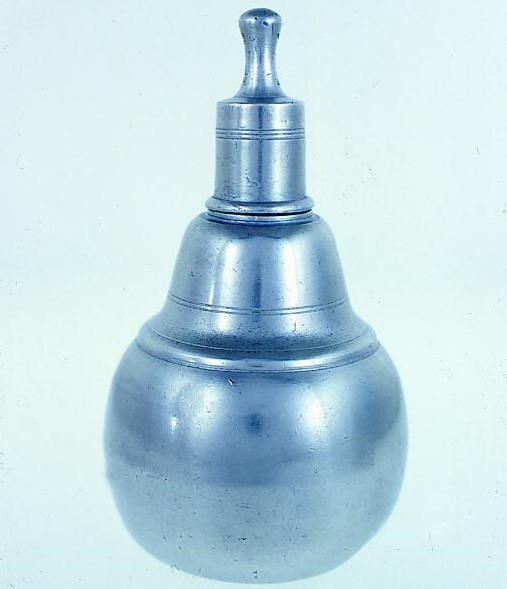 Figure 2. Complete pewter feeding bottle including nipple. Courtesy of the
Yale University Art Gallery, Mabel Brady Garvan Collection.
Figure 2. Complete pewter feeding bottle including nipple. Courtesy of the
Yale University Art Gallery, Mabel Brady Garvan Collection.
What led people to use these pewter feeding bottles? When breastfeeding was not a desirable
or viable option, parents turned to hand-raising (bottle feeding) by means of containers,
such as horns as early as the Medieval period. Leather and wooden bottles were developed
and used in the 16th century. Eventually, in the 18th century pewter bottles came into
use (Kevill-Davis 1991, 40-42). They were a dangerous choice for a few reasons, including
the lead content of pewter, the impossible to clean and sterilize bottle, and the bacteria
inherent in unpasteurized, unrefrigerated milk. Pewter contains lead as part of the alloy.
And lead solder is used to join components. We know now that lead should not be ingested
in any amount as it causes severe negative health impacts. Additionally, people struggled
to properly clean the bottles because of the shape, let alone sterilize them. They were
told to clean with soap and water, but that is not sufficient to protect delicate infant
immune systems from harm (Bracken 1953, 356). Obviously, the opaque nature of pewter
meant people could not see the milk that clung to the crevices. Aside from the worries
about the bottles, their contents were a cause for concern as well. Since refrigeration
did not exist, animal milk meant as a substitute for breastmilk often spoiled before it
could be consumed by an infant (Ibid). Pasteurized milk was not widely available until
the 1920s (Kevill-Davis 1991, 41). For all these reasons, very few babies survived
attempts at hand-raising. . “The Dublin Foundling Hospital which hand-raised over ten
thousand babies between the years of 1775 and 1796, had only forty-five successes,
representing a staggeringly high 99.6 percent mortality rate” (Kevill-Davis 1991, 40).
Thankfully parents today have safer options should they choose to bottle feed.
References
Bracken, Felisa, J.
1953 “Infant Feeding in the American Colonies.”
Journal of the American Dietetic Association 29 (4): 349-358.
https://doi.org/10.1016/S0002-8223(21)31756-4
Doepkens, William P.
1991 Excavations at Mareen Duvall’s Middle Planation
of South River Hundred. Gateway Press, Inc.
Kevill-Davis, Sally.
1991 Yesterday’s Children: The Antiques and History
of Childcare. Antique Collectors’ Club Ltd.