Archaeologists love a good mystery. In August 2025, a generous donor gifted an
interesting piece of pottery to the Maryland Archaeological Conservation Lab.
It had been discovered in a ravine near the park about 25 years ago—on a
property that was purchased in 1869 by James Boom, a formerly enslaved man.
This early date made it one of the first Black-owned properties in the small
rural community of Wallville.
The red-pasted earthenware vessel (which may be a bottle or cruet) would have been
about 8” tall if complete. What makes this piece a mystery is that its manufacture
origin is unknown. Its vessel form, glazing, and decoration don’t conform to those
of ceramics imported from England and Europe. Maryland, and particularly Baltimore,
had a long tradition of utilitarian earthenware pottery production, so chances are
good that this vessel was made locally. John Brown and members of his family were
producing earthenware in Baltimore during the second half of the 18th century and
into the early 19th century (Kille 2009:17; Zipp 2018).
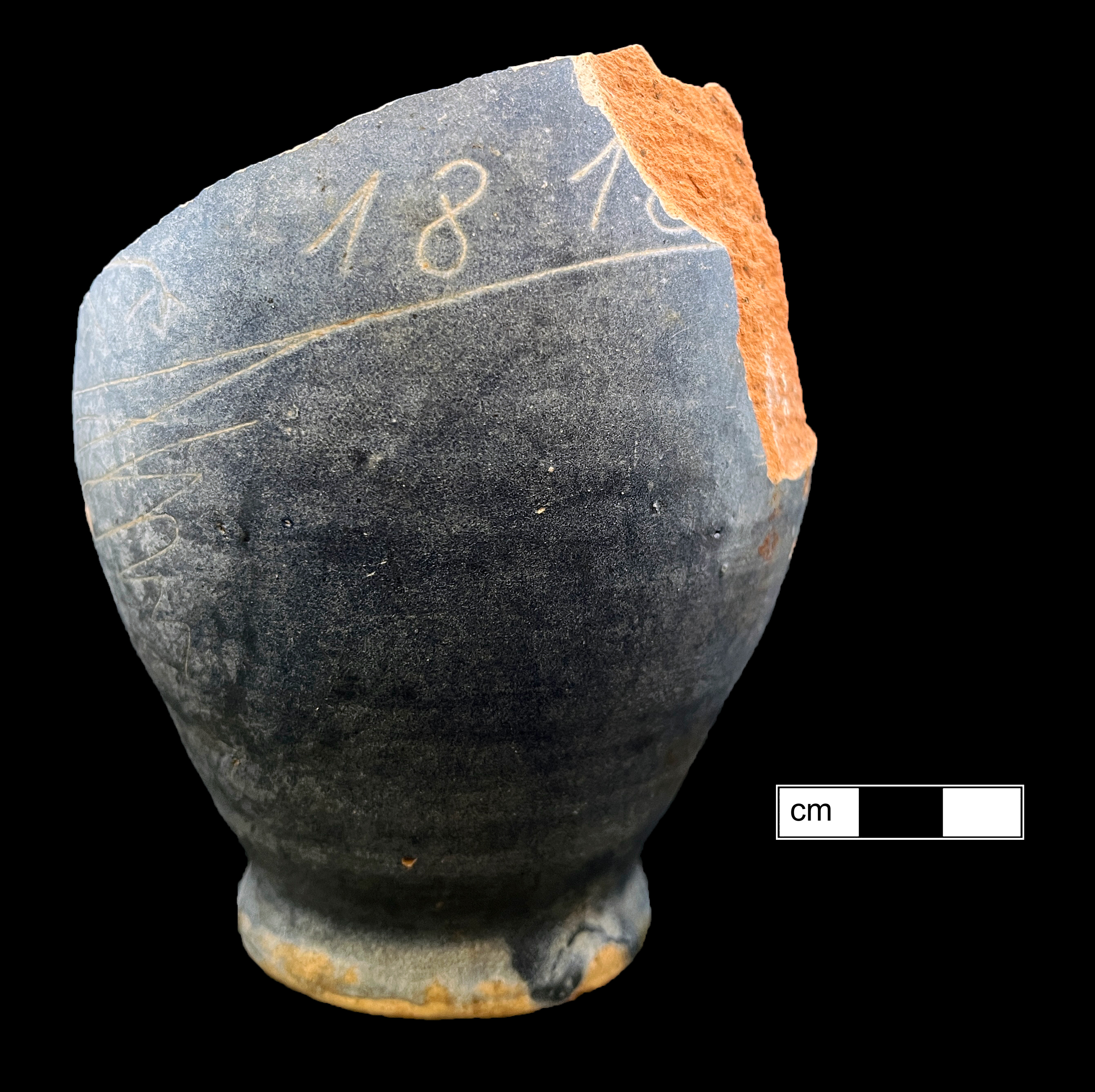 Figure 1: Side view of the bottle showing the incomplete date, which
appears to have been 1818 or 1816.
Figure 1: Side view of the bottle showing the incomplete date, which
appears to have been 1818 or 1816.
Before being finished with a dark blue glaze or slip containing cobalt, the bisque fired
vessel was dipped in a white clay slip that covered both the inside and outside of the
bottle. It was then decorated by using a pointed tool to cut lines that went through
the blue coating down to the white slip. The potter incised the design of a bird (only
the feet and tail are still intact), as well as the date 181- (the last number appears
to have been a 6 or an 8). Bird decorations similar to this one were common on
19th-century Baltimore-made stoneware, mostly notably those made by Henry Remmey,
Morgan and Amoss, and Morgan Maker (Kille 2005). Baltimore’s earthenware industry
declined beginning in the early 19th century, as more durable salt glazed stoneware
began to be produced in quantity. If this vessel is a Maryland or Baltimore piece,
then its glazing and decoration have roots in both earthenware and stoneware potting
traditions in Maryland. Potter Henry Remmey arrived in Baltimore around the time of
the War of 1812 and brought with him the decorative aesthetic of incising elaborate
birds on pottery. (Zipp 2018).
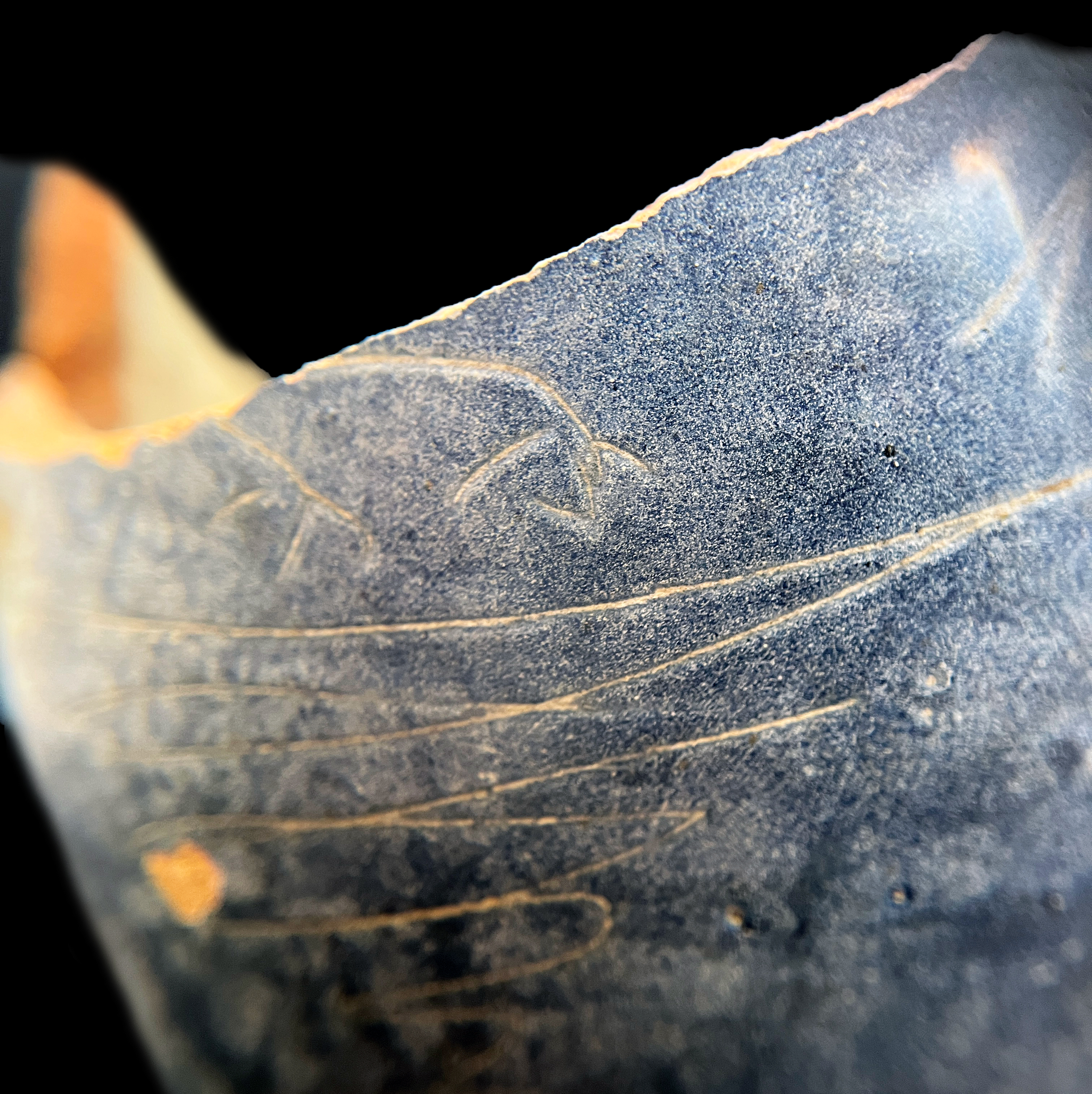 Figure 2: Detail of incised bird feet.
The MAC Lab recently conducted elemental analysis on the bottle’s clay paste to determine
more about the construction of the vessel and potentially where it was made. Testing was
done using X-Ray Fluorescence (XRF), a non-destructive testing method that irradiates a
sample with X-rays and measures emitted electrons at specific energies, which correspond
to different elements. Beginning by testing the outer blue decorated surface, the vessel’s
clay body was also compared with that of pieces known to have been made in Baltimore, as
well as with the paste of bricks made in Calvert County, near to where the bottle was found.
Elements present in the blue exterior include cobalt, manganese, nickel, and lead.
Preliminary results show that the clay paste shares similarities to both local clay bricks
and red earthenwares produced in Baltimore when comparing ratios of trace elements of iron,
titanium, and potassium. There is currently no known historical or archaeological
documentation of Calvert County potters in the 19th century, so attributing this piece to
a county potter is not possible currently. Testing on more samples is needed, and thus,
research will continue on this intriguing piece.
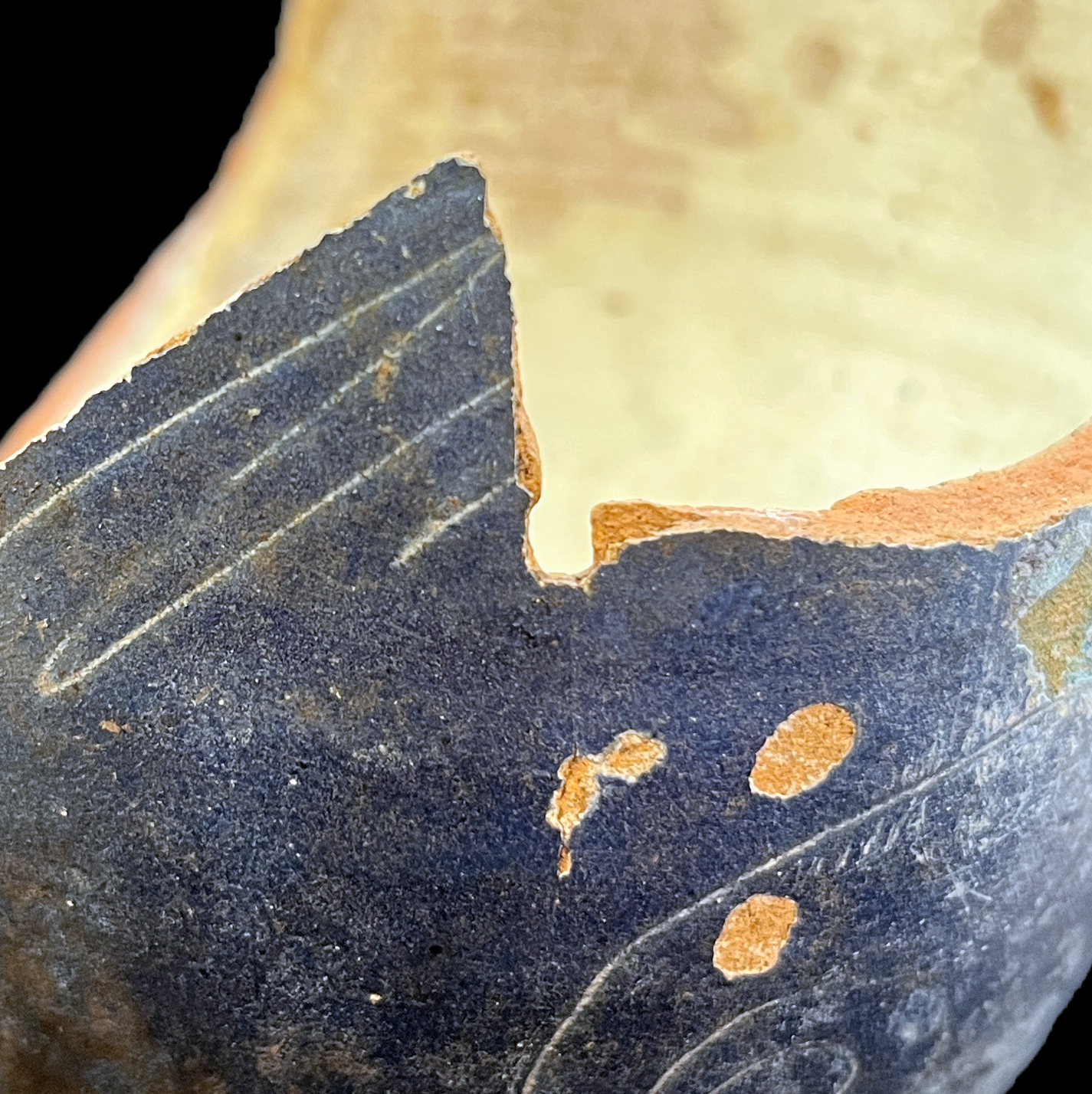 Figure 3: A small circular hole in the vessel indicates that it was the victim
of target practice by someone using bird shot.
Figure 3: A small circular hole in the vessel indicates that it was the victim
of target practice by someone using bird shot.
References
Kille, John
2005 Distinguishing Marks and Flowering Designs:
Baltimore’s Utilitarian Stoneware Industry. Ceramics in America. Chipstone
Foundation. Pp. 93-132.
2009 The Cultural Landscape of Baltimore’s
19th-Century Working Class Stoneware Potters. PhD dissertation, University of
Maryland, College Park.
Zipp, Luke
2018 Exceptional Baltimore Redware Pottery Jug
for Henry Clay, circa 1840's. Video available at
https://www.youtube.com/watch?v=BYBvSBJJt2Q.