Cleaning is one of the most impactful steps in archaeological conservation.
The burial environment is a complex system of physical, biological, and
chemical forces, and over time these forces obscure the original surfaces of
the objects. Removing that obscuring layer is not only cosmetic, it is an
act of discovery and can be an essential component of an artifact’s
preservation. The original surface of an artifact holds information about
its age, its use, the social context in which it was made and owned,
and the techniques by which it was manufactured. Cleaning, done well,
makes that information legible again.
Conservation cleaning methods fall into two broad categories, chemical and
mechanical. Chemical methods can be efficient when treating large groups of
objects but they can be difficult to control, and without careful monitoring
there is real risk of unintended damage. Mechanical methods, by contrast, are
inherently slower and more labor-intensive, but under the direct observation
of an experienced conservator the process is controlled and adjusted in real
time often yielding superior preservation outcomes.
Within mechanical cleaning, the choice of tool and technique is guided by the
stability of the object and the strength of the interface between the artifact
and the material being removed. When that interface is weak, such as when
soil or accretion sits loosely on the surface, gentle approaches like soft
brushes, vacuum suction, or the careful use of a scalpel are often sufficient.
When corrosion or encrustation has bonded tightly to the artifact, more
assertive methods are warranted.
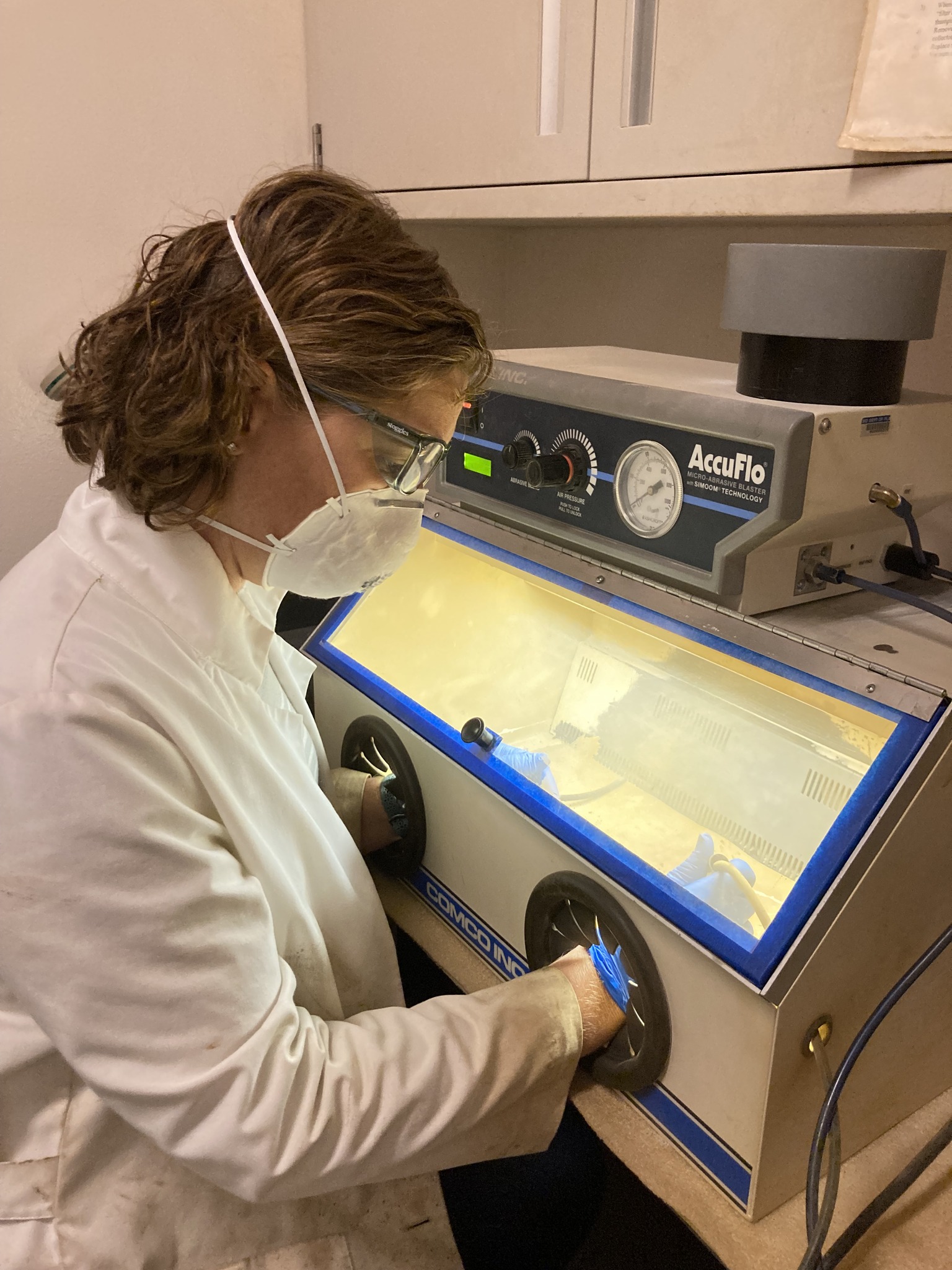 Figure 1: Conservator using a micro-blasting unit to remove corrosion
from small iron artifacts.
Figure 1: Conservator using a micro-blasting unit to remove corrosion
from small iron artifacts.
Among the more powerful options in the mechanical toolkit is air abrasion, a
technique that conservators at the MAC Lab use regularly, particularly for
removing excess corrosion from archaeological iron. Air abrasion uses a high-speed
stream of particles propelled by compressed air directed at the artifact’s surface.
The mechanical energy of the compressed air is converted to kinetic energy in
the particles, and that energy does the work of removing unwanted material
through friction.
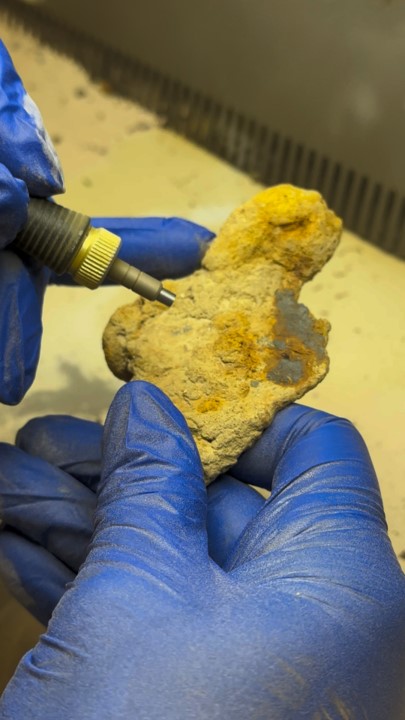 Figure 2: Iron artifact undergoing precision cleaning with a micro
air abrasion tool.
Figure 2: Iron artifact undergoing precision cleaning with a micro
air abrasion tool.
The process is controlled by adjusting air pressure (psi) and the choice of blasting
medium. Abrasive particles differ in hardness, shape, and size, and these properties
determine their effect on the surface. When gentle cleaning or surface polishing is
the goal, cornstarch can be a useful medium. It is relatively soft and fine-grained,
making it effective without being aggressive. When the target is dense, strongly
adhered corrosion, aluminum oxide is often the preferred choice. Its hardness
and sharply angular particle geometry give it cutting power suited to the toughest
deposits.
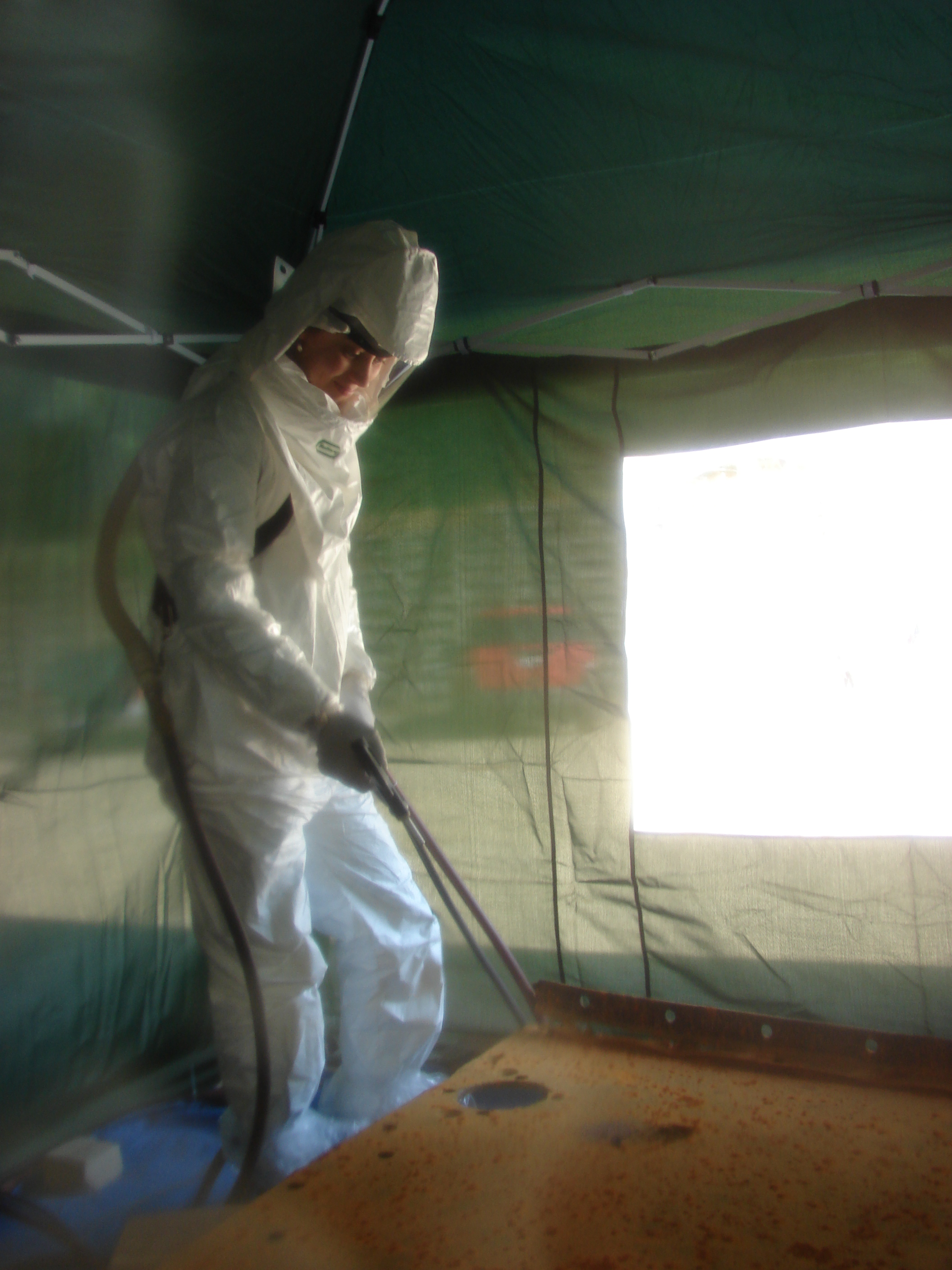 Figure 3: Conservator using a large air abrasive lance inside a containment
tent to remove corrosion from an oversized iron artifact.
Figure 3: Conservator using a large air abrasive lance inside a containment
tent to remove corrosion from an oversized iron artifact.
The range of tools and techniques available to conservators reflects the range of
problems they encounter. Every artifact poses its own cleaning challenge, and the
skill of the conservator lies in reading that challenge accurately, understanding the
object, the deposit, and the interface between them, and selecting an approach that
will reveal the surface without causing harm in the process. That combination of
knowledge and judgment is what distinguishes conservation cleaning from simple
removal, and what makes it such a central part of the preservation process.