In March 2008, I wrote my very first Curator’s Choice about a bodkin inscribed with
the initials “SS” (Figure 1). This personalized artifact was found in a c. 1675-1700
pit at the Charles’ Gift site, home of Susanna Sewall, her husband Nicholas, and
their children. At the time I cited sources interpreting bodkins like this as
personal objects that women used for running drawstrings and laces in clothing,
and I speculated that the wealthy Sewalls may have opted for a silver-plated
bodkin instead of a solid silver one because they fell on hard times during the
Protestant uprising of 1689. I’ve learned a lot since 2008 though, and I now don’t
believe either of those interpretations to be accurate. Reading my original
Curator’s Choice is therefore something the latest slang would call “so cringe.”
It’s time for an update.
The Charles’ Gift archaeological site is located aboard the Naval Air Station, Patuxent
River in St. Mary’s County, MD. Nicholas Sewall received the land from his stepfather
Charles Calvert, who was the Governor of Maryland from 1661-1676 and the 3rd Lord
Baltimore from 1675-1715. Nicholas came of age as a member of the Catholic ruling
family of Maryland, and when Charles Calvert returned to England in 1684, Nicholas
Sewall was one of the loyal Catholic elites he left in charge.
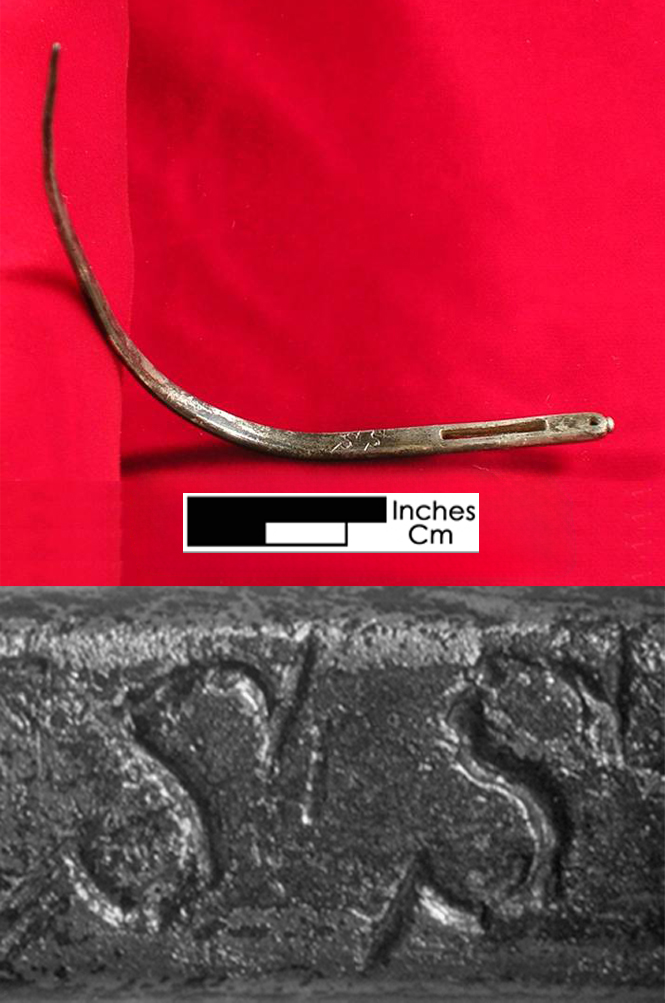 Figure 1: The Charles' Gift bodkin, with inscribed "SS" initials.
Courtesy Naval District Washington, Naval Air Station Patuxent River.
Figure 1: The Charles' Gift bodkin, with inscribed "SS" initials.
Courtesy Naval District Washington, Naval Air Station Patuxent River.
When Protestants overthrew the Catholic proprietary government in 1689, Nicholas
became a target. He fled to Virginia, leaving his plantation and family vulnerable.
Susanna and the children seem to have stayed at Charles’ Gift, but over the next
five years, Nicholas only made intermittent appearances in Maryland, and he complained
that his family and property suffered.
Around 1694 hostilities had settled enough to allow Nicholas’ return. The original house
was in disrepair so new construction began across the yard. The “SS” bodkin was recovered
in a pit that was likely excavated for clay to make brick, then filled with construction
waste from the new home, and demolition debris from the old one. That means it was lost
or discarded sometime between 1694 and 1700 (Hornum et al. 2001; Hornum and Rivers Cofield
2022).
 Figure 2: Holme's drawings of bodkins depicting older bulbous styles
(top left and box 63), and the newer fashion with a smaller finial and a small hole
above the long hole (top right and box 64). Adapted from Alcock and Cox (2000).
Figure 2: Holme's drawings of bodkins depicting older bulbous styles
(top left and box 63), and the newer fashion with a smaller finial and a small hole
above the long hole (top right and box 64). Adapted from Alcock and Cox (2000).
Meanwhile, across the Atlantic, Randle Holme III, a deputy herald in Great Britain started
publishing The Academy of Armory in 1688 (Alcock and Cox 2000). This encyclopedic set of
books illustrated heraldic elements and many everyday objects that might have made it into
heraldic imagery. Holme depicted two types of bodkins; the “old fashion” with a somewhat
bulbous finial, and the “new fashion,” which is the best match for the “SS” bodkin
(Figure 2). Holme states that:
The Bodkin is a thing usefull for women to bind vp their haire with and aboute, they
are usually made of siluer and gold the inferiour haue them of Brasse, but the meanest
content them selues with a scewer of sharp pointed stick. [Alcock and Cox 2000]
This primary source has significantly changed my understanding of Susanna Sewall’s bodkin.
Holme makes no mention of bodkins like this being used for lacing clothing. He calls
them “Instruments for the head,” and groups them with combs (Alcock and Cox 2000). Many
other 17th and 18th-century sources concur, suggesting that bodkins underwent a shift
in primary function from hairdressing to lacing at some point in 19th century.
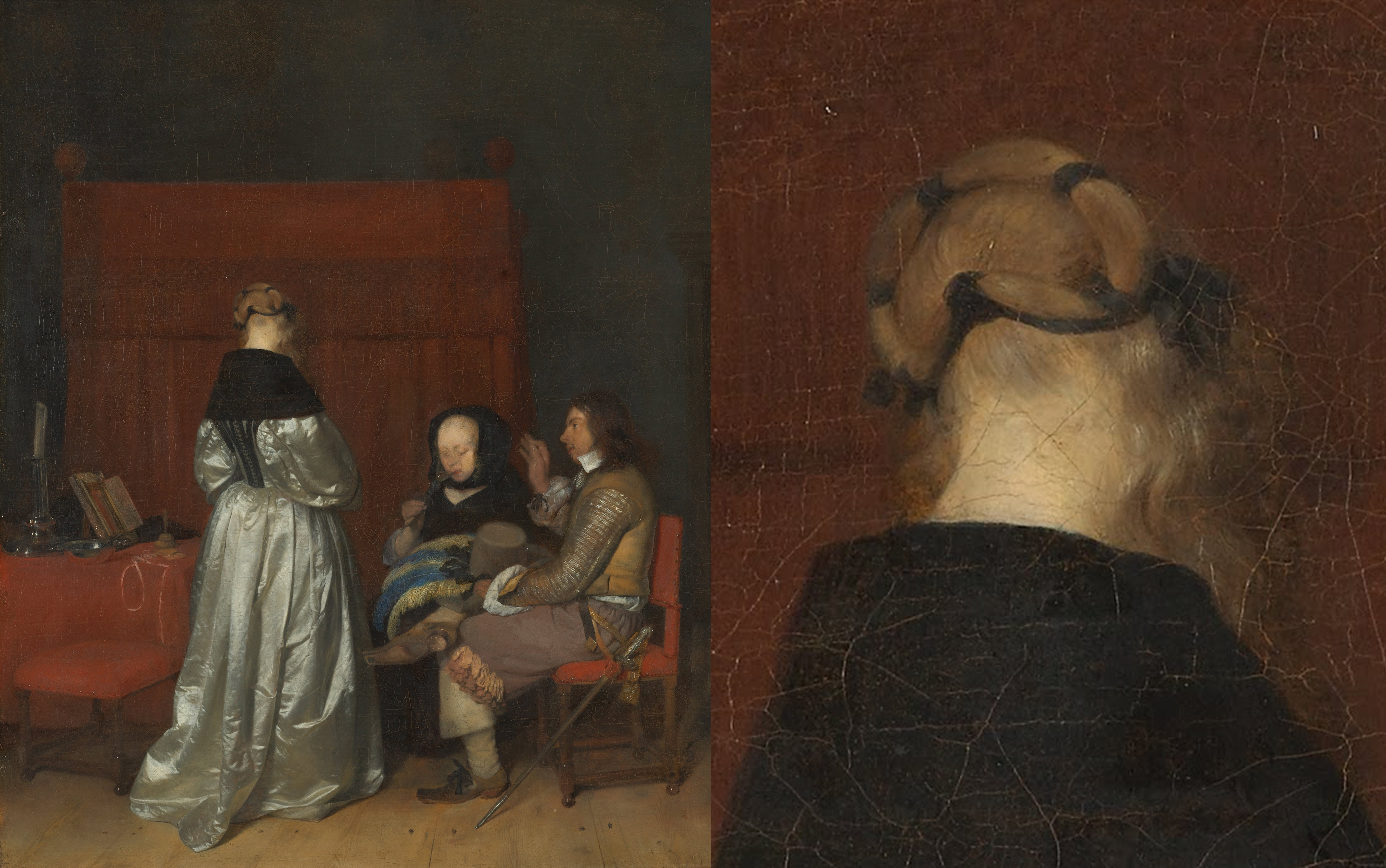 Figure 3: Gerard der Borch's 1654 painting titled The Paternal
Admonition (aka The Gallant Conversation) shows a woman wearing a popular
updo of the 17th century. Her hair circles the back of her head and black
ribbons wrap the hair, with ribbon bows tied at each side. The long holes in
bodkins would facilitate threading wide ribbons into the hair for styles
like this.
Figure 3: Gerard der Borch's 1654 painting titled The Paternal
Admonition (aka The Gallant Conversation) shows a woman wearing a popular
updo of the 17th century. Her hair circles the back of her head and black
ribbons wrap the hair, with ribbon bows tied at each side. The long holes in
bodkins would facilitate threading wide ribbons into the hair for styles
like this.
Women’s bodkins of the 17th century facilitated popular updos with ribbons and cords
running through them, or tight buns concealed under bonnets and caps (Figure 3). In
other words, my original Curator’s Choice had the function of the bodkin wrong.
Aglets were very popular in the 17th century, and it makes much more sense that
they facilitated lacing rather than the relatively large bodkins of the period
that were too big to fit through most lacing holes.
Additionally, in 2008 I thought that the family’s woes following the Protestant
Rebellion might have forced Susanna to settle for a crudely inscribed silver-plated
bodkin instead of solid silver. Now I’m not so sure the inscription or the material reflects
hardship. All the initialed bodkins in the MAC Lab’s collections have been inscribed
by hand, and it may be that the SS just looks a little messier because the
curved letters are harder to make than straight ones. Plus, Susanna’s bodkin was
in the “new fashion” according to Holme, and it was deposited by c. 1700, so
unless Susanna accidentally lost the bodkin very shortly after she got it, she
must have had enough purchasing power and awareness of the latest fashions to
be an early adopter of the trend.
The “SS” bodkin remains important as a direct connection to Susanna Sewall, a woman
who helped steer her family and home plantation through the adversarial years
following the Protestant uprising. The bodkin is also now one of the many artifacts
that exemplify the usefulness of archaeological collections for ongoing study.
It’s been 18 years since I first wrote about this artifact, and while it is kind
of disheartening to have to revise a Curator’s Choice that has long since been
finished, it would be much worse if I hadn’t learned anything new in 18 years!
The thrill of discovery is ongoing when we recognize that not every first
interpretation will prove to be the best or most accurate one, and there is
always room to keep learning. Maybe someday there will be an “SS Bodkin:
Part III” with even more insight into this little piece of Maryland’s history.
References
Alcock, N.W., and Nancy Cox
2000 Living and Working in Seventeenth
Century England: Descriptions and drawings from Randle Holme's Academy of
Armory. CD-Rom. The British Library Board, London.
Hornum, Michael B., Andrew D. Madsen, Christian Davenport,
John Clarke, Kathleen M. Child, and Martha Williams
2001 Phase III Archaeological Data
Recovery at Site 18ST704, Naval Air Station Patuxent River, St. Mary’s
County, Maryland. Report Prepared for Tams Consultants, Inc., Arlington, Virginia.
Hornum, Michael B., and Sara Rivers Cofield
2022 Archaeological Deposits from
Site 18ST704 Associated with Maryland’s 1689 Revolution in Government.
Maryland Archeology 55(2):1-19.