When household artifacts from the Patterson House returned to JPPM from offsite
storage in 2024, five steamer trunks arrived with the haul of over 6,000 artifacts.
One of those steamer trunks needed extra care and went directly to the MAC
Lab post-delivery. The delicate trunk showed signs of wear and both the
inside and outside were covered in cobwebs, dust, dirt, and inactive mildew.
It lived in the MAC Lab freezer for a while to kill any potential pests.
Then the JPPM Curator got to work on cleaning the artifact.
The database had little information beyond what could already be easily observed:
the artifact number, a brief description of the wicker and oilcloth construction,
and the name and location labeled on each side. The lack of detail was mysterious
but presented a challenge. What can we learn about this artifact simply by
looking at it? How do we answer the essential “Who?”, “What?” “When?” and “Where?”
questions? The JPPM Curator began by making a list of what she could see. First
were the composition details: the wicker and oilcloth. Then came the name and
location labeled on each of the short ends:
“C.C. Goodrich. / Llewellyn Park / Orange, N.J.” And finally, the partially
visible marker’s mark on the worn and powdery center leather strap:
“Drew & Sons / Picadilly Circle / London.” These key observations led her on
a journey into the world of manufacturing, wealth, and the changing nature of
travel in the late 19th and early 20th centuries.
The database had little information beyond what could already be easily observed: the artifact number, a brief description of the wicker and oilcloth construction, and the name and location labeled on each side. The lack of detail was mysterious but presented a challenge. What can we learn about this artifact simply by looking at it? How do we answer the essential “Who?”, “What?” “When?” and “Where?” questions? The JPPM Curator began by making a list of what she could see. First were the composition details: the wicker and oilcloth. Then came the name and location labeled on each of the short ends: “C.C. Goodrich. / Llewellyn Park / Orange, N.J.” And finally, the partially visible marker’s mark on the worn and powdery center leather strap: “Drew & Sons / Picadilly Circle / London.” These key observations led her on a journey into the world of manufacturing, wealth, and the changing nature of travel in the late 19th and early 20th centuries.
Who?
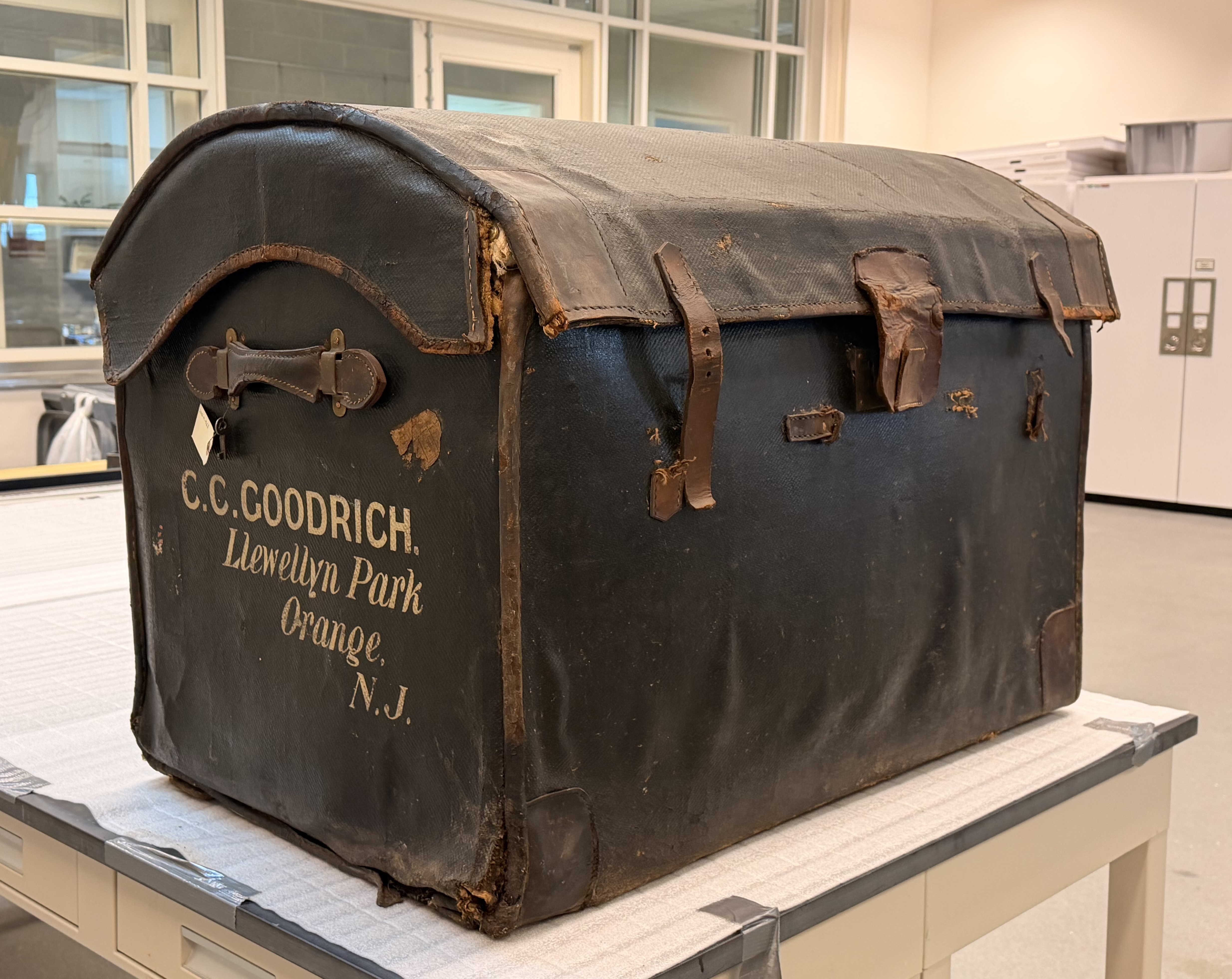 Figure 1: Trunk owned by Charles Cross Goodrich and passed down to his niece Mary Marvin Breckinridge Patterson.
C.C. Goodrich (1871–1932), or Charles Cross Goodrich, was the oldest son of Benjamin Franklin “B.F.” Goodrich, and the uncle of Mary Marvin Breckinridge Patterson, the wife of Jefferson Patterson.
B.F. Goodrich was a physician who founded the B.F. Goodrich Company in 1870. The company soon became an icon of the rubber and tire industries and survives today as the Goodrich Corporation. C.C. Goodrich was on the Board of Directors for the company and a member of the lower house of the Maine Legislature at the time of his death in 1932. It is likely that Mrs. Patterson inherited or was gifted the steamer trunk from her uncle after his death.
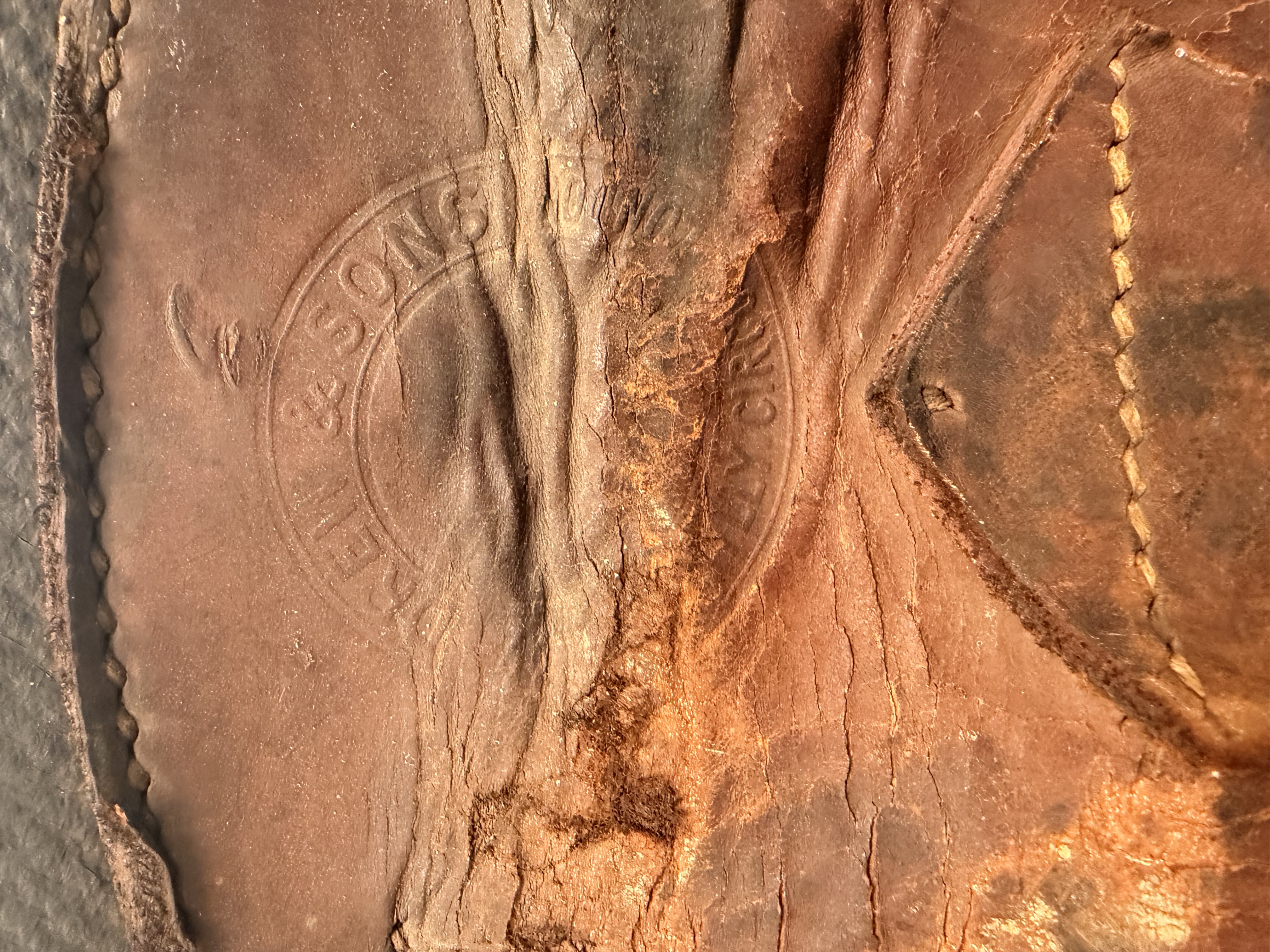 Figure 2: Drew & Sons maker’s mark on the center strap.
Drew & Sons, the marker’s mark on the trunk’s center leather strap, was a
high-end leather, luggage, and silver goods company founded in London in 1844
by Samuel Summers Drew. Advancements in steamship and rail travel saw wealthy
clients purchasing luggage that combined fashion with function and revealed
their upper-class status.
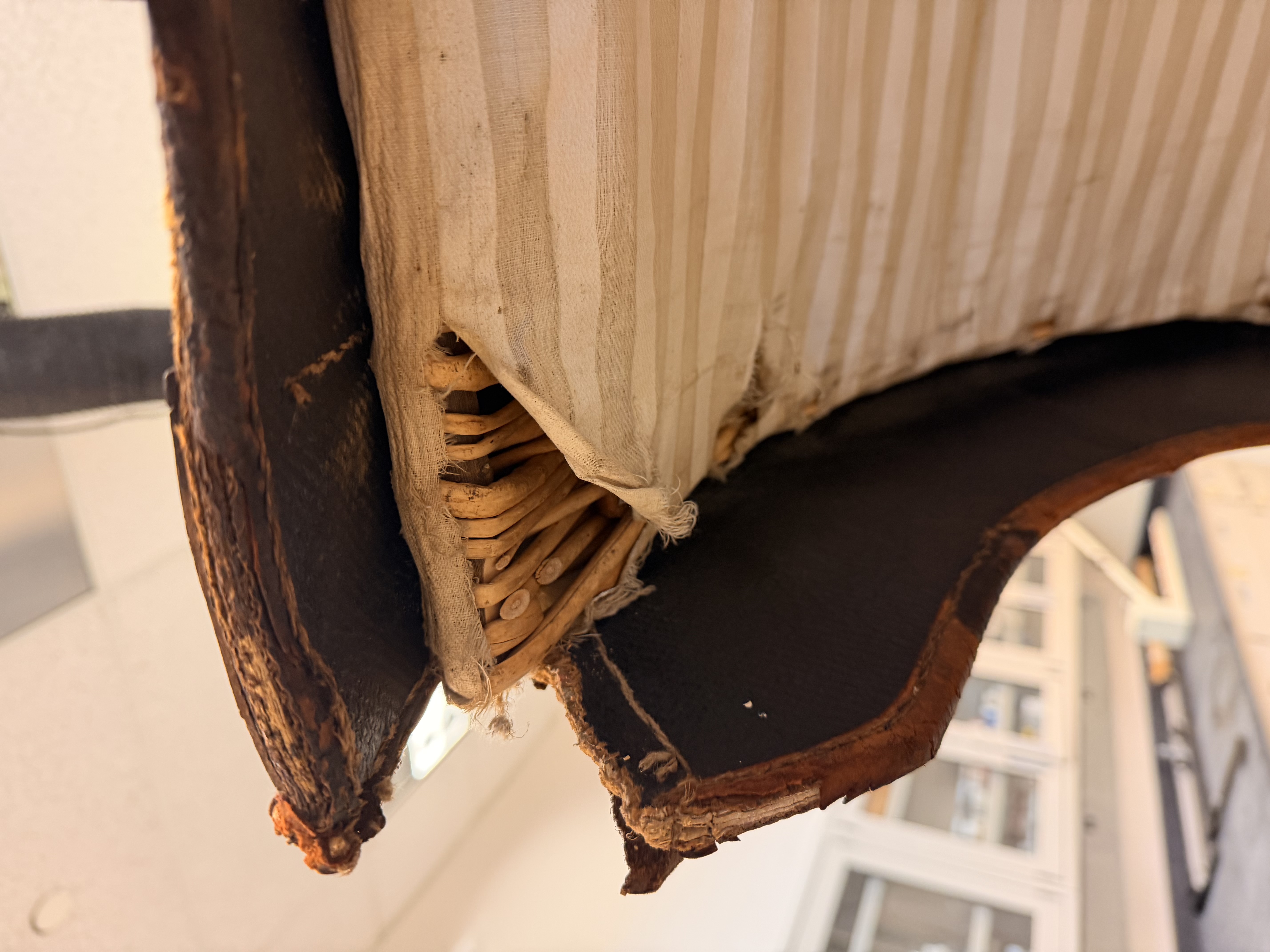 Figure 3: Image of the trunk that shows the oilcloth cover, wicker basket construction, and cloth interior.
What?
As the JPPM Curator cleaned, she learned more about the composition of the trunk. It had a camelback lid and was composed of a basket-like wicker structure covered in water-resistant oilcloth (canvas treated with linseed oil), lined with a thin, striped fabric, and accented with leather handles and straps.
When?
Judging by the year of C.C. Goodrich’s death (1932), the trunk is anywhere between 94 and more than 100 years old, placing it during the golden age of transatlantic steamship travel. The voyage of the SS Savannah in 1819 established the beginning of transatlantic steamship travel. In the 1840s several steamship lines carried passengers and cargo back and forth across the Atlantic Ocean. Before the advent of steamship travel, journeys by sailing ships could last from three weeks to more than a month. Transatlantic steamship travel cut the journey down to one to two weeks.
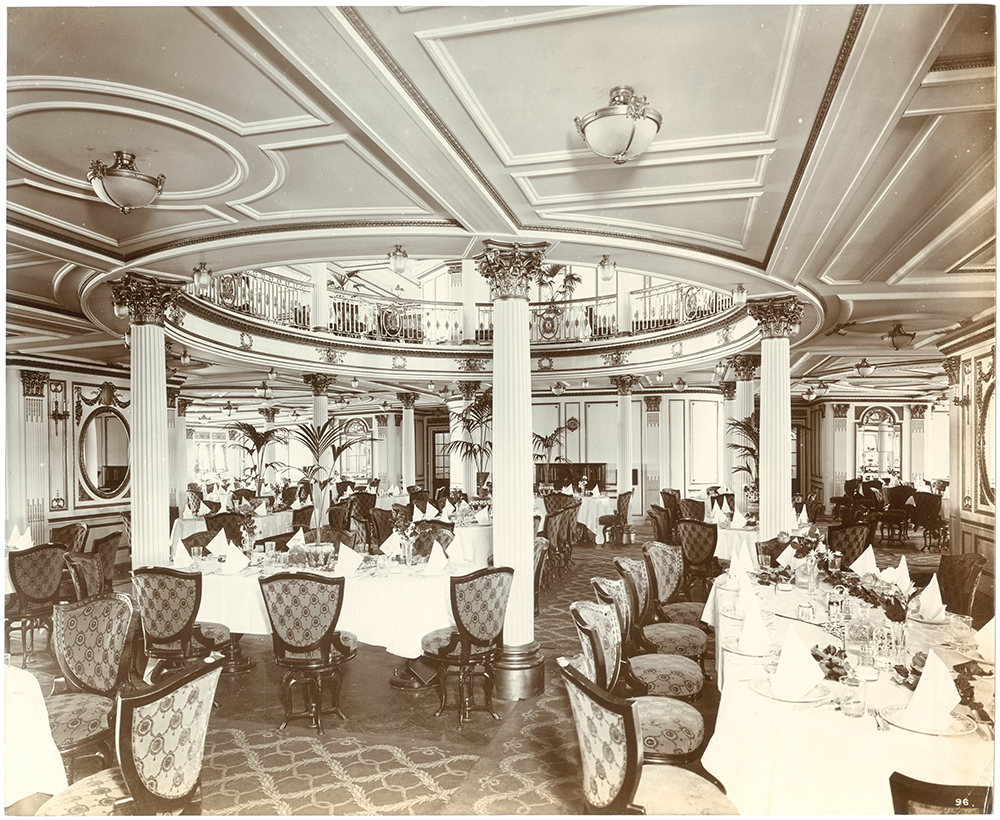 Figure 4: First class dining saloon on the RMS Lusitania. Europe, Asia, and Australia: Photographs, Manuscripts, and Imprints Collection. Ag1982.0183. DeGolyer Library, Southern Methodist University.
Where?
Only tiny parts of travel labels still exist on the trunk, but we can use the clues that we’ve gathered to make educated guesses about where Goodrich might have traveled. The short answer? Just about anywhere! Because of Goodrich’s class status and his position as a businessman, he would have been able to afford travel to Europe, Asia, or even Africa at a time when such travel was highly inaccessible to most. Class status is very relevant to conversations about steamship travel because it determined the type of experience that one would have on board. Goodrich would have been a first-class passenger and had access to luxurious and elaborately designed cabins, salons, and decks that second and third (also called steerage) passengers could not access.
Conclusion
Although little provenance has been recorded for the trunk, this exercise has
demonstrated the way that curators can use context clues to find the truth
behind an artifact and who owned it. After asking “Who?” “What?” “When?”
and “Where?” we are left with an image of a wealthy businessman who used
his status to acquire fashionable and functional luggage to accompany him
on his luxurious travels by land and sea. But by uncovering that part of
the story we can also gather more historical context about the history of
rubber manufacturing, luxury goods, transatlantic travel, and the role
that class played in one’s experiences on board a steamship.
References
EBSCO
“Atlantic Steamship Travel
Begins: History: Research Starters: EBSCO Research.” Accessed August
18, 2026. https://www.ebsco.com/research-starters/history/atlantic-steamship-travel-begins#full-article.
Steamship Historical Society
2025 “Leisure.”
https://shiphistory.org/themes/leisure/.
GG Archives
“Luggage Fashions of 1928.” Accessed August
18, 2026. https://www.ggarchives.com/OT/Articles/LuggageFashionsOf1928.html.
National Museum of American History
“Speed and Luxury.” Accessed August 18,
2026. https://americanhistory.si.edu/explore/exhibitions/on-the-water/online/ocean-crossings/comfort-courtesy-safety-speed/luxury.
Steam
2026 “Life on Board - Passengers.” Steamship Historical
Society, March 23, 2026. https://shiphistory.org/2017/09/22/life-on-board-passengers/.
Tomaszewski, Lois
2022 “Ocean Travel in Victorian and Edwardian Times.” House
of History, February 23, 2022. https://houseofhistory.squarespace.com/blog/ocean-travel.
EBSCO
“Transatlantic Steamer Service: History: Research
Starters: EBSCO Research.” Accessed August 18, 2026. https://www.ebsco.com/research-starters/history/transatlantic-steamer-service.