By Rebecca Harris and Amanda Ortiz, students of Huntingtown High School's
Historical Investigations Class
Emanuel Thomas Lyon was the founder of "Lyon Kathairon for the Hair," which began production in the early 1850s and
claimed to "effectively promote the luxuriant growth and beauty of the hair." Lyon graduated from Princeton College
and later became a chemist working on many products such as his Magnetic Powder for pest control and his own Lyon
Kathairon hair tonic. The hair tonic was manufactured in New York City and exported to many other cities along
the east coast, including Baltimore, when the company expanded. Although Emanuel passed away shortly after the
start of production, the company continued sales throughout the 19th century, successfully competing against other
hair tonic products, such as Vitalis Hair Tonic.
Vitalis Hair Tonic contained a number of ingredients, including Benzyl Benzoate, a treatment for lice and scabies
infestations. It is believed to be absorbed by the lice and destroy them through their nervous system. Lyon tonic
likely contained similar ingredients, since they advertised similar messages to Vitalis hair tonic. Claims that
Vitalis was a cure for lice and reverse head baldness are two examples of messages sent to customers. Still, Lyon
Kathairon Hair Tonic had customers purchasing it throughout the 19th century, more frequently after Lyon's death.
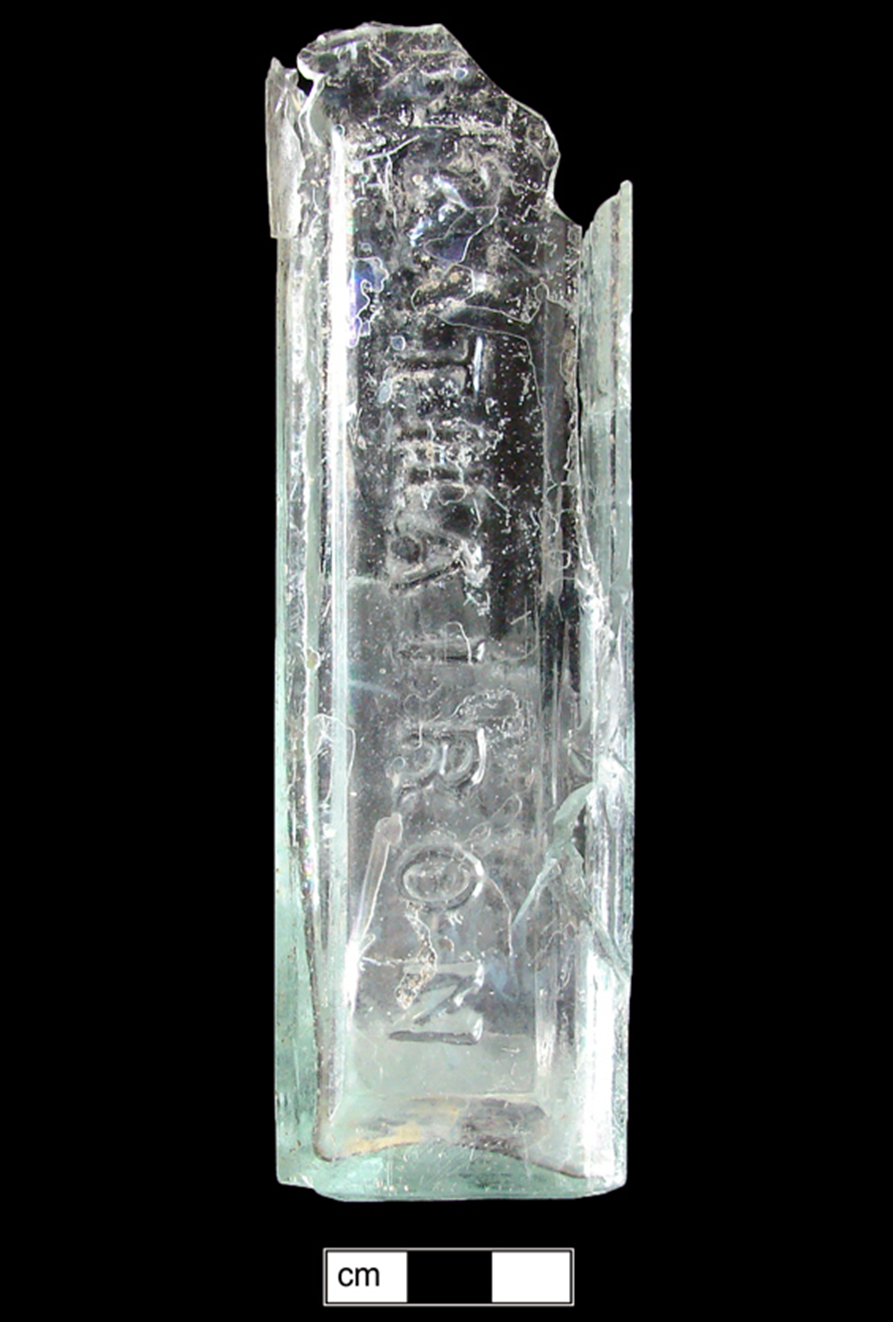 This partial bottle once contained a tonic known as Lyon Kathairon for the Hair. Emanuel Thomas Lyon was
the founder of Lyon Kathairon for the Hair, which began production in 1850 and claimed to "effectively promote
the luxuriant growth and beauty of the hair." Hair loss is still an unresolved beauty issue today. One of the
most popular modern hair tonics is Rogaine.
This partial bottle once contained a tonic known as Lyon Kathairon for the Hair. Emanuel Thomas Lyon was
the founder of Lyon Kathairon for the Hair, which began production in 1850 and claimed to "effectively promote
the luxuriant growth and beauty of the hair." Hair loss is still an unresolved beauty issue today. One of the
most popular modern hair tonics is Rogaine.
Lyon Kathairon's popularity was mainly due to its memorable advertising and notable feedback from satisfied customers.
Advertisements had quotes of customers saying they went from baldness to a full head of hair. The statements and images
produced were merely propaganda; in the end all it really gave the customers was a head of shiny hair.
Ingredients for the tonic mainly consisted of alcohol, castor oil, and fragrant oil. Since the Lyon hair tonic was sold
prior to the Federal Food, Drug, and Cosmetic Act of 1938, the modern regulations to list ingredients and have medically
proven claims were not required. Therefore, a claim such as, "The most excellent and popular preparation for the hair
ever made," and Lyon’s declaration on advertisements that millions of hair tonic bottles had already been sold were
believed to be true by the customers. Without the listings of ingredients, and a scientific guarantee, customers were
buying what they thought was a miracle worker. People would continue to buy this product in hopes of a good head
of hair, in order to cure their self-consciousness and fear of going bald.
There is no scientific evidence that these products work. These are simple products that lead customers to believe
they are fixing a part of themselves, when the product is having very little to no effect. However, Rogaine, a
hair loss and regrowth treatment is a product sold today that is similar to the Lyon hair tonic. Men and women
purchase it with a goal of having a healthy head of hair, with questionable results. Just like the hair tonic, there
are many customers purchasing the product on a regular basis.
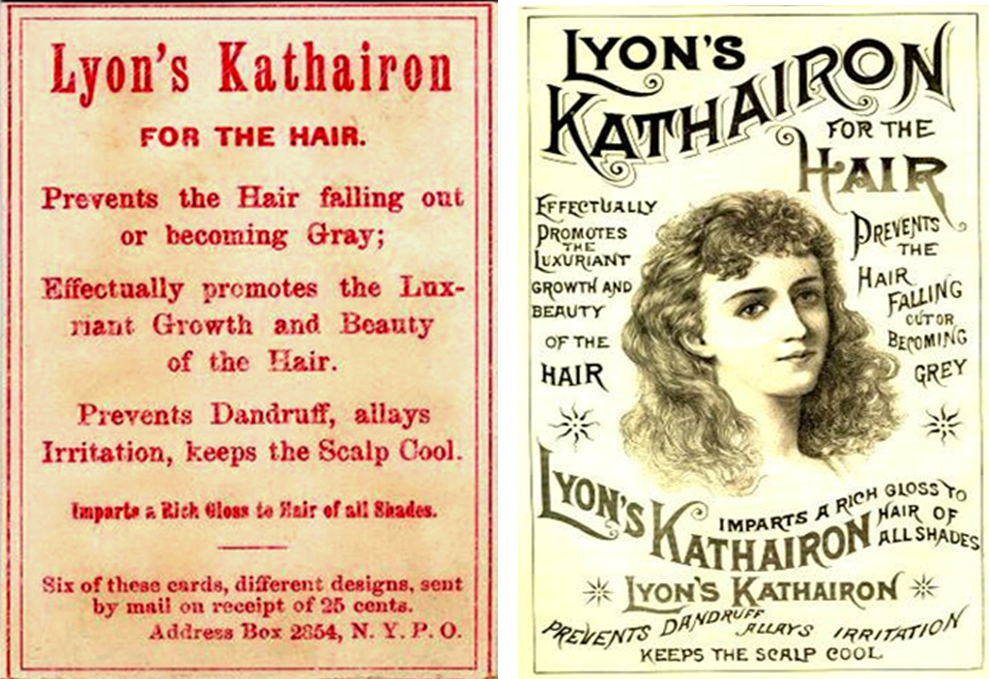 Images found at "Lyon Kathairon." Hair Raising Stories.
http://www.hairraisingstories.com/Products/LYON_K.html.
Images found at "Lyon Kathairon." Hair Raising Stories.
http://www.hairraisingstories.com/Products/LYON_K.html.
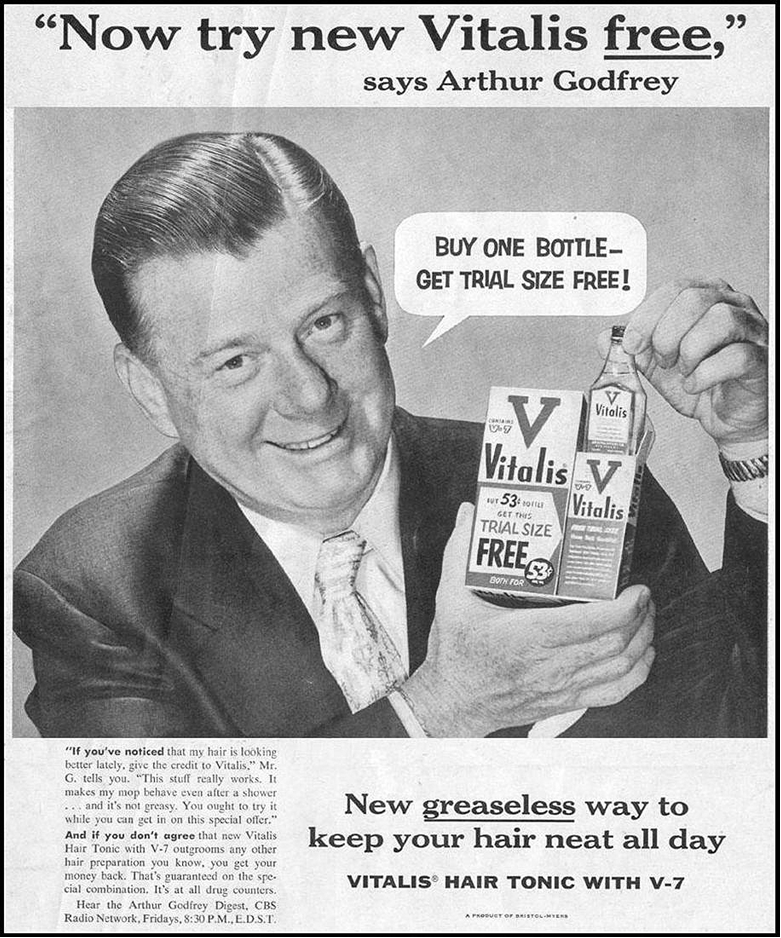 Vitalis Hair Tonic Advertisement found at Gallery of Graphic Design. N.p., n.d. Web. 14 May 2013.
http://gogd.tjs-labs.com/gallery-view?keyword=HAIR%20TONIC&match=EXACT.
Vitalis Hair Tonic Advertisement found at Gallery of Graphic Design. N.p., n.d. Web. 14 May 2013.
http://gogd.tjs-labs.com/gallery-view?keyword=HAIR%20TONIC&match=EXACT.
References Cited
"Benzyl Benzoate." Drugs.com. N.p., n.d. Web. 14 May 2013. http://www.drugs.com/cons/benzyl-benzoate-topical.html.
"Cruz, Stephanie. Life and Vigor to the Hair." 2007. PDF
file. http://www.stanford.edu/group/marketstreet/cgi-bin/wordpress/wp-content/uploads/2007/04/Cruz.pdf.
Lyon Kathairon for the Hair.1892. Amazon. Web. 25 Feb. 2013.
http://www.amazon.com/Lyons-Kathairon-Print-Memorabilia-49256/dp/B004G47IIS.
"Lyon's Kathairon." Hair Raisings Stories. N.p., n.d. Web. 27 Feb. 2013.
http://www.hairraisingstories.com/Products/LYON_K.html
"Lyon Kathairon." Hair Raising Stories. N.p., n.d. Web. 14 May 2013.
http://www.hairraisingstories.com/Products/LYON_K.html.
"Lyon's Kathairon Hair Product Bottle." Odyssey's Virtual Museum. Odyssey Virtual Museum, 2013. Web. 21 Feb. 2013.
http://odysseysvirtualmuseum.com/products/Lyon%27s-Kathairon-Hair-Product-Bottle.html.
Odyssey's Virtual Museum. Odyssey Marine Exploration, n.d. Web. 14 May 2013.
http://odysseysvirtualmuseum.com/products/Lyon%27s-Kathairon-Hair-Product-Bottle.html.
Samuels, T.M. "Dual Action Cleanse Ingredients." Live Strong. Demand Media, 23 May 2010. Web. 14 May 2013.
http://www.livestrong.com/article/96679-dual-action-cleanse-ingredients/#ixzz2T88qeSgl.
"6 Uselesss Infomercial Products Still Being Sold Today." HubPages. HubPages, n.d. Web. 14 May 2013.
http://brettmw.hubpages.com/hub/6-Uselesss-Infomercial-Products-Still-Being-Sold-Today.
"Vitalis Hair Tonic." Medshop Express. N.p., n.d. Web. 14 May 2013.
http://www.medshopexpress.com/682762.html.
"Vitalis Hair Tonic Advertisement." Gallery of Graphic Design. N.p., n.d. Web. 14 May 2013.
http://gogd.tjs-labs.com/gallery-view?keyword=HAIR%20TONIC&match=EXACT.