By Rebecca Forrester and Stella Hayden, Huntingtown High School's Archaeology Class
This antique English white ironstone brush box dates back to about the early 1850s. It
was created by E. Challinor and Company, who partnered with other local pottery businesses
in both Tunstall and Sandford, England. The company originated in Great Britain and all
of their ironstone had a printed stamp on the bottom which read, "E. Challinor & Co.
Ironstone, China."
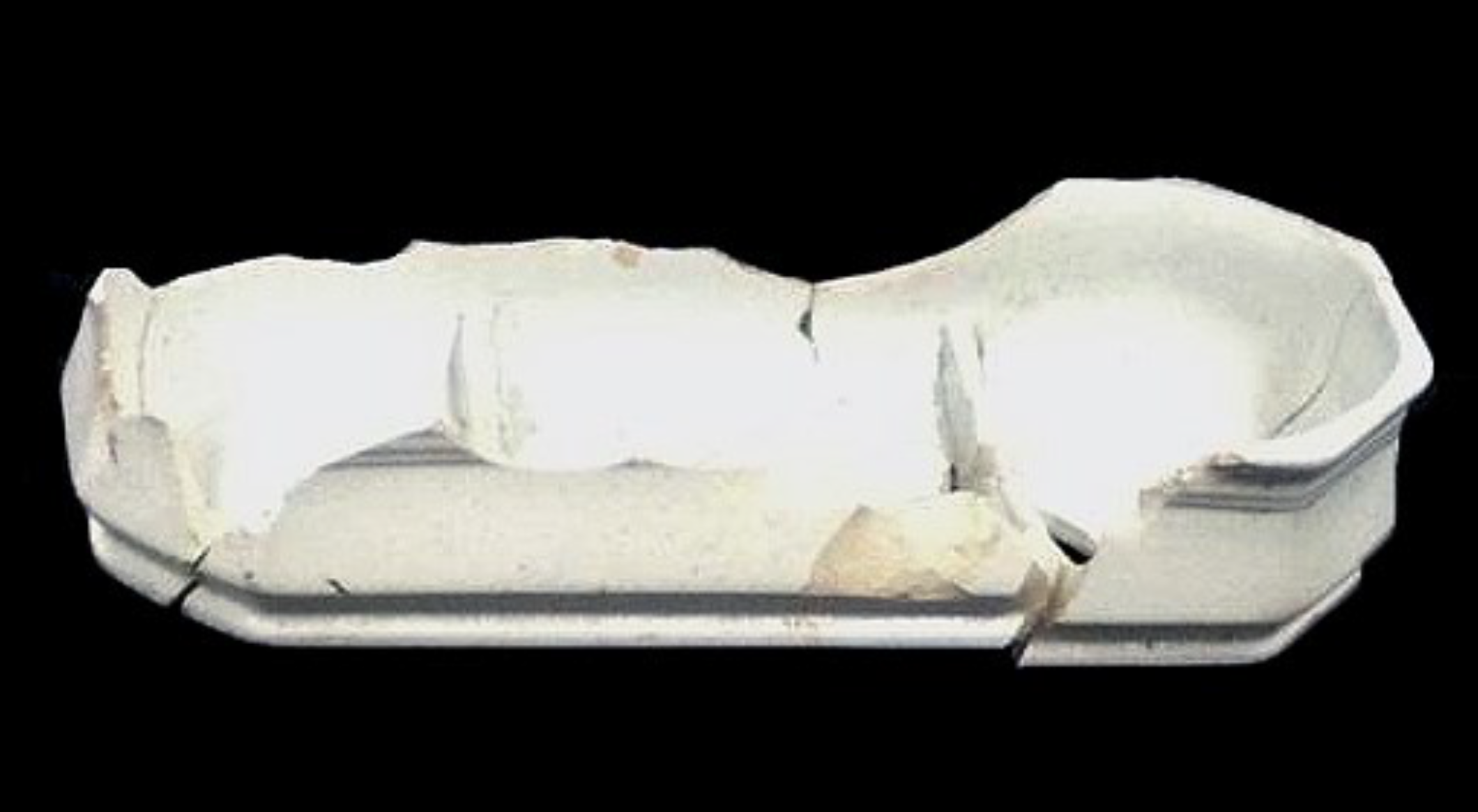 White ironstone brush box discovered in the Otterbein neighborhood of Baltimore
during the 1980 Federal Reserve site excavation.
White ironstone brush box discovered in the Otterbein neighborhood of Baltimore
during the 1980 Federal Reserve site excavation.
Edward Challinor had been operating at the Fenton Pottery from 1853 as E. Challinor & Co.
It is likely that these works were owned by the coal master Charles Challinor, with whom
Edward joined in partnership in 1862 to produce a wider range of domestic wares, expanding
from earthenwares into ironstones. Charles Challinor had many financial interests in the
district of Fenton. The partnership eventually dissolved and the business carried on as
C. Challinor & Co. for only another 4 years. It is extremely rare that one comes across
an E. & C. Challinor partnership mark.
Brush boxes were extremely popular items, specifically between the years 1845-1862. They were
made out of white granite and ironstone and were lightly fired in order to create a glaze
across the ceramic and also to smooth the piece out. The brush box's sole purpose was to
hold toiletries such as razors, toothbrushes and, of course, hair brushes. They were very
common in the middle and upper classes and could cost anywhere between $5 to $10.
In addition to its intended purpose, the brush box was sometimes used to pass notes between
local prisoners and their families. Families would visit and bring items, such as a brush
box, that contained toiletries for them, but inside there would also be letters and or
money. Although rarer, brush boxes are still sometimes used today. One was recently
apprehended at a jail when prisoners attempted to use it to smuggle a cellphone into a
prison cell.
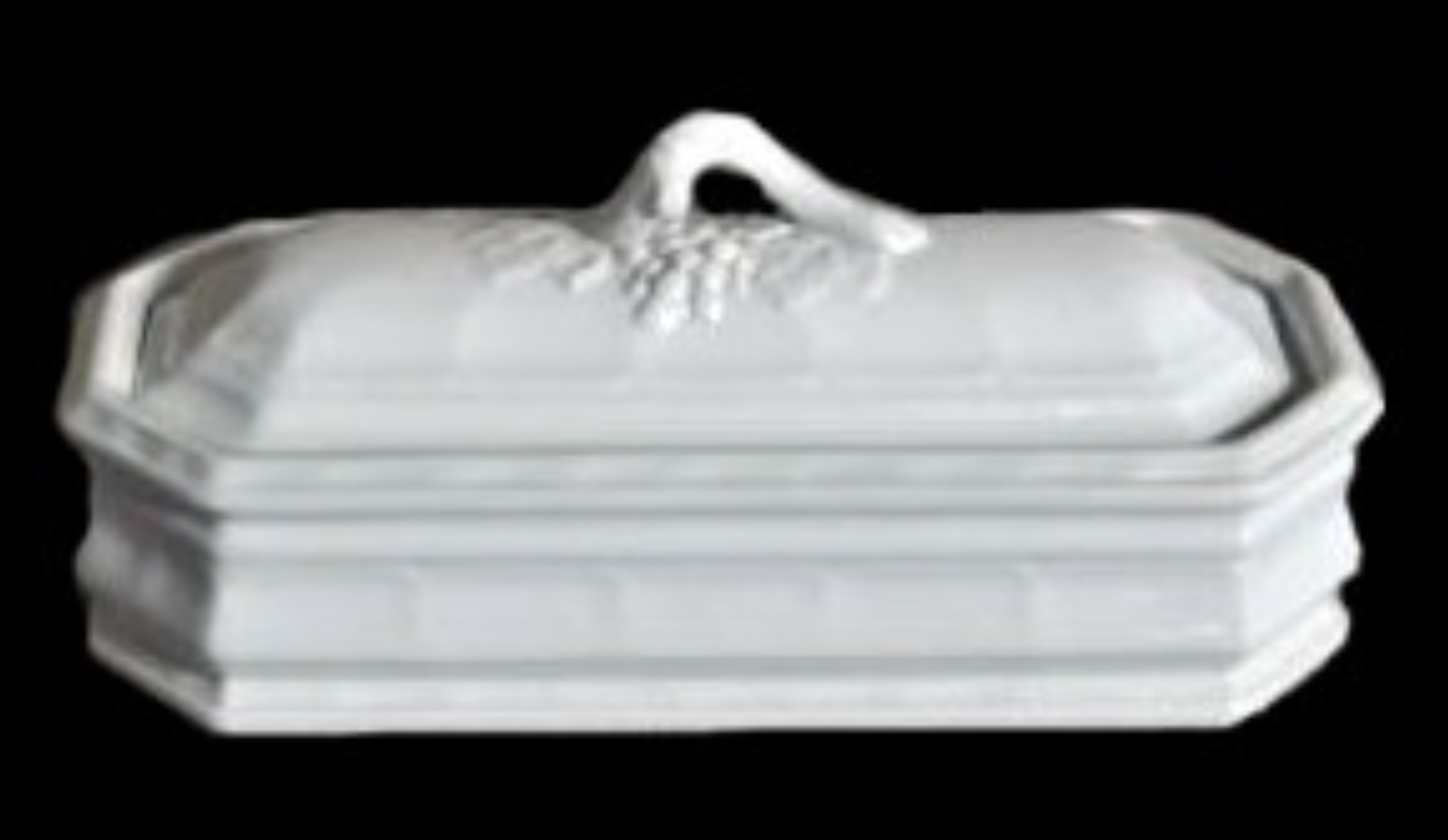 Complete examples of similar white ironstone brush boxes shown here and to
the right, (Private collection).
Complete examples of similar white ironstone brush boxes shown here and to
the right, (Private collection).
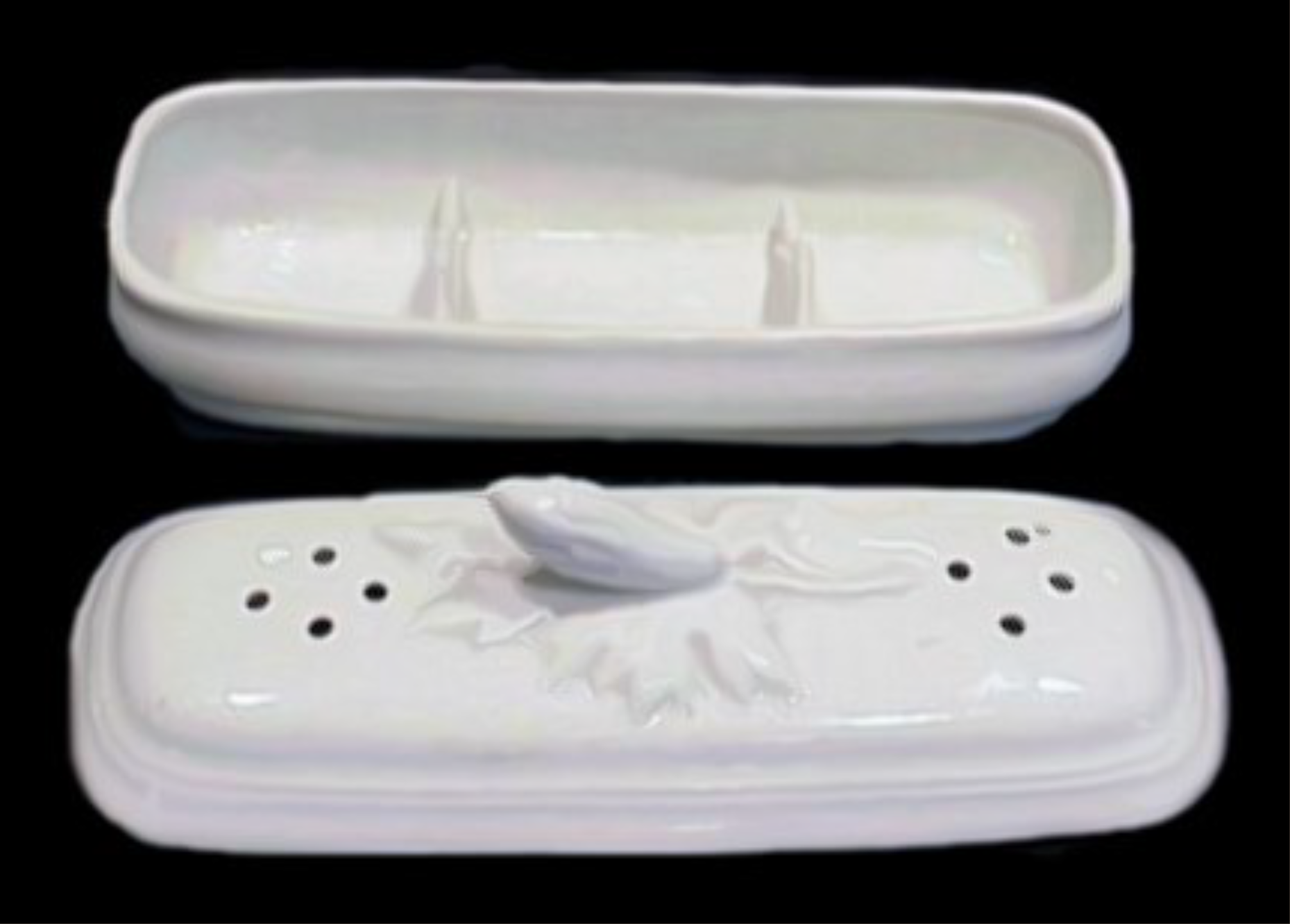 Brush box above similar to the one excavated at the 1980 Federal Reserve site.
(Private collection).
Brush box above similar to the one excavated at the 1980 Federal Reserve site.
(Private collection).
The brush box was supposed to help maintain hygiene among family members; however, in most
cases it did the exact opposite. Families would share brush boxes with one another,
putting all of their tooth brushes in one box and brushes in another. This caused a
massive spread of bacteria and many would fall ill.
The most common area for a brush box would be in the bathroom. They would, for the most
part, sit beside the sink, and on rare occasions would be found in a person's bedroom
on their dresser. They easily broke and many times the pieces ended up at the bottom of
a privy, like this one which was discovered in the Otterbein neighborhood of Baltimore during
the 1980 Federal Reserve site excavation.
References Cited
http://www.pbs.org/brush_box/19th/century
http://www.weebly.com/huntingtown_media/brush_box/crimes